The administration of US President Donald Trump is proposing to increase the regional content requirement for North American-built vehicles to 82 percent, with 50 percent of that value produced in the US, in order to qualify for preferential treatment under the US-Mexico-Canada Agreement (USMCA).
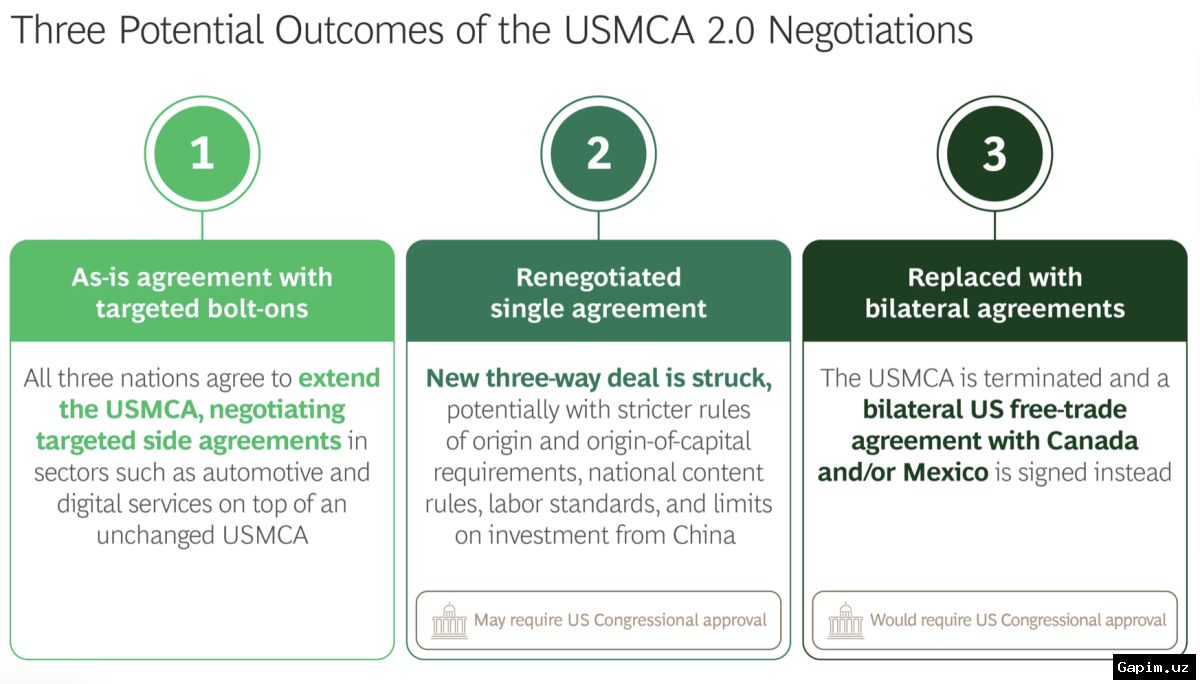
The proposal, first reported by Reuters citing four unnamed sources, emerged during USMCA renegotiation talks in Mexico City. Canada was not present at the negotiations.
The current USMCA requires that 40 percent of the value of “core parts” for passenger vehicles be produced in high-wage jurisdictions (US or Canada), and 45 percent for pickup trucks. Overall, vehicles must have 75 percent regional content to qualify for tariff benefits.
Auto industry officials told Reuters that US Trade Representative Jamieson Greer will negotiate with Mexico and present Canada with a take-it-or-leave-it offer. Canada’s exclusion from talks comes amid rising tensions between Washington and Ottawa.
The USMCA, launched in 2020, underpins nearly $1.6 trillion in annual trilateral trade. However, Trump last year imposed 25 percent tariffs on Canadian and Mexican vehicles and components, and 50 percent duties on steel, aluminum, and copper from those countries.
The Canadian economy contracted at an annualized rate of 0.1 percent in the first quarter, the second straight quarterly decline, as tariff uncertainty weighs on growth. Prime Minister Mark Carney, elected on a platform of diversifying away from the US, is strengthening ties with China.
Chinese Foreign Minister Wang Yi, on a three-day visit to Canada, said Canadian exports to China could exceed a 50 percent increase by 2030 and potentially double. Canada and China struck an initial trade deal in January to cut tariffs on electric vehicles.
In a speech at the Economic Club of New York, Carney called for a “true partnership” with the US but warned that “integration has been weaponized.” He emphasized the need for Canada to increase its strategic autonomy by diversifying trade partners.
Source: www.aljazeera.com