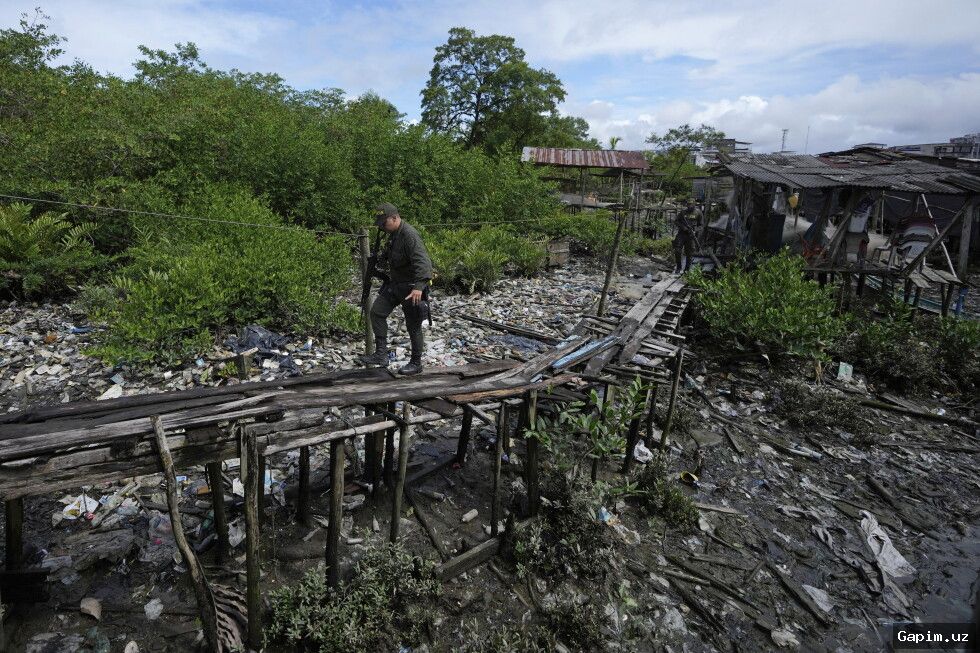
A tense calm hangs over Cartagena del Chairá on the edge of the Colombian Amazon, where residents live in fear after the Carolina Ramirez Front of the Estado Mayor Central (EMC) issued an audio message on May 12 banning all movement by road or river. The restrictions have effectively cut off parts of Caquetá department, leaving communities isolated and terrified.
President Gustavo Petro's flagship 'Total Peace' policy, launched in 2022, has failed to deliver. According to the Fundación Ideas Para la Paz (FIP) think tank, the number of active fighters has more than doubled from about 13,000 in 2022 to roughly 27,000 by end of 2025. Violent incidents rose 34% in 2025 compared to 2024, with armed group disputes at a decade high.
Experts say the policy is 'in the red.' FIP director Javier Florez noted that negotiations strengthened armed groups, allowing them to expand territorially and technologically. Fragmentation of rebel groups after the 2016 FARC peace deal and their focus on criminal economies complicated talks. Ceasefires with groups like the Clan del Golfo and EMC broke down within months.
With presidential elections on May 31, only one leading candidate, Senator Ivan Cepeda, has pledged to continue 'Total Peace.' Right-wing candidates Paloma Valencia and Abelardo de la Espriella call for a military crackdown. De la Espriella, a fan of El Salvador's Bukele, promises 'submission or neutralization' through force, blaming Petro's policy for the bloodshed.
Analysts warn that abandoning negotiations entirely could worsen the conflict. Former FARC fighter Edilson Sánchez, displaced again in January 2025, still believes peace is the only way forward. 'It's always better to have an imperfect peace than a perfect war,' said former adviser Luis Gregorio Moreno, criticizing bureaucratic delays that prevented implementation of local agreements.
Source: www.aljazeera.com