Rwanda's new nuclear cooperation agreement with Russia, while appearing technical on paper, signals a deeper shift in the geopolitical balance across Africa. As Moscow deepens its presence on the continent, Washington and other Western powers are increasingly viewed as inconsistent partners, leaving room for countries like Rwanda to explore new alliances.
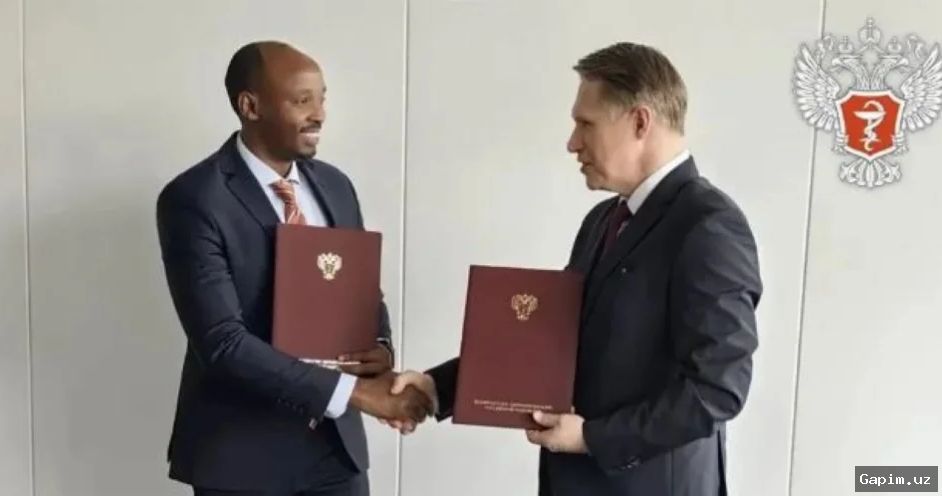
The agreement was signed on May 19 at the Nuclear Energy Innovation Summit in Kigali, where Rwanda's government emphasized its ambition to become a regional hub for technology, innovation and advanced healthcare. The Memorandum of Understanding (MoU) covers nuclear medicine and broader cooperation in health and nuclear science, including potential research reactor projects and training programs.
Rwandan government spokesperson Yolande Makolo told Al Jazeera that feasibility studies are underway for a small modular reactor (SMR)-based facility and a Centre for Nuclear Science and Technology. She also noted that Rwanda signed MoUs with the US government on civil nuclear cooperation, as well as agreements with firms from South Africa and Austria.
Western influence in Africa, long rooted in aid, development financing and security partnerships, is facing new challenges. Some African governments question whether foreign partners can be relied upon when policy priorities shift between administrations. Russia has moved quickly to exploit this uncertainty, promoting a policy of noninterference and respect for sovereignty.
Professor Macharia Munene, a specialist in diplomacy and international relations, said Russia is benefiting from weakening perceptions of Western consistency. In the eyes of some African leaders, Moscow's approach is more predictable: investment and training without strings attached. Russia's nuclear outreach is part of a broader strategy, with agreements reportedly signed in Egypt, Ethiopia, Nigeria, Ghana and South Africa.
Rwanda has faced criticism over human rights, including accusations of targeting journalists and opposition figures. Relations with the US have been tense, with Washington accusing Kigali of backing the M23 rebel group in the eastern Democratic Republic of the Congo. Yet, Rwanda frames its engagement with Moscow largely around technology, training and investment rather than politics.
Beverly Ochieng, senior analyst at Control Risks, said Rwanda is able to juggle multiple bilateral partners. This deal comes alongside a health MoU with Russia and defense talks with France. President Paul Kagame's strategy is clear: maintain strong ties with the US, China, Europe, the Gulf and Russia, without becoming overly dependent on any single partner.
Nuclear projects in Africa often serve dual purposes: technical development and political signaling. A small modular reactor or research facility demonstrates scientific ambition and industrial sophistication. However, experts point out that nuclear programs are expensive and complex, requiring decades of expertise, regulatory oversight and careful management of international safeguards.
In East Africa, nuclear capability is increasingly seen as part of national prestige and economic strategy. Kenya, Uganda, and Ethiopia have all expressed long-term interest in nuclear energy. Rwanda's decision to pursue partnerships with multiple countries reflects both regional ambition and caution.
The nuclear cooperation agreement is long-term and incremental. Feasibility studies, student training and infrastructure planning are expected to take several years. Only after these foundations are laid could operational facilities be considered, a process that may span a decade or more.
Source: www.aljazeera.com