The World Meteorological Organization (WMO) has announced a high likelihood of a moderate or possibly strong El Niño weather phenomenon in the coming months, which could push global temperatures higher and disrupt rainfall patterns.
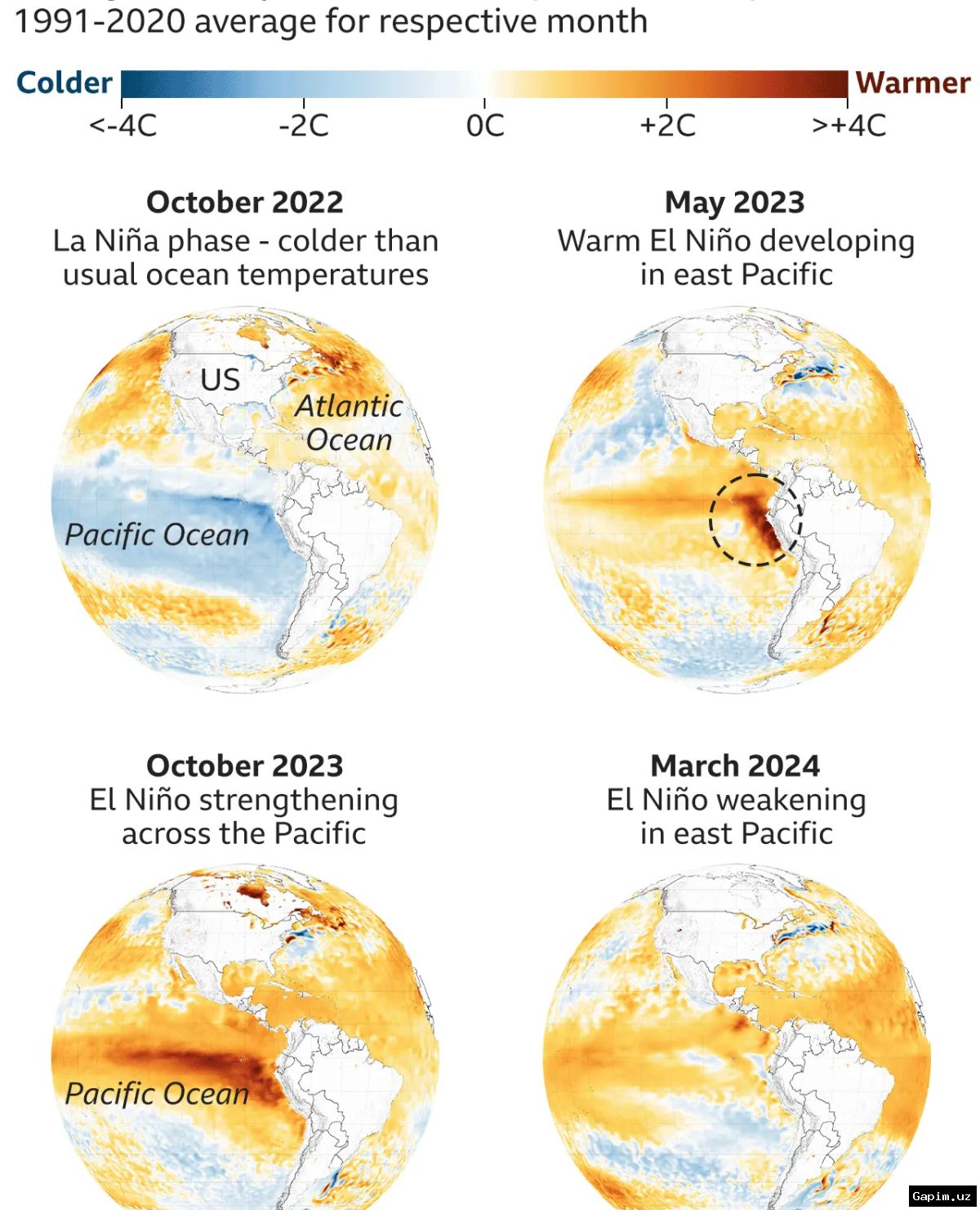
In an update issued Tuesday, the UN weather agency predicted an 80% probability of an El Niño event developing between June and August 2024. El Niño, a periodic warming of sea surface temperatures in the central and eastern Pacific Ocean, typically lasts nine to 12 months, according to the WMO.
The phenomenon can lead to increased global temperatures, heavier rainfall in some regions and droughts in others, while also spurring hurricane formation in the central and eastern Pacific. The WMO noted a probability “near or above 90%” that El Niño would persist until at least November if it begins.
“Although some uncertainty remains about El Niño peak strength and timing, most forecast models suggest it will be at least moderate — and possibly strong,” the WMO said. Its most senior official urged preparedness for the most serious scenario.
WMO Secretary-General Celeste Saulo stated: “We need to prepare for a potentially strong El Niño event — which will exacerbate drought and heavy rainfall and increase the risk of heatwaves both on land and in the ocean.” Associated risks include higher prevalence of insect-borne diseases and reduced food and water supplies.
The last El Niño period between 2023 and 2024 contributed to 2024 being the hottest year on record. UN Secretary-General António Guterres warned: “El Niño will pour fuel on the fire of a warming world,” calling for climate action including ending fossil fuel dependence and accelerating the shift to renewables.
The warning follows an early summer heatwave that brought record May temperatures to parts of Western Europe. The WMO forecasts “a nearly universal dominance of above normal temperatures in nearly all parts of the globe” for June to August.
Source: www.dw.com