️ A strategically vital stretch of the Arctic Ocean, known as the Bear Gap, has become the latest flashpoint in concerns over Russia's military ambitions in the far north, with Norway's defense minister warning that Moscow must not be allowed to seize control of the corridor.
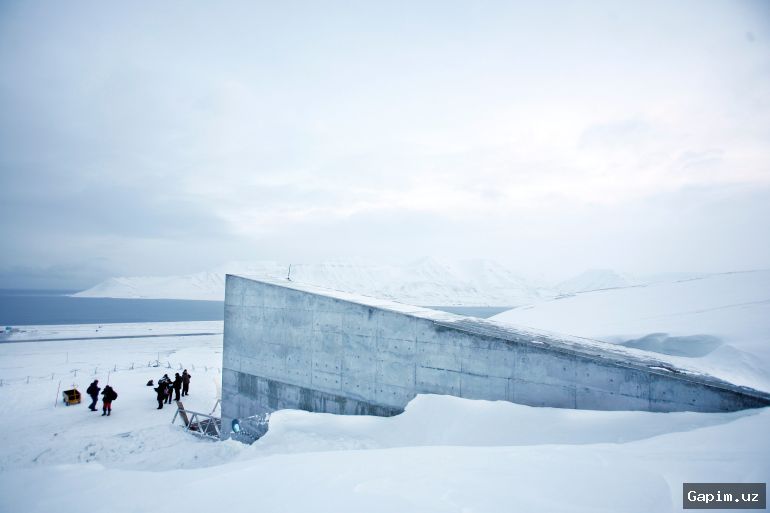
️ In an interview with the UK's Times newspaper on Monday, Norwegian Defence Minister Tore Sandvik cautioned that Russian control of the gap would grant Moscow a dangerous capacity to deploy submarines and weapons, potentially threatening NATO members. "We see what kind of weapon systems Russia is developing, and we know that if they can control the Bear Gap, they can also use hypersonic missiles against NATO ... against London, against Norway, against Denmark," he said.
️ The Bear Gap is a strategic naval chokepoint spanning roughly 400 miles (650 km) between Norway's North Cape and Bear Island, the southernmost tip of the Svalbard archipelago. Located between the Barents Sea and the Norwegian Sea, it is a key maritime route for Russian naval vessels and submarines moving from Arctic bases into the North Atlantic. The gap lies directly west of Russia's Kola Peninsula, home to the bulk of Russia's sea-based nuclear deterrent and the headquarters of its Northern Fleet.
️ Kristian Atland, a senior research fellow at the Norwegian Defence Research Establishment (FFI), explained that Russia views the maritime area as integral to its "Bastion Defence" strategy. "In order to ensure the safe operation of the Northern Fleet's ballistic missile submarines in the inner part of the bastion, that is, in the Barents Sea, Russia wants to be able to control the Bear Island gap," Atland told Al Jazeera. Currently, Russia does not exert control over the gap, which lies within an area dominated by NATO members Norway, Canada, and other allied states. However, Russia maintains significant military capabilities nearby, including a modernized Northern Fleet and Arctic bases.
️ In response to Russian activity, Norway announced in December the acquisition of two German-built submarines, citing "activity of Russian forces in the North Atlantic." In February, the UK said it would double its troops stationed in Norway to 2,000 over three years, taking on a "vital" role in a NATO Arctic operation. US President Donald Trump has openly expressed desire to acquire Greenland, viewing it as vital for US security, and in January threatened trade tariffs on European countries opposing him.
️ According to Atland, most Northern European countries would be "within striking range of Russian surface vessels and attack submarines" deployed beyond the gap, given the "long-range capabilities of their increasingly sophisticated missile systems." Gunhild Hoogensen Gjorv, professor at The Arctic University of Norway, said the Bear Gap is the "way that they [Russia] get out into the North Atlantic." If Russia controlled the area, "they could then fire missiles ... from sea-going vessels," potentially hitting the UK, Denmark, the Netherlands, and Nordic countries.
️ However, Gjorv questioned whether Russia would actually attack surrounding nations. "If they decide to do that, this is all-out war. This is not just an escalation in under-threshold threats; this is full-scale war, and it is very difficult to see that Russia is prepared to think in those terms," she added.
️ Russia possesses one of the world's largest arsenals of long-range missiles, including the Oreshnik intercontinental ballistic missile, first revealed in November 2024, which Russia claims is nuclear-capable and hypersonic. The Arctic is becoming an increasingly important arena for "great power competition," Atland said, as melting ice opens new opportunities for shipping, resource extraction, and military operations.
️ Gjorv noted that the Arctic has long been a security arena, especially during the Cold War. Under President Vladimir Putin, Russia has kept "one foot on either side" of cooperation and rivalry, combining limited cooperation with growing rhetoric about sovereignty and territorial dominance. "Essentially, it's almost like building up a type of Russian empire," she said.
️ In December 2024, Canada released a 37-page security strategy outlining plans to bolster its military posture and diplomatic footprint in the Arctic in response to Russian and Chinese activity, describing Russian weapons tests as "deeply troubling." China is also believed to be routinely sending ships into northern waters fitted with dual-use military and research technology to gather data.
Source: www.aljazeera.com