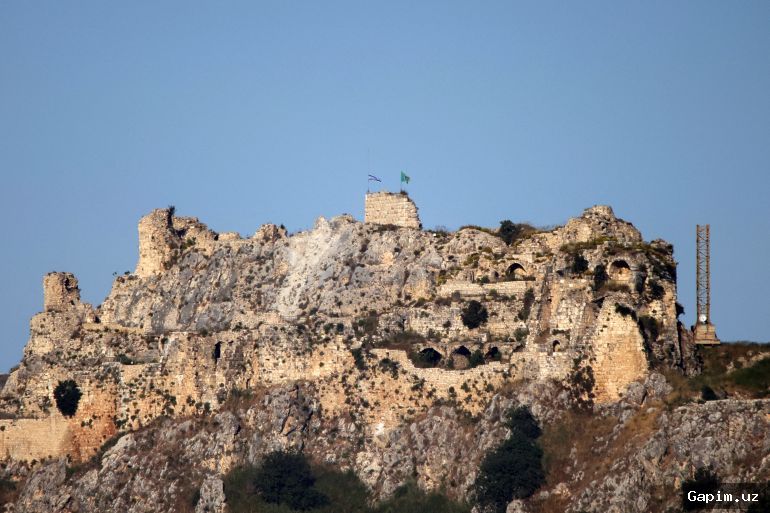
The Israeli regime's military offensive in southern Lebanon continues to expand, with its forces capturing the historic Beaufort Castle near Nabatieh on Saturday. The 900-year-old Crusader fortress fell after days of heavy fighting, marking the deepest Israeli incursion into Lebanon in 26 years, with troops crossing north of the Litani River toward the Zahrani River.
Lebanon's Culture Minister Ghassan Salame told AFP that Israeli attacks are putting UNESCO World Heritage sites, including the ancient city of Tyre, in "serious danger." Tyre, 83 km south of Beirut, contains ruins of one of the most important Phoenician cities and the largest hippodrome of the Roman Empire.
Israeli forced displacement orders and bombardments have driven an estimated 200,000 people from Tyre and its surroundings. Across Lebanon, over one million people have been uprooted by the wider conflict.
Beaufort Castle (Qalaat al-Shaqif), perched 700 meters above southern Lebanon, was built by Crusaders in the 12th century and later controlled by Ottomans and other powers. It was captured by the Israeli regime during its 1982 invasion and occupied until 2000.
UNESCO's Lazare Eloundou Assomo stated, "When heritage is destroyed anywhere, moral standards are undermined, social cohesion is eroded, and trust and resilience are jeopardised." Lebanon has 39 cultural sites under enhanced protection, with violations potentially constituting serious breaches of the 1954 Hague Convention.
Other threatened sites include the Eshmun sanctuary near Sidon, a Roman-Byzantine village in Chouf, Chehab Castle near Hasbaiyya, the Tomb of Hiram, and Paleolithic sites south of Tyre.
Source: www.aljazeera.com