Pope Leo XIV continued his weeklong tour of Spain on Thursday with a visit to the port of Arguineguin in the Canary Islands, a flashpoint of the massive migration crisis that has hit the archipelago in recent years.
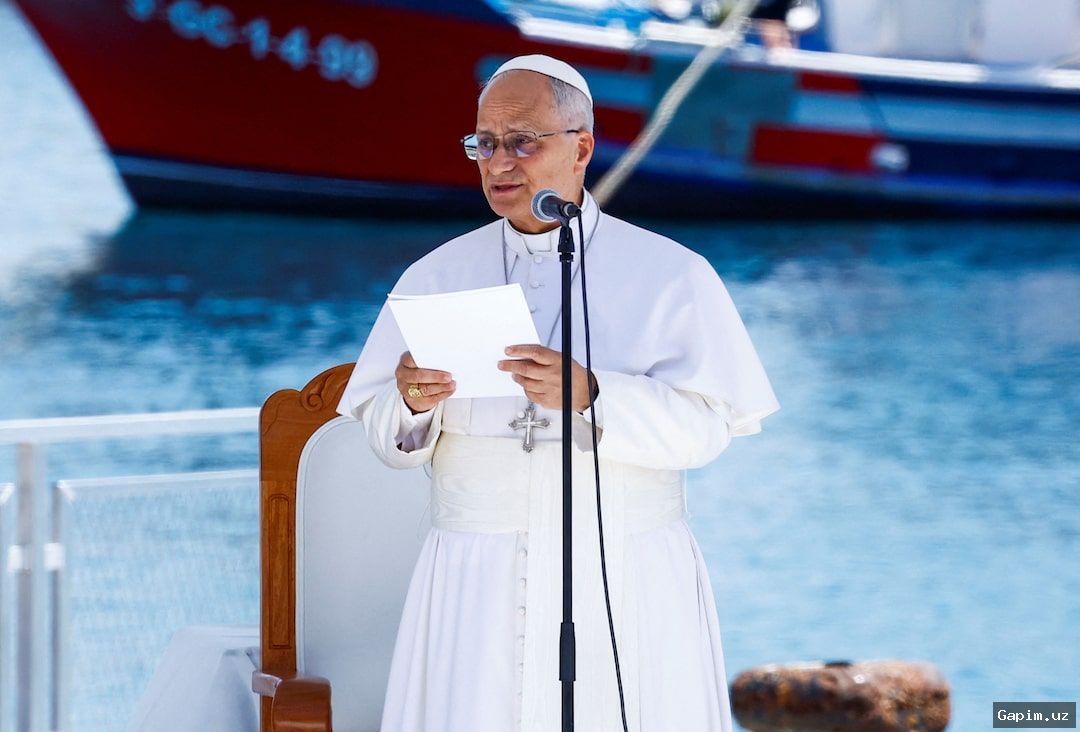
The pontiff addressed migrants at the port and lambasted the international community, particularly European leaders, over their treatment of migrants. He argued that Europe cannot claim to uphold human dignity while allowing the Mediterranean and Atlantic to become 'unmarked graves.'
Casting a wreath into the sea to remember the thousands who have died attempting to cross into Europe, the pope echoed a gesture made by his predecessor Francis during a 2013 visit to Lampedusa, another migration hotspot.
'May history not accuse us of turning the pain of those who suffer into a common sight along our shores,' he said. 'Today, here by the sea, every individual that arrives asks us what remains of our humanity.'
He urged authorities in migrants' home countries to improve security and economic conditions, and called on transit countries to protect migrants from smugglers and traffickers. But his sharpest criticism was reserved for European politicians, where a crackdown on migration has intensified amid far-right pressure.
'Human dignity has no passport and does not lose its value when crossing a border,' the pope said. Addressing the migrants directly, he added: 'Dear migrants, before saying anything else to you, I want to bow before your dignity. You are not just numbers or files. You are people who have left behind families and homes. You have dreams that no one has the right to despise.'
Located over 1,000 kilometers from mainland Spain, the Canary Islands are closer to Africa than Europe and have become a key arrival point for migrants. The port of Arguineguin was dubbed the 'dock of shame' in 2020 after thousands slept in the open or under makeshift shelters.
In 2024, a record 46,000 people arrived in the archipelago, but deals between the EU, Spain, and several West African governments led to a dramatic fall. In the first five months of 2026, just over 3,000 arrivals were recorded.
The International Organization for Migration's Missing Migrants Project records some 6,600 deaths on the Atlantic route since 2014, though the real figure is believed much higher. Spanish migrant rights group Walking Borders estimates over 25,000 deaths or missing cases since 2020.
On Thursday, a sign was put up renaming the port of Arguineguin as the 'dock of hope.'
Source: www.dw.com