In Sudan’s El-Geneina, the lecture halls of the University’s Faculty of Medicine have been converted into shelters for people displaced from other parts of the country. Among them is Zainab, who did not wish to give her full name, holding two of her three surviving children.
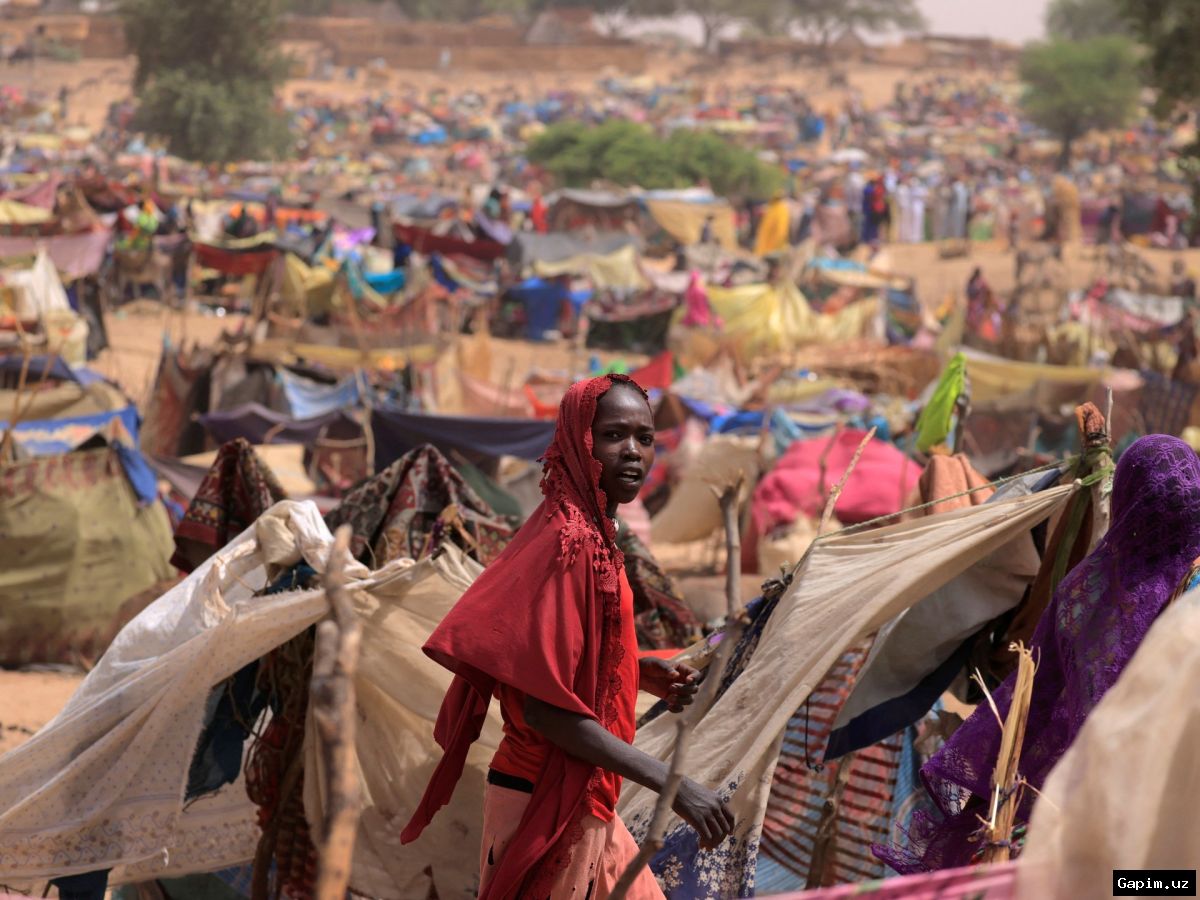
Zainab claims that on June 26, 2024, the Sudanese Armed Forces (SAF) attacked her home in Omdurman, killing three of her children. “We were targeted even though there were no Rapid Support Forces (RSF) or checkpoints nearby,” she said. Her husband, a police officer, disappeared during the chaos of battle.
She now lives in a small hut she built herself, with a cooking area and sleeping mats for her daughters. “We are relying on God. I have three daughters with me; they need food, clothes, and water, and none of this is available,” Zainab said. Two of her daughters still carry shrapnel under their skin, requiring surgery costing $2,000.
El-Geneina, the capital of West Darfur, is currently under RSF control. The RSF seized the city in late 2023 after what the UN described as “some of the worst violence of the war,” allegedly ethnically motivated and possibly amounting to crimes against humanity. Over 50,000 people have been killed in the war.
Teacher Nagwa, from the al-Nasr neighborhood, chose to stay despite losing her possessions. “Before the war, life was normal. Markets were open, things were cheap. After the war, we lost our homes, belongings, and jobs,” she said. Over 120,000 displaced people are in El-Geneina, and aid organizations cover only 50% of needs.
Mohamed, an official with an international humanitarian organization, said the response in West Darfur faces major challenges: an unclear population count due to influx, cuts in international funding, and insufficient communication of needs to donors. Despite relative calm and the reopening of markets and hospitals, residents and displaced persons in El-Geneina continue to struggle.
Source: www.aljazeera.com