Israeli Foreign Minister Gideon Saar announced this week that he would suspend contact with the European Union's foreign policy chief, Kaja Kallas, following reports that she compared Israel's treatment of Palestinians to South Africa's former apartheid system.
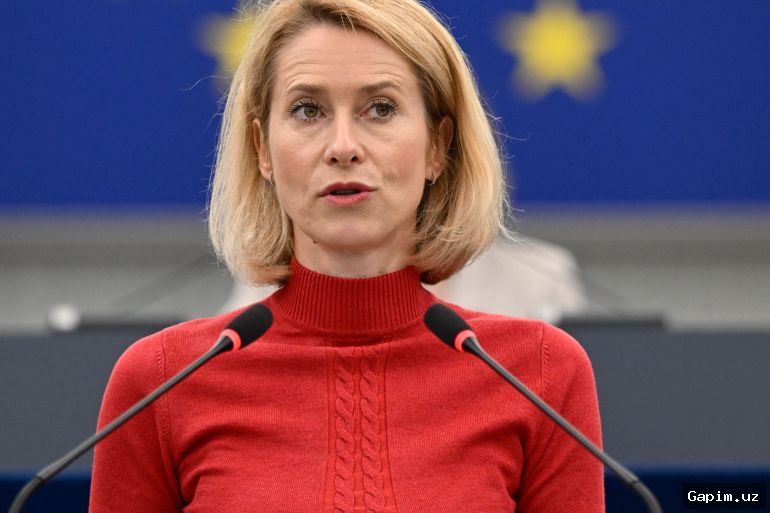
The diplomatic row stems from reports by European news outlet Euractiv that Kallas made the remarks during high-level talks with Mexican officials in May. Citing unnamed officials, the outlet reported that the EU diplomat privately likened Israel's policies in Gaza and the occupied West Bank to the racial segregation regime that ruled South Africa until the mid-1990s.
In a post on X, Saar said he had 'no choice but to sever all contact' with Kallas until she retracted what he described as a 'blood libel' against Israel. Kallas responded by stressing the EU's commitment to dialogue and a two-state solution but did not deny the report. Saar concluded that silence 'speaks for itself'.
The row comes as Israel faces ongoing legal proceedings in international courts over accusations of genocide and war crimes in Gaza. Analysts say the diplomatic fallout from Kallas's remarks will remain symbolic due to deep internal divisions among EU member states.
Nele Anders, a Berlin-based analyst at the European Council on Foreign Relations, said the episode reflects a deeper structural problem: Kallas and the European External Action Service have increasingly been sidelined, caught between member states and the European Commission.
Irish Prime Minister Micheal Martin criticized the EU's failure to take strong action against Israel, stating that 'the credibility of Europe is undermined'. He called Saar's decision to sever ties with Kallas 'unacceptable'.
The EU has been unable to reach unanimous agreement on sanctions against Israel. A proposal to suspend the EU-Israel Association Agreement has stalled due to resistance from Germany, Italy, Hungary, and the Czech Republic.
German Chancellor Friedrich Merz distanced himself from Kallas's remarks, saying 'I explicitly do not share this choice of words'. Armin Laschet, chair of the German Bundestag's Foreign Affairs Committee, described the remarks as 'anti-Semitic outbursts'.
Felix Berenskotter, lecturer at King's College London, suggested the spat could be seen as a 'deliberate strategic intervention of Israel in EU internal debates'. He noted that Kallas is locked in a power struggle with Commission President Ursula von der Leyen over EU foreign policy leadership.
Source: www.aljazeera.com