The German government has decided to purchase a 40% stake in European tankmaker KNDS from the families that own it, aiming to bring its share to the same level as that held by the French government. The deal sets the stage for a long-awaited initial public offering (IPO) for KNDS on the stock exchange, with Berlin keen to have an equal share to France before the listing.
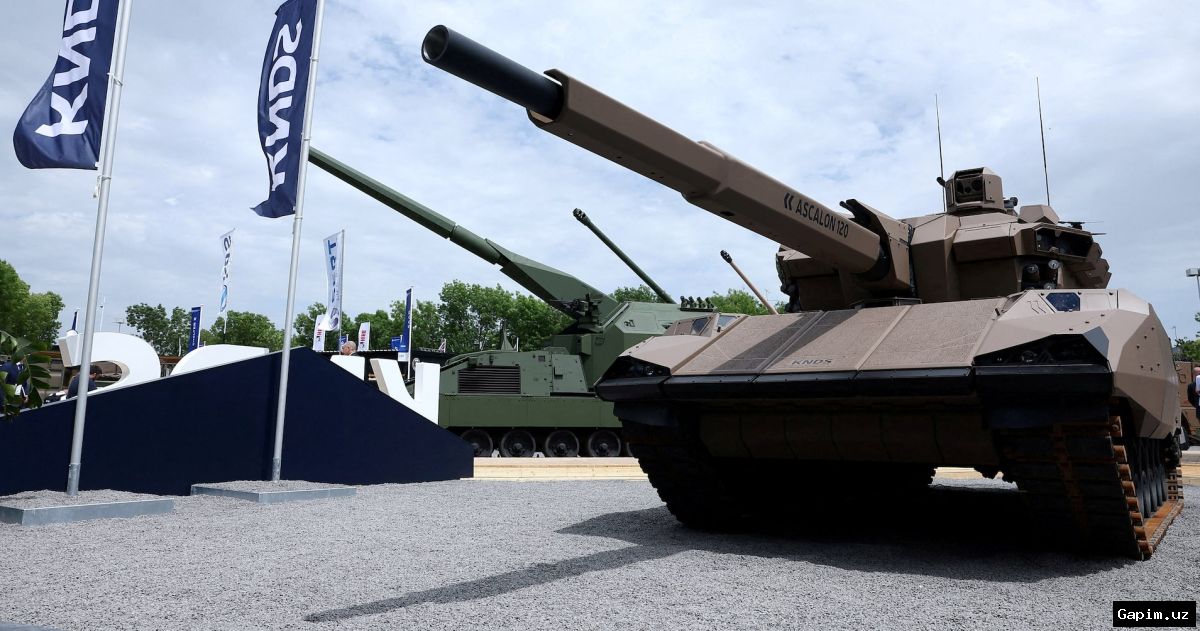
The stake is expected to be worth around €6 billion, depending on the company's valuation. The plan still requires approval from the German Bundestag's budget committee. France currently owns 50% of KNDS. In a joint statement, the two countries said they had agreed on "the strategy and governance" of the company and aim to maintain equal shareholding levels in the future. According to multiple media reports, France will soon reduce its share to 40%, so that both governments hold the same stake. The remaining 20% is expected to be sold in the IPO on both the Frankfurt and Paris exchanges.
Berlin took action after Wegmann & Co, a holding company for the families that own part of KNDS, decided to sell. KNDS is Europe's biggest tankmaker, producing the German "Leopard 2" and the French "Leclerc" battle tanks, while also working on a next-generation Main Ground Combat System. It was formed in 2015 through the merger of German family-owned firm Krauss-Maffei Wegmann and French government-owned weapons maker Nexter.
Stefan Kornelius, spokesperson for the German government, said the deal "aims to safeguard federal interests" and that "Germany's participation in KNDS will secure long-term influence over a company that is strategically important for European security and defense capabilities." In their joint statement, the governments said: "The shared ambition of France and Germany is clear: to develop KNDS into a leading European and global defense company serving the French and German armed forces."
The deal continues a recent trend of the German government taking direct ownership stakes in major defense companies. Marco Becht, professor of corporate governance at Université libre de Bruxelles (ULB), noted that Germany had been somewhat exceptional compared to other European countries in that it previously had few direct stakes in companies. However, he believes this deal points to a desire from Berlin to both benefit from potential future earnings and have more strategic control in the increasingly important defense sector.
Declan Power, a defense and security analyst with the Institute for International and European Affairs (IIEA), said the deal is important primarily because it shows a strong willingness on the part of France and Germany to upgrade their own defense capacity. "Europe does a lot of talking about it, but this deal is a tangible step towards Europe taking control of its own defense manufacturing capabilities," he told DW.
In its statement, the German government highlighted the importance of defense in Europe since Russia's full-scale invasion of Ukraine in 2022. "This geopolitical situation necessitates an expansion of defense industry capacities." Becht says this also means a push for more control. While the government already exercises considerable influence over the sector through the War Weapons Control Act, which covers the licensing of weapons production and sale, that does not necessarily extend to direct corporate influence.
This KNDS deal is one of several that suggests that may be changing. When submarine builder Thyssenkrupp Marine Systems (TKMS) went public in October 2025, the German government secured special advisory rights and supervisory board nomination rights as part of the IPO. Back in 2021, the state-owned KfW bank bought a 25.1% stake in military radar company Hensoldt. It also owns around 11% of shares in aerospace and defense giant Airbus.
The KNDS deal is significant not just for Germany's individual defense ambitions, but also for the bilateral Franco-German defense relationship. The agreement comes in the wake of the collapse of the FCAS fighter jet project, a long-planned Franco-German defense collaboration which ultimately fell apart due to disagreements between Airbus' German wing and France's Dassault over control of the project. Talks for the KNDS deal had also dragged on for several months, hinting at difficult negotiations.
Germany highlighted the importance of working closely with France in its statement, saying the deal "aims to strengthen bilateral and European defense cooperation in particular, with collaboration with France playing a key role." Declan Power says that when it comes to defense, his view is that France has a tendency to try and control the relationship with Germany. However, he thinks the Franco-German defense relationship will thrive if it is more rooted in meaningful industrial collaboration.
But ULB professor Marco Becht argues that from Germany's perspective, the deal is as much about collaboration as it is about demonstrating its own growing defense clout and strength to France. "It shows a new German willingness to be more assertive and to do fewer favors," he said. "Germany is increasingly prepared to say 'no', rather than agreeing to something simply to accommodate France."
Source: www.dw.com