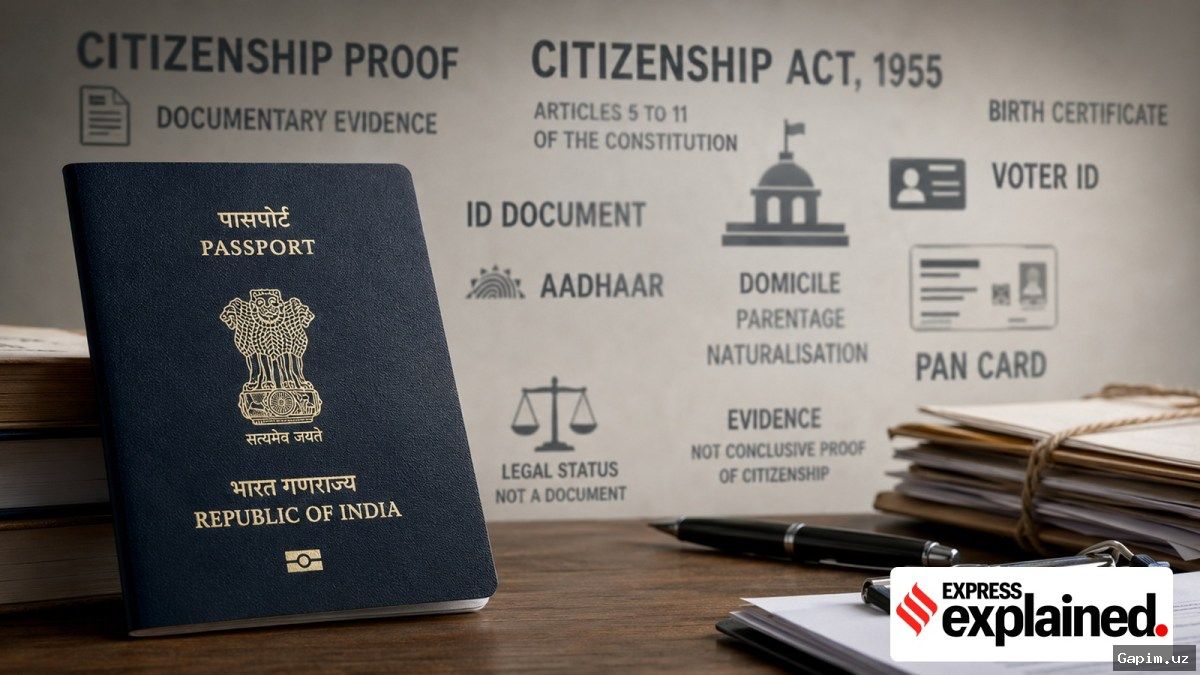
A statement by a senior Indian foreign ministry official that a passport is primarily a travel document and not conclusive proof of citizenship has reignited debate over how citizenship is determined in the country. The clarification comes amid ongoing electoral roll revisions that critics say disproportionately affect marginalized communities.
The Election Commission of India is conducting Special Intensive Revisions (SIR) of voter lists in several states, including Bihar and West Bengal. While the commission claims it aims to remove ineligible voters, opposition parties and activists argue the process is skewed against Muslims and other minorities, fueling fears of wrongful exclusion.
Legal experts point out that India lacks a single document that conclusively establishes citizenship. The Aadhaar biometric card, voter ID, and passport serve different purposes but none is legally recognized as definitive proof. Senior lawyer Rebecca Mammen John noted that while passports are issued only to citizens, the government does not provide a separate citizenship certificate for those who acquire citizenship by birth or descent.
Faizan Mustafa, vice-chancellor of Chanakya National Law University, argues that the burden of proof should shift to the state. He suggests that documents like Aadhaar, which capture biometric data, should be treated as conclusive evidence of citizenship. He warned that low-level officials should not have the power to determine citizenship status arbitrarily.
The passport controversy also evokes memories of the National Register of Citizens (NRC) and the Citizenship Amendment Act (CAA), which have been highly contentious. The NRC in Assam excluded nearly two million people from citizenship. The Supreme Court has clarified that while the Election Commission can revise rolls, it cannot determine citizenship, and deletion from voter lists does not extinguish citizenship.
Source: www.dw.com