Saying Alabama, Chicago, Michigan, Wyoming, Yosemite out loud means you are already speaking variations of the languages of this land's first peoples, often without knowing what the words mean or who first spoke them.
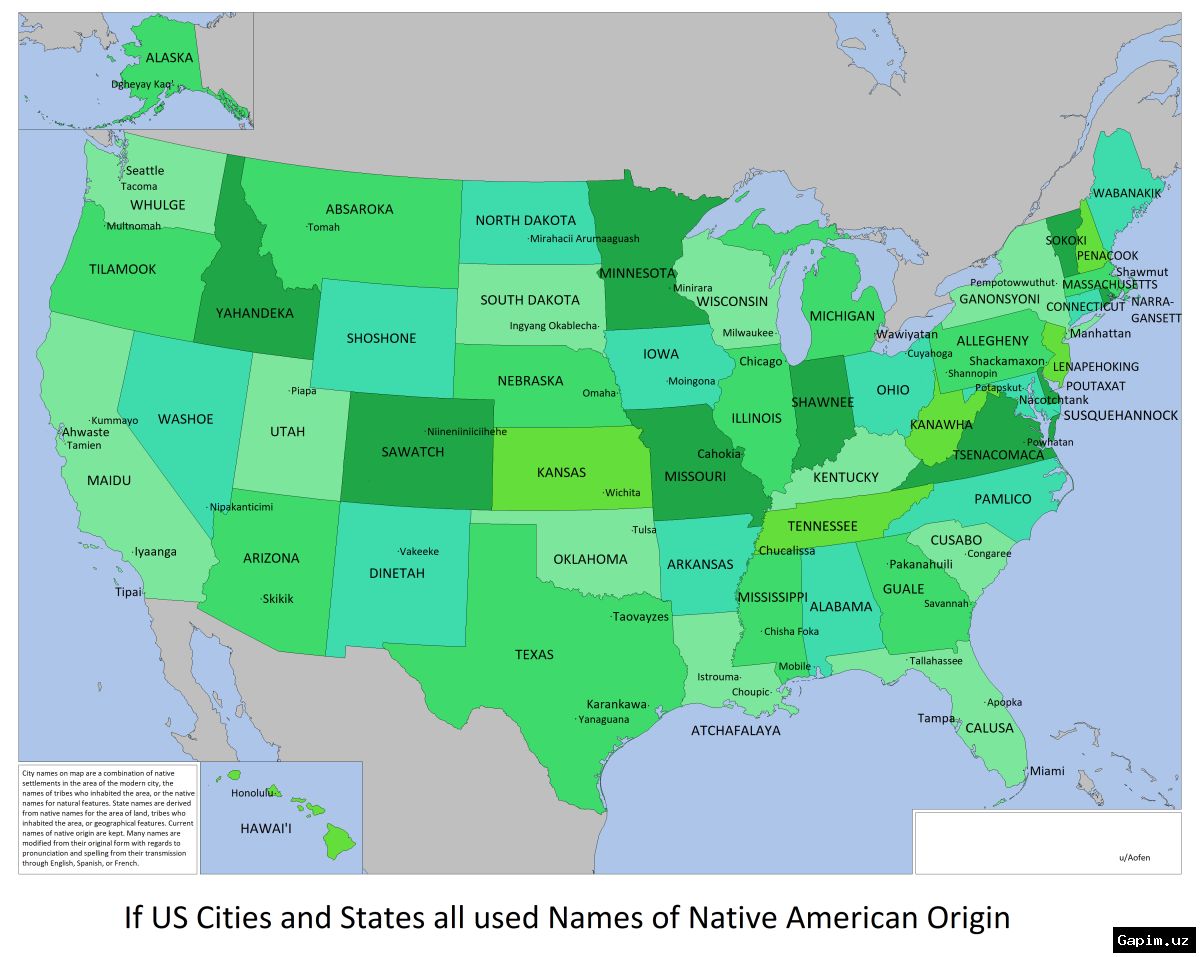
Alabama, also spelled Alibamu, comes from the Alibamu people. It is thought to derive from Choctaw for "plant-cutters," a nod to farming the land, while Yosemite, famous today for the national park, is pronounced Yohhe'meti in Miwok.
As the United States marks 250 years since the July 4 Declaration of Independence, thousands of US cities, states, rivers and lakes still carry Indigenous names. Al Jazeera traces 50 of those surviving names, exploring their original languages, meanings and pronunciations.
In the 2020 United States census, some 3.7 million people - about 1 percent of the population - identified as American Indian or Alaska Native alone. Including those who also reported another race, the figure reaches 9.7 million, or nearly 3 percent.
Dr Crystal Cavalier-Keck, a member of the Occaneechi Band tribe of the Saponi Nation in North Carolina, traces her ancestry to one of the first Indigenous communities to encounter English colonisers. She says the landscape around her still speaks Indigenous languages. The Haw River is named after the Sissipahaw people, and Hyco Creek means "turkey" in her tribe's language.
The Indian Removal Act of 1830 forced tens of thousands of Native people from their homelands to territory west of the Mississippi, in present-day Oklahoma. Her tribe currently has about 2,000 enrolled members, and many more have left the area due to racial hostility.
Through forced assimilation, the breaking up of communities, forced conversions and the imposition of English, the impact on Indigenous languages has spanned generations. "It's only in the last 10 years that I've truly understood what losing our language means," she says.
Rene Locklear White, a member of the Lumbee Tribe which won full federal recognition in December 2025 after a struggle of more than a century, says Indigenous words belong to complex language families, and many Native American languages can express a whole sentence in a single word.
According to UNESCO, dozens of Indigenous languages in the United States now have only a handful of elderly speakers left. Across the country, a quieter effort is under way to bring these languages back, through immersion schools, digital dictionaries, recordings and cultural programmes.
Source: www.aljazeera.com