As Europe experiences another summer of extreme heat and wildfire warnings, the eucalyptus tree, imported from Australia, is facing renewed global scrutiny.
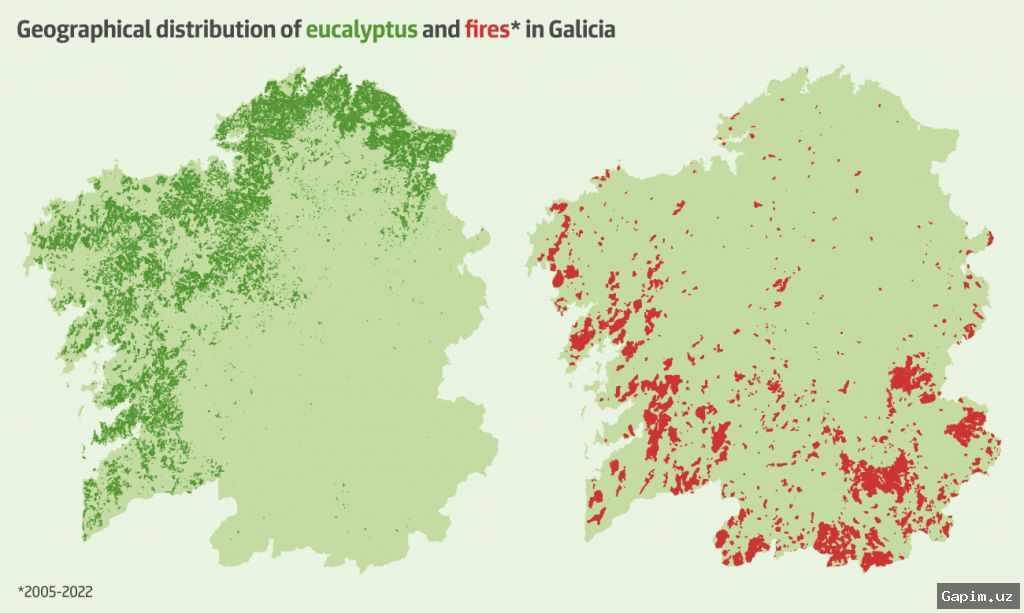
Over 400,000 hikers annually traverse the Camino de Santiago in Galicia, but much of the surrounding forest is no longer native. Indigenous oak and chestnut have been replaced by vast eucalyptus monocultures.
This transformation is not unique to Galicia. Prized by the pulp and timber industries for rapid growth and profitability, eucalyptus plantations now cover 22 million hectares across more than 90 countries, including Brazil, Chile, California, India, and South Africa.
However, scientists consider eucalyptus highly flammable. The trees' leaves contain volatile oils, and bark strips can ignite into embers that travel long distances, intensifying wildfires. Tim Curran of Lincoln University in New Zealand noted that embers from Australia's 2009 Black Saturday fires were blown over 30 kilometers.
In Galicia, plantations have expanded uncontrollably since the 1990s, now covering about half a million hectares. A 1992 forestry plan projected 250,000 hectares by 2030, but the area doubled due to illegal planting and land abandonment. The regional government imposed a moratorium on new plantations, but enforcement remains uneven.
The economic benefits are significant: Galician plantations generated €167 million in 2024. Yet critics argue that unmanaged eucalyptus landscapes pose a growing fire danger. Local activist Joam Evans Pim leads the De-Eucalyptus Brigades, which remove eucalyptus and restore native trees to create fire-resistant green breaks.
Researchers call for stricter management of eucalyptus plantations, balancing economic gains against wildfire risks. Joaquim Sande Silva of the Polytechnic University of Coimbra emphasized that plantations should be carefully regulated to avoid replacing sensitive ecosystems.
Source: www.dw.com