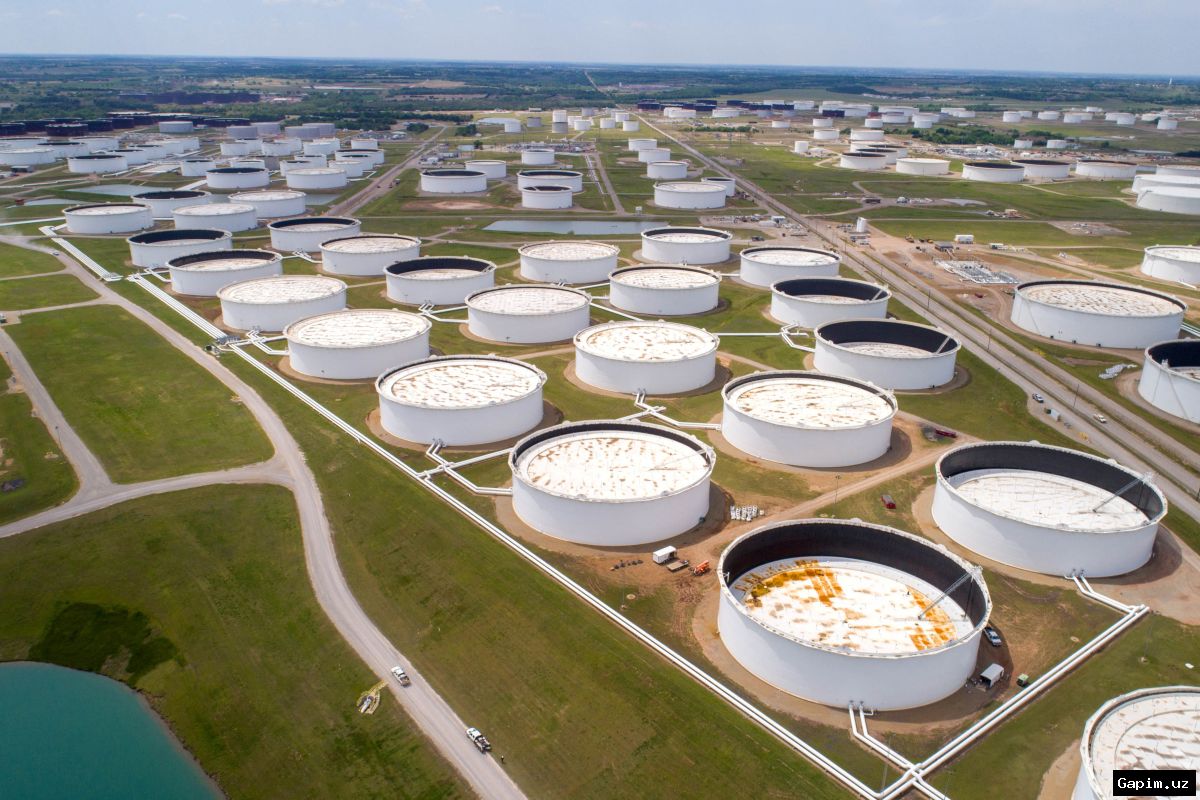
Last month, the United States Strategic Petroleum Reserve (SPR) fell to its lowest level since 1983 as renewed tensions between the United States and Iran raised concerns about the stability of global oil supplies and prices.
US President Donald Trump acknowledged to reporters that anytime the US strikes Iran, oil prices jump. On July 9, Brent futures settled at $78.02 a barrel, up 5.2 percent from the day before, the highest since June 19.
According to the Department of Energy, the SPR fell by 6.2 million barrels in the week ending July 3 to 319.5 million barrels, marking its lowest level since the Reagan administration. The reserve has a storage capacity of 713.5 million barrels, last approached in the 2010s.
Despite the US being the world's top oil producer and a net exporter, tensions with Iran still affect domestic gasoline prices. Crude oil is priced based on global benchmarks reflecting worldwide supply and demand.
Maksim Sonin, an energy executive at Stanford University, told Al Jazeera: “Independence doesn’t mean price security because oil is a globally traded commodity.” If Hormuz shipments are disrupted, buyers compete for replacement supplies, driving up global prices.
The SPR was established in 1975 after the Arab oil embargo. It stores crude in salt caverns along the Gulf Coast and is meant for emergencies like war and natural disasters. It was tapped after Hurricane Katrina and during the Ukraine conflict.
Abhi Rajendran, a non-resident fellow at Rice University, said: “It’s for shocks like this; it’s for conflict, major overseas disruptions.” However, the depleted reserve limits the government’s flexibility in prolonged crises.
Experts warn that half of the 319.5 million barrels may be unusable due to age and storage conditions, further reducing the effectiveness of the reserve in stabilizing markets during future disruptions.
Source: www.aljazeera.com