At least 72 people have died after around 60,000 migrants surged across the border from Morocco into Spain's North African enclave of Ceuta over the past few days, sparking a major migration crisis for Spain and the European Union.
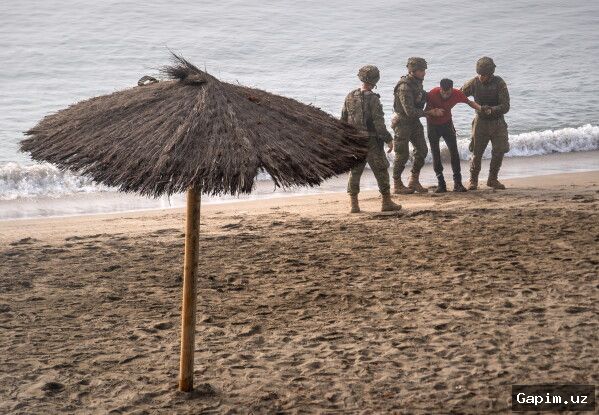
Five more bodies were found along Ceuta's coastline on Sunday, as Spanish authorities said more than 1,000 people had been treated by health services since the surge began on Thursday. Many of the deceased drowned, while others were crushed while trying to climb a breakwater and border fence.
While more than 48,000 of those who crossed had returned to Morocco within 48 hours, the crisis has prompted 22 EU member states to call for coordinated border action. Italy suspended passport-free Schengen travel with Spain, and Spanish authorities installed a floating barrier off Ceuta's coast.
The situation in the city had improved markedly by Sunday, but more had to be done to re-establish normality, the Spanish government representative in Ceuta, Miguel Angel Perez, told reporters. The Spanish Civil Guard has begun identifying the 72 bodies, with fingerprint and DNA collection expected to be completed by the end of next week, according to official Carlos Atuchi.
Karima Abenaz, a French national with family in Morocco, expressed grief in Ceuta: "It pains me deeply that young people are dying at sea. It's not right that, in the year 2026, women with children as young as two months old should be crossing the sea only to die. In Morocco, there's food, there's everything we need. If we don't have a decent job, we should go on strike and demand our rights from the government."
Ceuta's leader, Juan Jesus Vivas, told El Pais that the city's morgue had received 88 corpses, including some from earlier attempts. He said Moroccan authorities were also recovering bodies from the sea, but no official information was available. Spain's Foreign Minister Jose Manuel Albares wrote on X: "Virtually all those who entered Ceuta have now returned to Morocco."
Ceuta and Melilla represent the EU's only land border with Africa. Migrants often swim about 5 km from the Moroccan town of Fnideq to reach Spanish territory. Authorities have reinforced police and army patrols and installed a 500-meter floating barrier. Spain has adopted a more open stance on migrants than most EU countries, but rejects suggestions that its residency program encouraged the rush.
Source: www.aljazeera.com