At a campaign rally in Dearborn, Michigan, supporters of Democratic Senate hopeful Abdul El-Sayed chanted "Down with AIPAC." The American Israel Public Affairs Committee has become the central topic of the Democratic primary in Michigan, which analysts say could shape the party's approach to Israel for years to come.
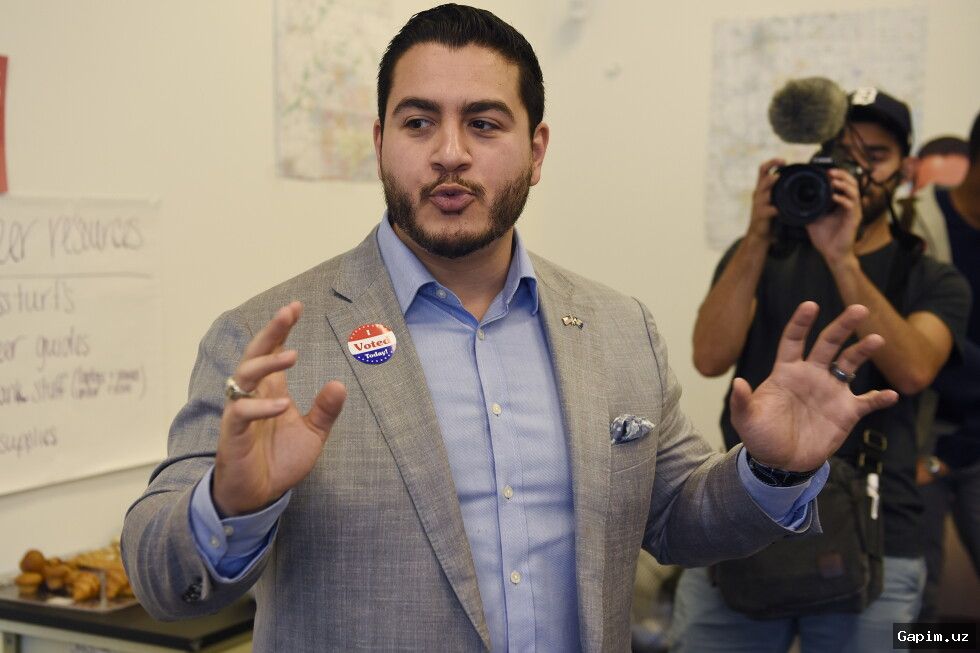
Michigan state legislator Alabas Farhat vowed at the rally that voters would make the pro-Israel group "burn" millions of dollars by electing El-Sayed to the US Senate. "The status quo has told us for a long time that we don't have money for modern schools; we don't have money for clean water to drink, for health care, for affordable housing," Farhat said. "But when we call up money to go and bomb children in Gaza, to do an ethnic cleansing campaign in South Lebanon – this administration seems to find that money."
Several speakers, including Congresswomen Rashida Tlaib and Ilhan Omar, took the stage, but the name of El-Sayed's opponent in Tuesday's election, Congresswoman Haley Stevens, was hardly mentioned. Instead, AIPAC – which is breaking records in campaign spending to defeat candidates critical of Israeli policies, such as El-Sayed – was repeatedly brought up, booed, and denounced.
El-Sayed, a progressive epidemiologist and former public health official, is running against Stevens, a four-term Congress member, to replace retiring Democratic Senator Gary Peters. The winner will face former Congressman Mike Rogers, the likely Republican nominee, in November. Federal Election Commission (FEC) records show that AIPAC and other political action committees (PACs) have spent more than $54 million to help Stevens.
A dark-money group called the Center for Democratic Priorities has also spent about $6.5 million on ads supporting Stevens, according to local media reports – increasing the grand total to more than $60 million. AIPAC's election arm, United Democracy Project (UDP), has spent north of $30 million on the race – $30,638,639.63 to be exact – as of Saturday evening. This amount represents a record for AIPAC, which has been using its enormous spending power to derail candidates who oppose unconditional aid to Israel.
Of the $100 million UDP has raised this election cycle, $30 million came from AIPAC, which operates as a social welfare nonprofit, making it difficult to track its donors. This tactic of funneling funds from nonprofits to election PACs to influence US elections is known as "dark money." The largest non-AIPAC spender in the race is a newly formed group called A Stronger Michigan with more than $17 million, mostly bankrolled by a nonprofit called Center Forward.
El-Sayed has outraised Stevens with direct campaign donations of $14.5 million, compared to her $11.9 million. However, Stevens has received over $60 million in independent expenditure support, while El-Sayed has received only about $3.5 million. The largest spender in El-Sayed's camp has been Fighting for Michigan, a group funded by progressive advocates and pro-Palestine donors.
Stevens has dismissed the millions spent by AIPAC on her behalf and repeatedly avoided addressing questions about the group, which she has thanked in the past. "I don't think there's much difference between super PACs going in for Abdul or super PACs going in for me. We have a problem with campaign finance reform in this country," she said during a recent debate. El-Sayed's supporters were quick to point out that the difference is more than $56 million.
El-Sayed argues that while he would represent the people of Michigan, Stevens is beholden to her donors, namely AIPAC. "Donald Trump is not himself the disease; he's just the first symptom of the disease of our politics," El-Sayed said on Friday. "The disease is this system that allows billionaires and corporations and special interests like AIPAC to buy and sell politicians to rig the system against us."
AIPAC – which has been an uncompromising advocate for the genocidal war on Gaza and the bombing campaign in Iran – rejects the notion that it is a lobby group that serves a foreign government. Instead, the organization presents itself as a coalition of engaged Americans who view a close US-Israel alliance as beneficial for both countries.
Palestinian rights supporters say if El-Sayed – who is leading in the polls – manages to pull off a victory against Stevens and AIPAC, it would be a major blow for pro-Israel advocacy in the US. "Progress is happening. People are waking up. The truth is coming," Vivian Moghni, an El-Sayed supporter in Dearborn, told Al Jazeera.
The Michigan Senate race could also decide which party controls the chamber after the general election in November. El-Sayed's rise in Michigan – a diverse state of more than 10 million people who voted for Trump in 2016 and 2024 – could prove to be a political earthquake for the Israel question within the Democratic Party.
Source: www.aljazeera.com