As happens every year, crashes have punctuated the opening week of the Tour de France, with several incidents highlighting how difficult it remains to manage concussion in a sport where the clock is always ticking.
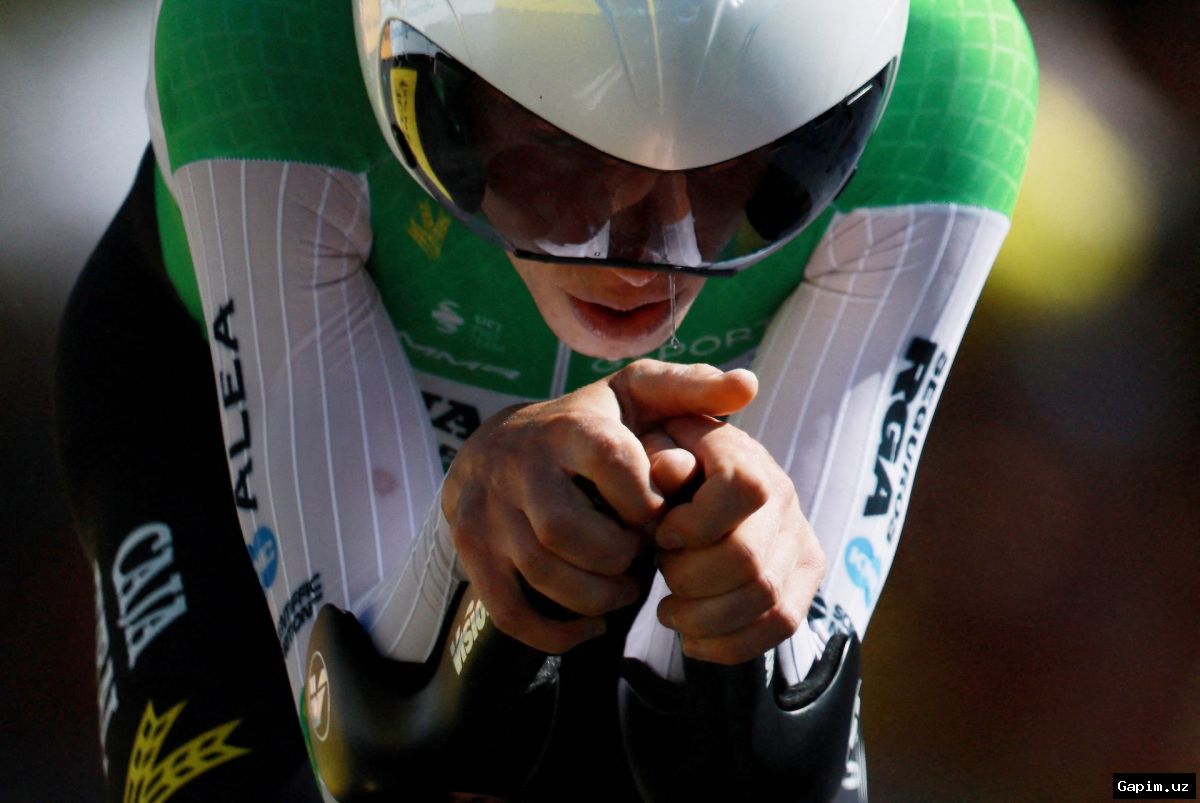
Of the eight riders who have abandoned the race since it began in Barcelona, Spain, on July 4, three withdrew because of concussion: Frenchman Clement Berthet of Groupama-FDJ United, Dutch rider Alex Molenaar of Caja Rural-Seguros RGA and Norway’s Torstein Traeen of Uno-X Mobility, who briefly wore the yellow jersey.
All three had one thing in common: they crashed, completed the stage and then withdrew later that evening once the diagnosis had been made.
Berthet went down heavily during the opening team time trial, Molenaar crashed 5km from the finish of stage five, while Traeen hit the ground the following day on the descent of the Col du Tourmalet while wearing the race leader’s yellow jersey.
“It is never very satisfactory for us to see riders diagnosed with concussion after they have resumed racing,” Xavier Bigard, medical director of the International Cycling Union (UCI), told Reuters.
The UCI introduced a concussion protocol at the start of the 2021 season. A year earlier, French rider Romain Bardet had covered almost 90km despite suffering concussion in a crash at more than 60km/h.
“We have come a long way,” said Bigard, who began working on a protocol after joining the UCI in 2018.
Under the current procedure, a rider who crashes must be assessed by the first person to reach them, often a mechanic. If that person detects at least two observable signs of concussion, the rider must be taken out of the race. If not, the rider may continue before undergoing a further assessment from the medical car or a team vehicle.
“The roadside protocol is much shorter,” said Mathieu Le Strat, medical director of Groupama-FDJ United. “It is carried out in the heat of the moment, so it is much harder to make an assessment.”
Florence Pommerie, the Tour de France’s chief doctor since 2010, also stressed how difficult concussion can be to diagnose. “You cannot see it,” she said. “There is no single defining sign, only a combination of indicators.”
All those interviewed agreed that cycling had taken the issue far more seriously in recent years. “There is now a full awareness of it,” said Pascal Chanteur, vice president of the CPA international riders’ union.
The central problem, however, remains the understandable urgency to get back on the bike in a sport where every second matters, particularly for a rider fighting for the overall classification in a three-week race. “We are in a situation that is far from perfect, and we are trying to make it the least imperfect as possible,” Bigard said.
Source: www.aljazeera.com