The energy crisis in Crimea has deepened dramatically over the past week, as Ukraine demonstrated its ability to exercise fire control over the peninsula to cut off its fuel and electricity supplies. Russian occupation authorities admitted there is no schedule for a return to normality, despite Moscow's assistance.
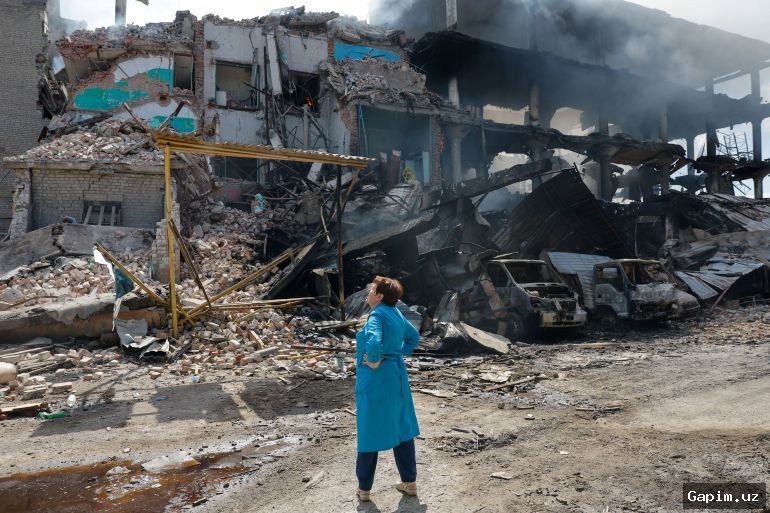
Ukraine's operation, dubbed "Molochka," began on July 6. Ukrainian unmanned forces commander Robert "Madyar" Brovdi said on his Telegram channel that it "paralyzes the feeder fleet of Russian courier tankers." These flat-bottomed tankers and barges ferry oil from the shallow waters of the Volga-Don Canal and Sea of Azov to larger tankers waiting in the Black Sea on the other side of the Kerch Strait.
During the first 10 days of the operation until July 16, Brovdi said Ukraine had struck 147 tankers of the Russian shadow fleet, with 117 being feeder tankers in the Sea of Azov. By Monday, July 13, Brovdi declared that "movement through the strait has been stopped" and unloading of oil to Crimea "has been reduced to a minimum."
Crimean occupation governor Sergey Aksyonov admitted the state of emergency in a public post, saying, "We cannot guarantee daily sales of gasoline at gas stations, nor can we provide precise schedules for fuel distribution." He said fuel shortages "will likely continue for some time," despite Russian President Vladimir Putin's approval of subsidies.
On the night of July 13, Ukraine's Security Service (SBU) struck several ferries used to transport military materiel across the Kerch Strait, as well as oil storage and trans-shipment points. The SBU said the simultaneous striking of dozens of targets in various remote locations in a single night indicates it is increasing the scale of its long-range special operations.
Ukraine also targeted Crimea's electricity supply, striking the Saky thermal power plant on July 9, five electricity substations on July 10, and nine more substations and the Kuban-Crimea electricity transfer point in Russia on July 13. "There will be no precise schedules for electricity delivery," said Aksyonov. "A deep and total blackout is inevitable," said Brovdi.
Crimean occupation authorities have been switching off street lighting to conserve energy and distributing generators to communities that had been without power the longest. Aksyonov also said he was distributing 4,000 free canisters of pressurised gas to households over a week and announced emergency measures to help businesses.
Ukrainian commander-in-chief Oleksandr Syrskii said there had been 7,028 successful mid-range strikes in 2026, with 2,000 in May and 3,800 in June. On July 7, Russia claimed Ukraine tried to blow up the main compressor station on its TurkStream gas pipeline. Gazprom said it thwarted three similar attacks in March and April.
Russian Foreign Minister Sergey Lavrov told reporters, "What the Ukrainian regime is doing isn't even piracy any more. This is pure terrorism." Yet Ukraine says its campaign has very specific goals. Long-range drones struck the Ilskiy refinery in Krasnodar Krai on July 10, the Syrzan refinery in Samara on July 12, and the Neftekhim Salavat refinery in Bashkortostan on July 14.
Russian Deputy Prime Minister Alexander Novak admitted on July 10 that the campaign was working, saying oil refineries are "partially out of service due to incursions." According to Reuters, Russian petrol production now reaches only two-thirds of seasonal needs. Rosstat reported monthly petrol inflation jumped by 6.9 percent in June.
Syrskii said Russia's rate of advance in the first half of this year had "more than halved" compared with last year, and Ukrainian forces are now conducting two-thirds as many offensive actions as the Russians, partly due to their growing advantage in short-range drones. He warned that "a turning point in the war is still far off."
Ukrainian President Volodymyr Zelenskyy on July 13 inaugurated a ballistic missile programme with France, Denmark, Germany, Italy, the Netherlands, Norway, Spain, Sweden and the United Kingdom. He also secured licenses to build Patriot interceptors and Aster and SCALP missiles, turning Ukraine into a missile powerhouse in Europe.
Only one development stood out against Ukraine's record of successes: the dismissal of its highly popular defence minister, Mykhailo Fedorov, after six months on the job. Fedorov had been very effective at turning money into force on the battlefield. Summarising his work on offensive drones, he said, "We purchased more drones in four months than in the entire previous year."
Source: www.aljazeera.com