The United States and Iran are locked in an increasingly escalatory cycle of strikes that they each claim is aimed at preventing the other from securing military dominance over the Strait of Hormuz.
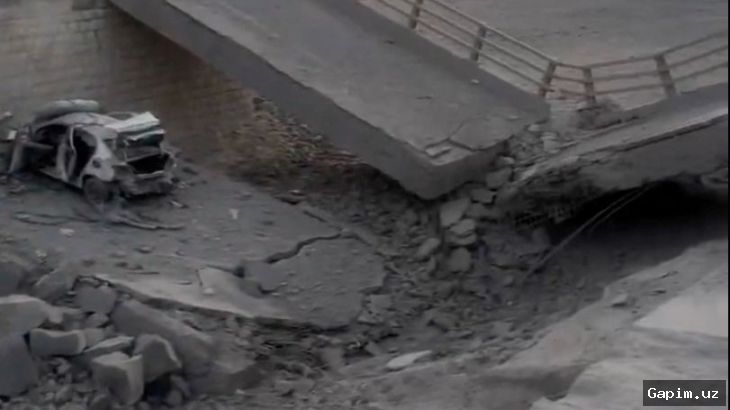
As the US pounds southern Iran and, in recent days, other parts of the country, Tehran too has hit back, striking US military bases in neighbouring nations in the Gulf and Jordan.
Projectiles fired by both the US and Iran have also hit civilian infrastructure, raising questions over potential violations of international law, even as the fragile memorandum of understanding (MoU) towards peace that the two countries had signed in June has collapsed.
“We’re going to knock out all their power plants. We’re going to knock out all their bridges unless they get to the table and negotiate,” US President Donald Trump threatened in a Fox News interview last week. He made similar threats on civilian infrastructure earlier in April.
At least 50 people have died in Iran since the resumption of hostilities, and 500 have been wounded since July 15, according to Iranian authorities. Dozens of locations in southern and northwestern Iran have been hit in the past week, ranging from military command centres to railways and airports.
Iran’s Islamic Revolutionary Guard Corps (IRGC) has hit back on neighbouring Gulf countries hosting US military assets, resulting in the deaths of at least two US military personnel.
International humanitarian law explicitly forbids the targeting of civilian infrastructure in armed conflict. A spokesperson for United Nations Secretary-General Antonio Guterres said on Friday that he was “particularly concerned about attacks on civilian infrastructure in Iran and across the region”, adding that “such attacks are unacceptable”.
The 1949 Geneva Conventions and their Additional Protocols of 1977 forbid armed attacks or reprisals on civilian infrastructure or “objects” during a conflict. Civilian infrastructure includes roads, bridges, railways, airports, electrical plants, sewage systems, hospitals, and phone and internet systems. Drinking water installations, irrigation works, foodstuffs, crops, livestock, dams, dikes, and nuclear power plants also cannot be targeted.
Civilian infrastructure becomes a legitimate target only when it can be proven that it was “used for military purposes at the time of the attack and that its destruction provides a definite military advantage”. Even so, attacks must be “proportionate to the military advantage”, and risks to civilians must not outweigh military gains.
Iranian media and officials have reported several US strikes on civilian infrastructure as defined by the Geneva treaty, particularly in southern coastline areas close to the Strait of Hormuz. Washington claims it has exclusively targeted “military logistics infrastructure”. Analysts say US military lawyers may be clearing some targets as “dual-use”.
Iran has repeatedly targeted military bases – and increasingly, civilian infrastructure – in Kuwait, Oman, Jordan and Qatar. The IRGC insists it is targeting US military assets.
Source: www.aljazeera.com