In Frederick County, Maryland, construction of a major Amazon data center has sparked local protests. The project expanded by about 1,000 acres beyond original plans, encroaching on green space and farmland.
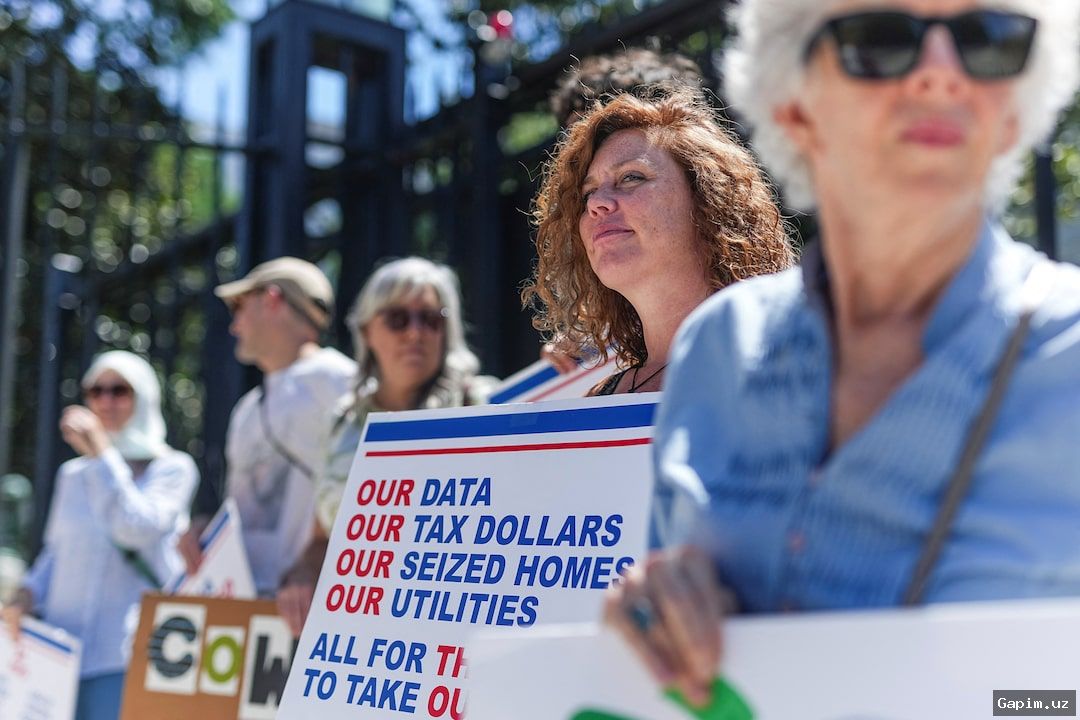
Community activist Elizabeth Bauer says the construction site's proximity to residential areas is causing dust and pollution that exacerbates asthma. "I'm okay with data centers in the right place. I'm not okay with them taking prime farmland," she said.
Bipartisan backlash against data centers is growing across the US. Virginia alone currently has around 640 data centers. These facilities require vast amounts of energy — as much electricity as 100,000 households each, according to the EPA.
New centers under construction could consume 20 times more power, largely due to AI's increased demand for data storage and processing. Goldman Sachs projects data centers will account for 8.5% of US power by end of 2027.
Data centers can use up to 5 million gallons of water daily (as much as a city of 50,000). Frederick County is experiencing severe drought. Harvard professor Francesca Dominici said tech companies disregard water issues: "They prioritize where they can get the land cheaper, where they can get the local politician to give the approval faster."
States with high data center concentrations have seen a 267% increase in electricity prices over five years. Penn State professor Hannah Wiseman noted that costs of new transmission lines are socialized among ratepayers.
At the federal level, President Donald Trump cut red tape for data center development via a 2025 executive order. Many tech companies require non-disclosure agreements to limit community understanding of project scale and resource consumption.
In March, Microsoft stopped using NDAs with local governments. Meta is piloting low-carbon concrete. New York became the first US state to halt new large-scale data center construction for up to a year.
In Frederick, Bauer and fellow activists continue to push back. They collected enough signatures for a referendum, but Maryland's supreme court quashed the idea. The county issued a temporary pause on new construction, but Bauer feels the democratic process failed: "The average citizen has no chance. This whole effort was not to fight data centers, it was to give people a voice."
Source: www.dw.com