In Jibia, Katsina State, Nigeria, Safiya Musa’s sewing machine has given her something violence had taken away: a way to provide for her children. But the livelihood she built after losing her husband and two children has left her facing a painful choice: whether to return home or risk losing the fragile independence she created after being forced to flee.
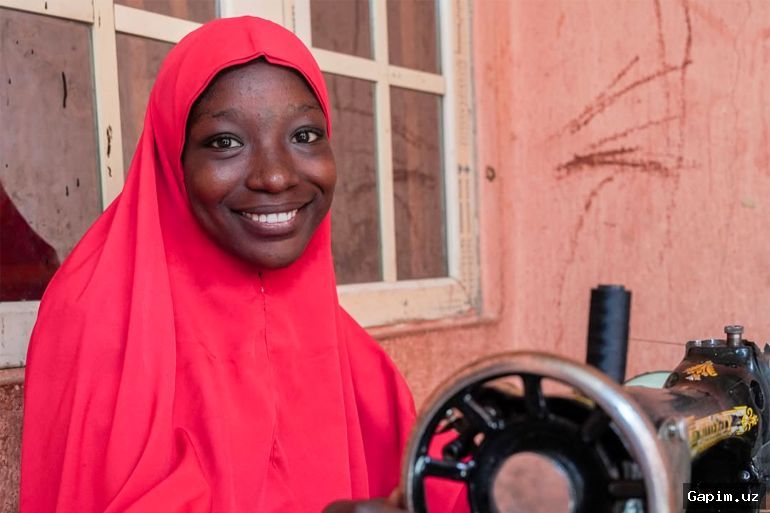
Safiya cannot recall the exact month, only that it was 2023 when armed bandits raided the town of Kankara in Katsina State, where she lived with her husband, a farmer and food trader, and their two youngest children, Umar (4) and Maryam (6). Their three older children were staying with relatives. The attackers had come to kidnap the town head but failed; as they left, they killed about 20 people.
Three days later, learning her husband had also been killed, Safiya fled to Batsari, where she reunited with her three surviving children. When another attack reached Batsari, she fled again to Jibia, settling in a camp for displaced people.
In Jibia, Safiya survived by grinding grain and taking temporary jobs. She was then selected for a handbag-making training programme by the United Nations Development Programme (UNDP) under its Climate Security Project, which provides vocational training and equipment to conflict-affected women.
After training, Safiya turned handbag-making into a source of income. “I used to wake up with nothing to offer my children,” she said. “Now I can feed them myself.” In March 2024, the project trained 20 women in Jibia, providing sewing machines and materials.
Karima Sule, 30, who fled violence four years ago, earns about $50 a month from the business. “When demand is high, I earn even more,” she said. However, challenges remain: Safiya struggles to buy materials, and Karima notes that violence slows market activity.
Researcher Abdussamad Ahmad Yusuf warns that economic activity may expose women to new risks, as kidnapping for ransom becomes more targeted. The Katsina government established the Community Watch Corps in 2023, but many families remain uncertain about returning home.
Safiya hopes to return home so her children can be with relatives, but fears losing her business. “If I cannot continue it there, how will we survive?” she asked.
Source: www.aljazeera.com