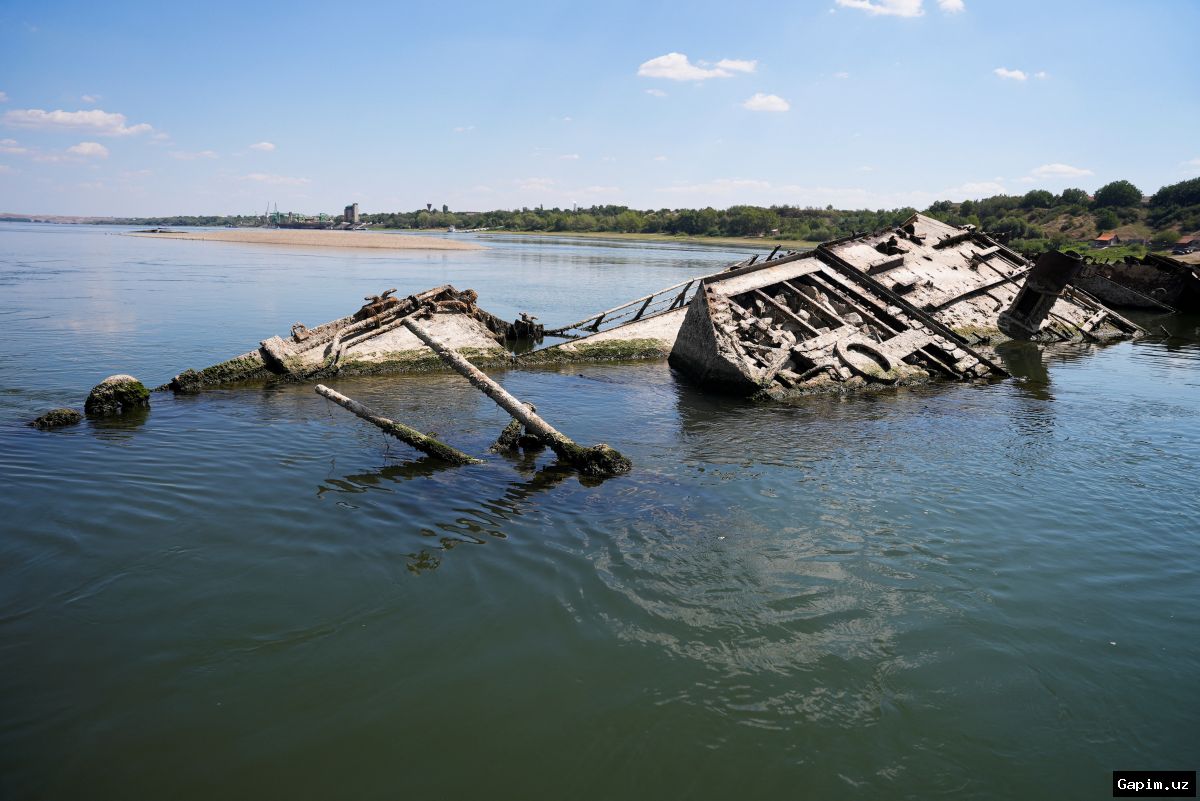
Historically low water levels along Europe's second-longest river have led Hungary and Romania to reduce output at key nuclear plants. Danube tourism and river cargo have also been severely affected by Europe's heatwave.
Hungary's Paks nuclear plant, 120 km south of Budapest, cut output by 50% at reactor 2 on Thursday. The plant operates four Russian-built reactors with a combined capacity of 2 GW. Output had already been cut by 254 MW on reactor 1 on Monday, before reactor 3 powered down on Wednesday.
In Romania, one of two reactors at the Cernavoda nuclear plant was shut down earlier this week due to lower water levels. The Energy Ministry planned to shut down the second reactor on Thursday but managed to keep it operating overnight.
Water from the Danube is vital for cooling operations at nuclear plants. In Budapest, the Danube's gauge level was measured at 23 cm on Wednesday morning, well below the previous record low of 33 cm set in 2018.
River traffic from cargo ships to tourist cruises has also been put on hold. In Hungary, popular cruise ships have to dock further upriver, while cargo ships have stopped operating nearly entirely. In Romania, the water level along parts of the Danube is already one meter below the navigable minimum.
In Bulgaria, police evacuated 186 tourists from a cruise ship that ran aground near Vidin. In Serbia, hundreds of small boats and dozens of cargo ships were marooned on the dried-out river bank near Novi Sad.
In Budapest, receding water levels have exposed the base pillars of Margaret Bridge, where authorities discovered a Second World War era bomb last week.
Experts attribute the situation to climate change. Europe continues to endure one of its hottest summers on record, with wildfires in France and Spain, and temperatures approaching 40°C in Germany. Berlin's Robert Koch Institute reported that 9,800 people have died due to heat-related conditions this summer.
Source: www.dw.com