Russian military command this week claimed to be advancing in Ukraine's Sumy, Kharkiv, and Donetsk regions. Meanwhile, Ukraine installed new political leadership in its defense ministry and new military leadership in its armed forces, following the unprecedented firing of both Defense Minister Mykhailo Fedorov and Commander-in-Chief Oleksandr Syrskyi within a week.
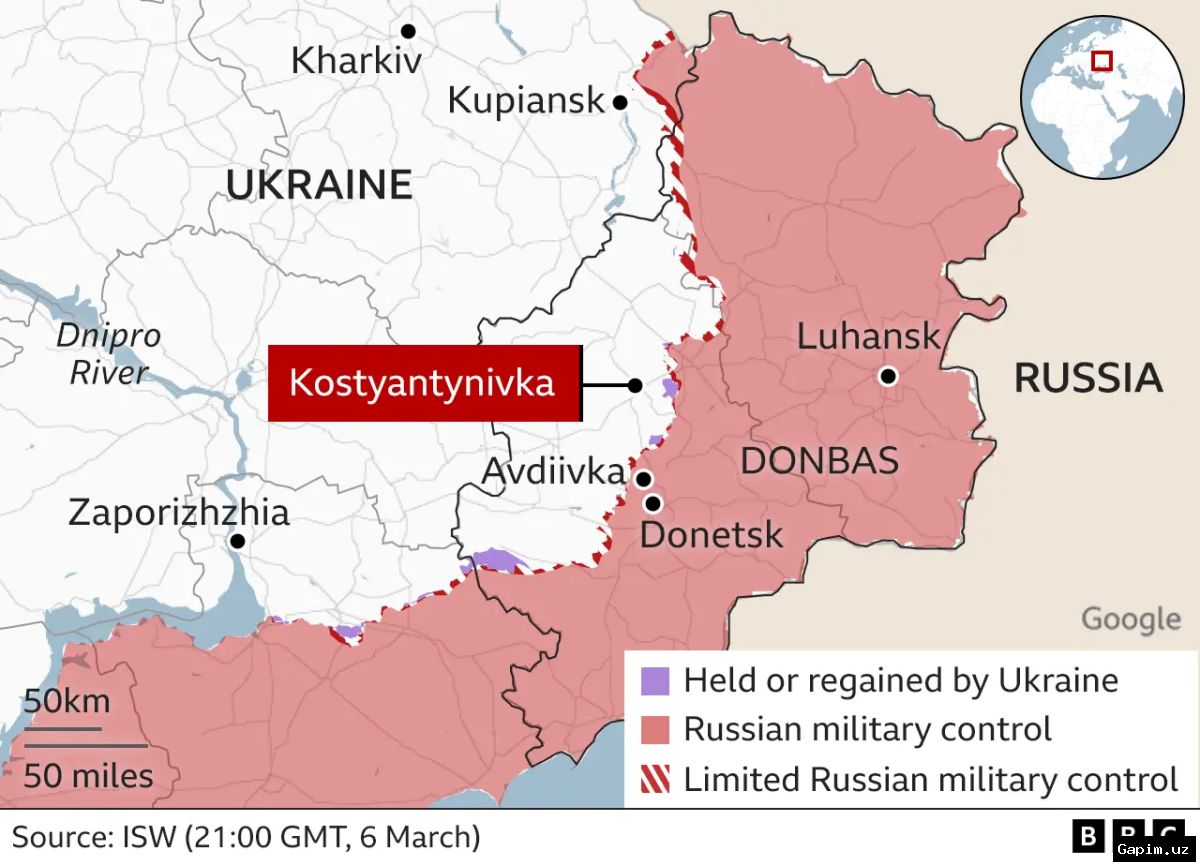
The most concerning news comes from Ukrainian soldiers in the eastern Donetsk region, who say Russian forces are "effectively cutting off" Kostiantynivka, the southernmost of four "fortress cities" Russia vowed to capture. Russian President Vladimir Putin recently called Kostiantynivka "the key to liberating the entire territory of the Donetsk People's Republic."
One Ukrainian soldier told Hromadske: "Things are very bad in Kostiantynivka. It's not a question of whether we'll lose it – we've effectively already lost it." He said Russians are moving into the villages of Molocharka and Izhevka north of the city, and his units could be surrounded in "another month or two" unless reinforcements arrive or containment tactics change.
Before his dismissal, Syrskyi painted a more optimistic picture, claiming there were 145 Russian infiltrators in the city suffering "significant losses" of about 25 people a day as Ukrainian drone units hunted them. The commander of a group called Kurt and Company told Suspilne that most of the city remains under control, but the enemy is trying to bypass them. He highlighted the devastating impact of KABs – massive aerial bombs weighing between 500kg and 3,000kg, which Russia drops at a rate of over 200 per day.
According to the Institute for the Study of War (ISW), three weeks ago Russian forces were present in only 37% of Kostiantynivka, but recent assessments suggest their influence has spread to most of the city. Overall, Russian forces have slowed: in the first half of 2025 they captured 16.6 sq km per day, in June only 1 km, and in July, ISW assessed Russia is losing territory at 1.6 sq km per day.
Ukrainian intelligence reports that Russia is attempting to regain the offensive: the number of enemy personnel involved in offensive operations along the front line in July increased by 12% compared to June and 18% compared to May. Russian casualties have risen proportionally. In the northern Kharkiv and Sumy regions, Russia claimed to have destroyed 10 Ukrainian UAV control centers on July 27, killing 70 personnel.
Ukrainian President Volodymyr Zelenskyy said he received intelligence that Russia is preparing an "expanded mobilization" to counter losses of 225,000 this year. He claimed Putin aims to raise 300,000 to 500,000 troops in early October after September parliamentary elections. Zelenskyy also reported that Russia is preparing barracks for 30,000 North Korean troops in Voronezh.
In the economic war, Ukraine continues striking Russian refineries and oil depots, including the Subkhankulovo oil tank farm in Bashkortostan, six refineries, an oil loading terminal at Rostov-on-Don, and fuel depots in occupied Crimea and Udmurtia. Ukraine claims to have disabled 42% of Russian refining capacity; a Financial Times investigation confirmed 45% of nominal capacity.
Ukrainian drones continue to starve Crimea of electricity and fuel, striking 37 electricity substations and four oil tankers during the week. Strikes also targeted Wildberries warehouses, suspected of supplying mobilized troops, bringing the total to 12 warehouses set ablaze with an estimated $2.2 billion in damage.
Russia also claims to have hit military targets in massive drone and missile attacks on Ukraine, but many hits were civilian. One person died when a supermarket in Chernihiv was struck on July 26, and the entire Voronov family was wiped out in Radushne on July 30. A record 56,000 people spent the night sheltering in the Kyiv Metro that night.
Source: www.aljazeera.com