Football, often dubbed 'the beautiful game', is on the verge of a civil war. An ugly standoff threatens an established order that has stood since FIFA's governance of the game began in 1904.
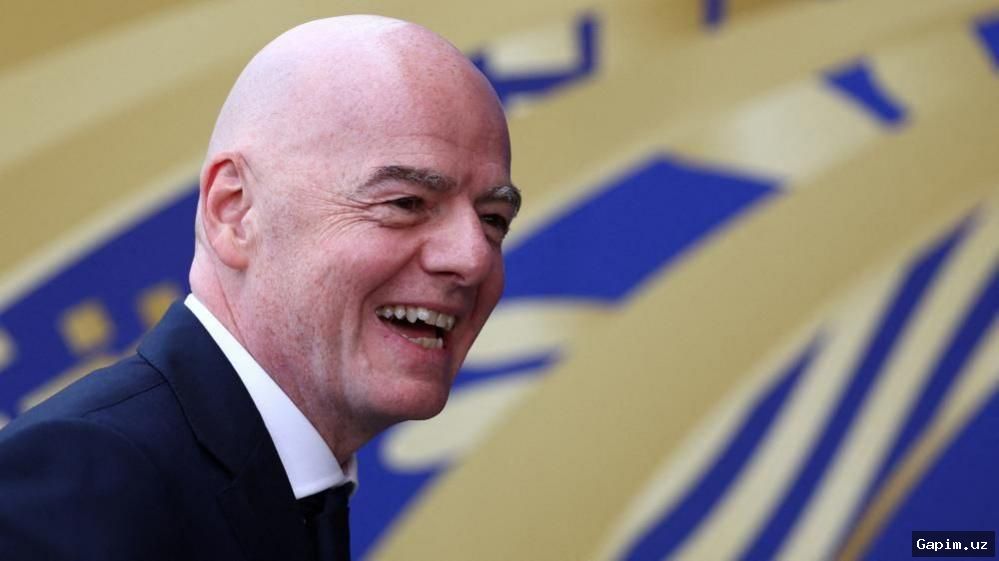
FIFA's proposal, fronted by its President Gianni Infantino, to sell stakes in the World Cup and other events to private investors has met with a furious backlash worldwide. The plan was only revealed on Tuesday.
In the days that followed, the sport has made headlines around the world and faced a split in the game with boycotts threatened. Al Jazeera Sport takes a look at where and how football has gone from a celebration of World Cup glory for Spain to a divide that has provoked fierce words from the continental governing bodies, politicians and a resigning FIFA adviser alike.
FIFA has staged World Cups every four years since 1930, breaking only for World War Two. The tournament has expanded from 13 teams competing at the inaugural event to a record 48 that lined up at World Cup 2026. That number could swell to 64 for the 2030 edition.
That in itself has drawn debate, but on Tuesday Infantino revealed a proposal to sell minority stakes in the World Cup, along with other events such as the FIFA Club World Cup, to private investors. The plan would centre around an investment firm attracting private funding. The expectation is that Joshua Kushner, the founder of Thrive Capital, would lead the proposed investor group via a fund called Thrive Eternal. Joshua is the brother of Jared Kushner, son-in-law of United States President Donald Trump.
Infantino has given the organisation's 211-member federations until September 19 to support the private investment proposal. The response to FIFA's plans has been damning. European football's governing body, UEFA, voted on Thursday to boycott FIFA – and with it future World Cups – unless all plans to seek private investment for minority stakes in the governing body's events were dropped immediately.
UEFA is made up of 55 nations and its vote was unanimous. The organisation based in Switzerland, which is also home to FIFA, cited its concern that it was "irresponsible and indefensible that a proposal of such significance for football was conceived in secret". "The World Cup cannot be treated as an investment product. It is one of football's greatest sporting legacies. It has been built over generations by players, national teams and supporters across every continent. No part of it should ever be surrendered to private investors. The World Cup is not for sale," the statement said.
CONCACAF, the regional bloc for North America, Central America and the Caribbean, also rejected FIFA's proposal during a meeting on Thursday. It stopped short, however, of following UEFA's plan to boycott World Cups. CONCACAF, made up of 41 member associations, expressed "deep concerns" about the lack of due process surrounding the proposal, the short deadline and absence of any review or approval by relevant FIFA governance bodies.
The Asian Football Confederation has also spoken out strongly against FIFA's plans and have backed the stances taken by UEFA and CONCACAF, but they too have stopped short of voting to boycott events staged by the governing body. "The fact that the situation has reached the point where the real possibility of a FIFA World Cup boycott has entered public discourse should concern everyone who cares about the future of our game," the AFC said in a statement on Friday. "Football should never have been placed in such a position."
The Mexican Football Federation (FMF) has said it would study the proposal before deciding its position. The FMF said FIFA had informed it of the proposal on July 28 and would provide member associations with additional information and documentation through a series of round tables before a decision is made. FIFA still await any footballing organisation to come out in support of its proposals.
The remaining continental governing bodies that have still to make their positions clear are the Confederation of African Football (CAF), the South American Football Confederation (CONMEBOL) and the Oceania Football Confederation (OFC). FIFA has blamed the media and doubled down on pursuing the project which now seems to have a majority of the 211 in opposition. "Our planned consultation process was disrupted by incorrect media reports," FIFA said in a statement early Friday. "We will proceed with this consultation process to ensure that each (member) has the ability to express its vote based on facts."
The overwhelming strength in the confederations lies with UEFA and it's 55 members. From the English Premier League, the richest domestic league in the world, to Spain's La Liga and Italy's Serie A, European football holds a strong hand when it comes to the running of football. Overcoming the fiercest opposition for the plans, by its biggest and strongest confederation, appears an impossible mission, especially given the heavy support offered from the AFC and CONCACAF.
The resignation of Infantino's senior adviser at FIFA, Carlos Cordeiro, on Friday heaped further pressure on the president's plans. Cordeiro was handpicked by Infantino to represent FIFA on the White House Task Force for the 2026 World Cup. His call for other senior staff to speak out is intensifying scrutiny of Infantino.
The AFC had been a key ally for Infantino in his 11-year presidency and their opposition also came with the recommendation that FIFA must urgently review its management style. The AFC's statement said "the proposed FFE cannot realistically achieve the necessary broad consensus and unity required to move forward". "Rather, it has exposed fundamental weaknesses in FIFA's consultation and decision-making processes that must now be addressed," said the statement from the AFC.
There are two hard deadlines that loom over the crisis dividing FIFA and the global game. The first is the September 19 deadline that has been issued by Infantino for support to be shown for the plan. The second is the next FIFA event. That comes in the form of the FIFA Under-20 Women's World Cup 2026, which is due to kickoff in Poland next month. The Polish Football Association (PZPN) said on Friday that it has not received any information about teams withdrawing from the tournament.
After that comes the election race for FIFA's presidency. Following the overall success of FIFA World Cup 2026, Infantino appeared to have a clear path to being re-elected unopposed for a fourth and final term in office through to 2031. FIFA has set a November 18 deadline for potential candidates to declare in a presidential vote of the 211 members scheduled next March in Rabat, Morocco. It is hard to imagine that there will not be opposition to Infantino standing for a final term. That, of course, assumes that the 56-year-old, who was born in Switzerland to Italian immigrants, is able to ride out the current crisis.
Source: www.aljazeera.com