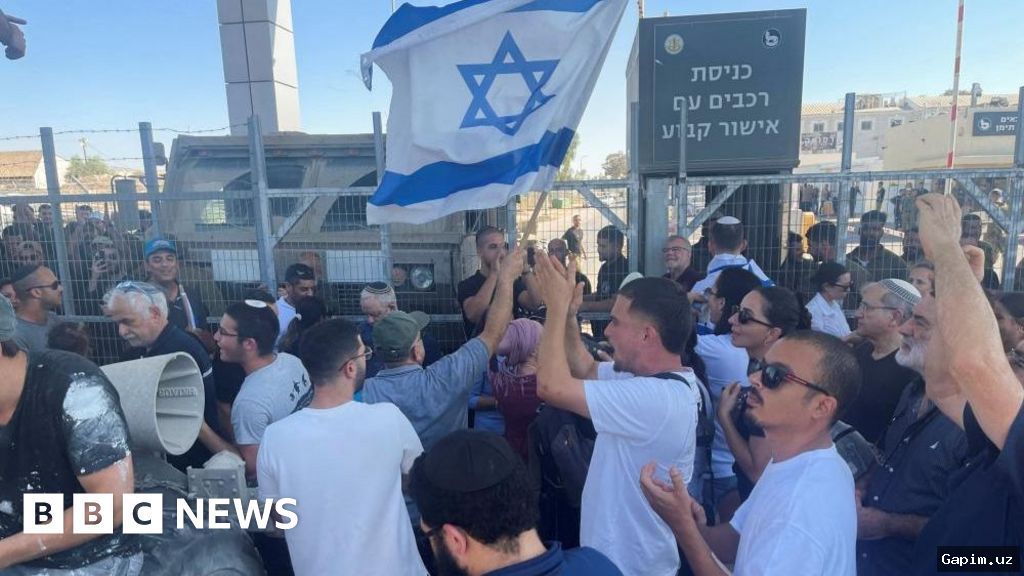
In a rare display of mass indiscipline, roughly 100 soldiers from the Givati Brigade's Tzabar Battalion left the Sde Teiman military base without authorization on July 30, after their battalion commander used a sledgehammer to smash decorative plaques they had hung. The army claimed the plaques were remnants of informal 'veteran-junior' traditions, but the soldiers insisted they were part of their company's heritage, carried through Gaza and Lebanon. The distinction hardly matters; what matters is that the argument escalated until the troops abandoned their weapons, marched out chanting against their officers, and rendered the battalion temporarily unfit for its upcoming Gaza rotation.
Most soldiers returned by evening under threat of AWOL charges, and the investigation will likely result in reprimands or quiet discharges. But this incident is far more than a disciplinary blip. It underscores a quiet renegotiation of the unwritten contract that has long underpinned discipline in the Israeli military. For decades, the combat soldier operated under an implicit understanding: political leadership could be questioned, the government could be detested, the media could be ignored, but the field commander's authority remained largely unchallenged. Trust was granted first and withdrawn only after clear failure. Now, that trust is eroding.
Nearly three years of continuous multi-front war have done what successive short campaigns never managed. The Israeli military was built for decisive, time-limited operations that restored deterrence and returned reservists to civilian life quickly. Since October 2023, however, the force has been mired in an open-ended attrition contest with no clear political horizon. Reservists have logged hundreds of days of service, units rotate between Gaza, Lebanon, and the West Bank with diminishing recovery periods, and the army publicly acknowledges shortfalls of thousands of combat troops. Reservist turnout has fallen well below the near-total mobilization of the war's first weeks, and the burden falls unevenly on a shrinking core while the political system continues to exempt large populations from equal service.
Something subtler has shifted in the relationship between fighter and commander. Authority that once rested on institutional prestige now requires continuous performance and emotional legitimacy. Soldiers who have buried friends, returned to disrupted families, and watched the same strategic arguments recycle without resolution no longer treat the commander's decision as automatically binding. The plaques may not have been the real issue; they became the language through which deeper frustration found expression—a grievance about recognition, continuity, and the sense that the hierarchy no longer fully understands the cost being paid at the bottom. When the commander chose the sledgehammer, he answered a cultural claim with pure rank, and rank no longer settled the argument.
Sde Teiman itself amplifies the point. The base carries the double memory of detention abuse scandals and the 2024 break-in by coalition politicians and activists determined to protect accused soldiers from the military justice system. That episode demonstrated how external political forces could penetrate the perimeter. The latest walkout shows the penetration working from the opposite direction: Israeli society's fractures now travel inside the soldiers' kit bags. Polarization over the judicial overhaul, the conscription of Haredi men, the war's aims, and the very definition of victory has not stopped at the base gate; it has entered the company lines.
Historical parallels are imperfect but instructive. During the first Lebanon war, 'grey refusal' among reservists and open protests by officers signaled that prolonged, politically contested campaigns strain the traditional contract. The 2005 Gaza disengagement produced localized refusals among religious soldiers. Those earlier episodes remained contained because the underlying conflicts had recognizable endpoints and the broader social consensus around the army's centrality had not yet fractured. The present conflict lacks both. The result is not collapse, as the Israeli military continues to fight, but a gradual conversion of hierarchical trust into something more conditional, more negotiated, and therefore more brittle.
The deeper implication is institutional. An army whose combat effectiveness has long rested on the assumption that orders will be obeyed without constant persuasion now finds itself managing legitimacy inside its own ranks. Commanders must not only plan operations; they must continually re-earn the trust of exhausted men who have learned that the strategic picture above them is contested and the burden below them is unequal. That is a different kind of leadership demand, and it is not one the classic Israeli military model was designed to meet indefinitely.
The investigation into the Tzabar Battalion will treat the episode as a disciplinary aberration. Future historians may instead see it as an early sign of a broader structural shift. For all its failures on the morning of October 7, the Israeli military that entered the war of October 2023 still possessed a residual capital of automatic trust between fighter and commander. The force still fighting in 2026 is spending that capital faster than it can replenish it. Whether this unwritten contract can be rewritten under fire, or will simply continue to fray until the next crisis exposes the damage, is no longer a theoretical question. Sde Teiman merely made it visible.
Source: www.aljazeera.com