At the Kvitneva railway station near Kyiv, workers lift white body bags from the pockmarked platform and carry them to waiting ambulances. Shoes, glasses, and pieces of clothing mark the spot where eight people were killed during Russia's latest massive aerial attack on Ukraine.
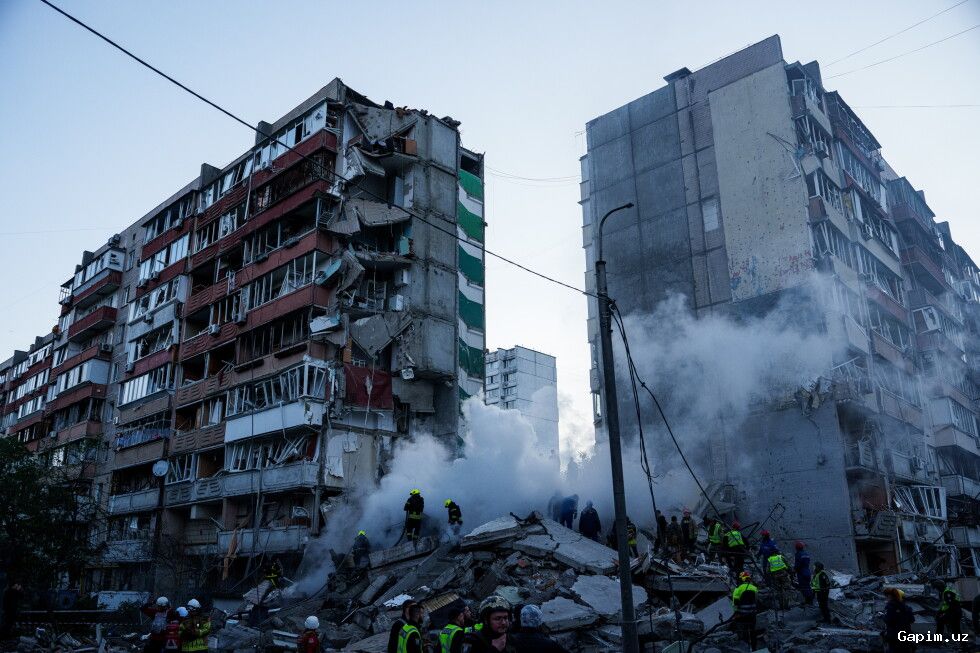
Overnight, Moscow fired 115 drones and 24 ballistic missiles. Most of the drones were shot down, but Kyiv's depleted air defenses did not intercept any of the missiles. Twenty-one people were killed and dozens more were injured. The attack started just after midnight with very little warning, making it one of the most intense nights of bombardment Kyiv has endured in recent months.
The latest Russian barrage destroyed storage and logistics facilities, from online retailer warehouses to a postal sorting center. In Kvitneva, it is unclear if the target was the railway itself or the warehouse beside it, which was also hit and was still smoldering hours later. Down the road, another warehouse was still ablaze more than 12 hours after the attack.
Nearby, Anastasiia Dudley's house was almost totally destroyed, but she and her mother survived – shaken but unharmed. Anastasiia has lived through years of war, but Wednesday was her 'scariest night' since the start of Russia's full-scale war on Ukraine in February 2022, she says. She looks up at the precariously leaning walls of her house, which she says was hit by a drone a few hours before missiles struck the warehouse and the station. 'You see two floors – the first and the second, but it was a three-floor house with a roof,' she says. The building's top floor has been sliced off.
Ukrainians have lived through four-and-a-half years of war, but now air defenses are increasingly vulnerable, resulting in dozens of deaths at a time. For years, Ukraine has relied on US supplies of Patriot interceptor missiles to shoot down Russian ballistic missiles. But the US has used many of its stockpiles during its war with Iran and is reluctant to give up more. After initially offering Ukraine the license to make Patriots in early July, last week President Donald Trump denied the US had agreed to 'give away that kind of technology'.
President Volodymyr Zelensky said, 'Ballistic missile interceptors could have saved the lives of those killed today.' He made a direct link between delays in supply and the 'horrific casualties and destruction' witnessed regularly across Ukraine. 'Quite literally every single day, the lives of people here in Ukraine depend on the decisiveness of our partners in Europe and America,' he said later, adding he had spoken to NATO chief Mark Rutte about getting interceptor missiles.
Ukrainian military expert Ivan Stupak compares the situation to having a supercar in the garage but no petrol: 'Imagine you own a Lamborghini but have no fuel. You have one of the best cars in the world, but you can't drive anywhere... The situation with Patriot is similar. The systems are there, but there are no interceptor missiles.' He warns that the lack of interceptors leaves the Patriot systems themselves exposed and vulnerable to Russian attacks, as they could become priority targets.
At the railway station, as medics leave the scene, another team moves in quickly to repair power lines above the track so services can resume. This is the rapid recovery and clear-up Ukrainians have become all too familiar with. But they know their skies can still light up with deadly force at a moment's notice. Countering that threat and keeping people safe depends on decisions about production and distribution of interceptors made many miles from Ukraine's borders.
Source: www.bbc.co.uk