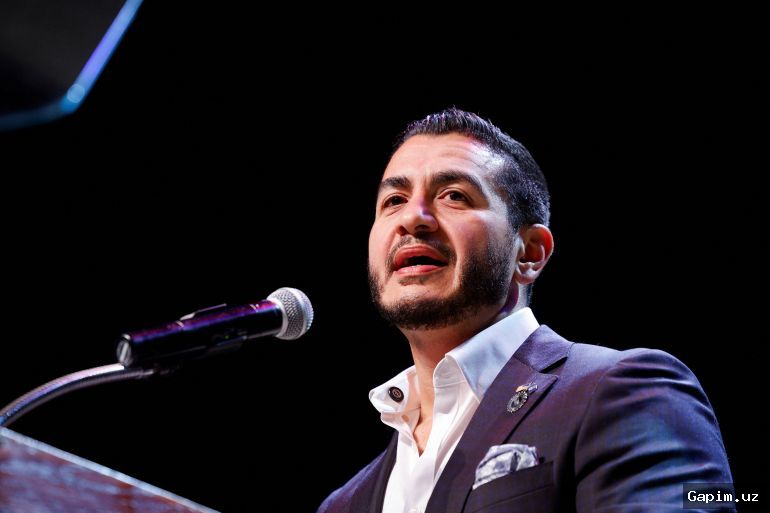
On August 5, progressive candidate Abdul El-Sayed won the Democratic primary for the US Senate in Michigan, defeating Haley Stevens, who was backed by the Democratic establishment. The race underscored the escalating rift within the Democratic Party over support for Israel. El-Sayed, like other progressives, is an outspoken critic of Israel and has openly expressed solidarity with the Palestinian cause. Stevens, on the other hand, was supported by pro-Israel Political Action Committees (PACs).
For years, many Israelis assumed that unquestioned bipartisan support in Washington would continue to underpin its political strategy, regardless of which administration sat in the Oval Office. Halfway through the decade, however, bipartisan support for Israel in the US is eroding. In this environment, Palestinians have a rare opportunity to translate shifting public sentiment into sustained political pressure capable of advancing policies that end the Israeli occupation and support Palestinian self-determination.
According to a Pew Research Center survey released in April, 60 percent of US adults now hold an unfavourable view of Israel, with negative perceptions especially pronounced among younger Americans. These trends should not be mistaken for a wholesale shift towards support for Palestinian rights. They do, however, suggest that longstanding political assumptions about unwavering support for Israel are becoming increasingly fragile.
The shift is also evident within traditionally pro-Israel constituencies. A March 2026 J Street poll found that 70 percent of American Jews oppose unconditional military and financial assistance to Israel. Even among Republicans and conservative Christians, who have traditionally supported close US-Israeli ties, negative views of Israel are growing.
While the future direction of Democratic politics remains uncertain, it is increasingly difficult to imagine a Democratic presidential nominee who adopts a less critical approach to Israeli policy than previous generations of party leadership. Meanwhile, congressional initiatives such as proposed legislation seeking to end US assistance to Israel demonstrate that debates once considered politically unthinkable have entered the mainstream.
Israeli policymakers are increasingly aware that bipartisan American support can no longer be taken for granted. Opposition figures have openly criticised Prime Minister Benjamin Netanyahu for contributing to the erosion of that consensus by aligning Israel too closely with one side of American politics. Yet, there is little evidence that Israel’s opposition has embraced a fundamentally different approach to the conflict itself. The last government formed without Netanyahu, despite its broader political coalition, pursued policies that continued to undermine Palestinian rights wrapped in a different rhetoric.
For the Palestinians, changing American politics alone will not automatically produce different outcomes. They need a coherent strategy for engaging the US — one built around clear, achievable policy objectives rather than broad aspirations. More progressives entering mainstream politics and elected bodies are forcing the Democratic Party establishment to rethink its policies. This political fluidity creates an opportunity to place recognition of a Palestinian state at the centre of Democratic campaigns.
At the same time, Palestinians should advocate a broader and more coherent policy agenda: accountability under international law, restoration of humanitarian access through UNRWA (the UN agency for Palestinian refugees), enforcement of existing US laws, such as the Leahy Laws (which prohibit US assistance going to foreign military units suspected of human rights violations), reconstruction of Gaza, and ending policies that entrench permanent occupation. This requires recognising that alignment will never be 10 out of 10 on every issue. Building sustainable coalitions will require accepting partial agreement while remaining anchored in consistent principles.
But the Palestinian movement should not limit itself to reaching out to the Democratic Party. Within the Republican Party, there is a growing recognition in some quarters that unconditional support for Israel is bad for the US. Influential figures increasingly attribute the perceived failures of the Iran conflict to Israeli policy. The approach to these constituencies should be different. Discussions about Palestinian rights with Republicans can be introduced through the language of accountability, fiscal responsibility, regional stability, and the US national interest.
Conversations with evangelical Christians require engagement with theology itself, making voices such as Bethlehem-based Pastor Munther Isaac particularly important in challenging narratives based on biblical claims to exclusive rights over the land. A key test will be how Palestinians navigate emerging shifts on the American right. Within parts of the MAGA movement, scepticism towards Israel is often driven not by support for Palestinian rights but by opposition to perceived Israeli influence over US policy. In some cases, these arguments overlap with anti-Semitic conspiracy theories, creating additional complexity and risk for engagement.
Palestine’s strategy should also recognise the growing influence of Gulf actors in Washington and global diplomacy. Countries such as Saudi Arabia have become increasingly important regional partners for the US, and its ability to shape diplomatic outcomes has expanded. The assumption that Arab normalisation with Israel can advance independently of ending the occupation and achieving Palestinian self-determination has become increasingly difficult to sustain, particularly after the Gaza war and the broader regional instability surrounding Iran.
Palestinians should therefore work with Gulf partners to translate regional influence into a coordinated diplomatic strategy that places ending the occupation, recognition of Palestinian statehood, and political rights at the centre of future regional arrangements. Existing power structures will continue to shape the near term, but generational change, growing scrutiny of US policy, and intensifying debates within both parties have created political openings for Palestine that did not exist just a few years ago. Whether those openings produce greater accountability and a renewed path towards peace will depend on sustained advocacy, disciplined messaging, and coalition-building.
Source: www.aljazeera.com