Erbil, Iraq – Over the past five months, Iraq's Kurdistan region has suffered the impact and ramifications of the ongoing US-Israel war on Iran. Despite efforts by the government to distance itself and not take sides or allow attacks on Iran from its territories, the repercussions have been heavy on the semi-autonomous region and Iraq as a whole.
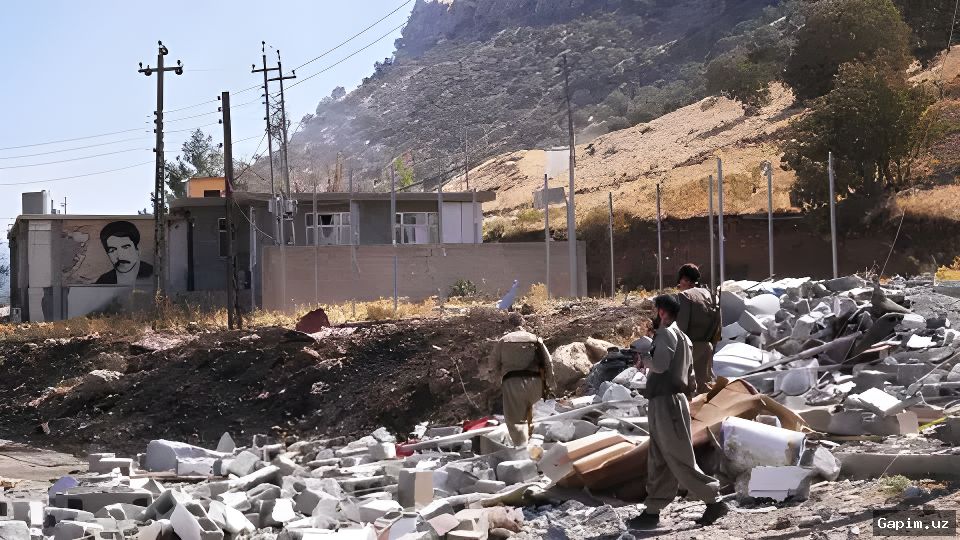
Since the outbreak of the war in February, hundreds of missiles and drones have hit the Kurdish region. Masrour Barzani, prime minister of the Kurdistan Regional Government (KRG), told Al Jazeera that the region has "paid a heavy price" in the war.
"We have been targeted more than 1,000 times by missiles and drones directly from Iran or from inside Iraq by some of the militias. We think these are all unjustifiable attacks on Kurdistan. Unfortunately, we had casualties and we lost people. Many of our infrastructure have been hit badly," Barzani said.
"The regional conflict and the security repercussions led to a 70 percent decrease in trade across the Kurdish region," he added. According to KRG data, the attacks hit military and security sites, energy facilities, bases and headquarters of opposition Iranian Kurdish parties, in addition to civilian areas.
A direct casualty of these attacks is the economy: the oil and gas sectors, and the movement of companies and investment. It comes at a time when the Kurdish region is facing a chronic financial crisis amid ongoing disputes with the federal government in Baghdad over salary payments for state employees, oil sales, and revenues.
"The scale of losses inflicted on the Kurdistan region as a result of the war, up to April, is estimated at one trillion and 500 billion Iraqi dinars ($1.14bn), and these figures were also handed over to the Iraqi government," Peshawa Hawramani, spokesman for the KRG, told Al Jazeera.
"There is no convincing reason to strike the Kurdistan region. We were not a party to this war, nor will we be a party to it, and we have not worked to make the territory of the Kurdistan region a launching point for striking Iran," Hawramani said, adding that attacks were a "violation of the sanctity of Iraqi territory and Iraqi sovereignty".
Kurdish authorities say they have named the perpetrators behind the attacks and provided them to the central government in Baghdad. "We have provided the names of these factions to the former and current Iraqi governments. These are factions that bear arms outside state institutions illegally, and yet, no measures have been taken so far by the Iraqi government towards these factions," the spokesman said.
Within hours of the US-Israel attacks on Iran, US assets in Iraq's semi-autonomous Kurdish region came under retaliatory attacks from Tehran-backed groups, dragging the country into the conflict that has since expanded across the Middle East and beyond.
Iraq was also attacked during the war. Drone and rocket attacks have hit Baghdad International Airport, which houses a military base and a US diplomatic facility, as well as oilfields and other facilities.
Economic worries are also weighing heavily on Iraq. Its Ministry of Oil announced a case of force majeure on all oilfields developed by foreign oil companies, citing disruptions to navigation through the Strait of Hormuz that have halted most of the country's crude exports.
Aland Kareem Salih, an economy researcher, warns a total shutdown of oil exports could be disastrous for the Kurdish region. "If the war continued and became wider, it will inflict huge harm on the energy sector such as oil and gas and the damage then could be 100 percent," Salih warns.
Fears in the region's main cities – Erbil, Sulaymaniya and Duhok – are growing not only because of the attacks, but over the possibility of the region turning into a permanent arena for settling scores between Iran and its proxies versus the US and its allies.
Source: www.aljazeera.com