Amazon recently announced that its Leo satellite internet service is expected to enter South Africa in 2027 through Herotel, the country's largest fixed internet provider. This partnership, Leo's first of its kind in Africa, aims to connect homes and businesses beyond the reach of fiber and fixed wireless networks.
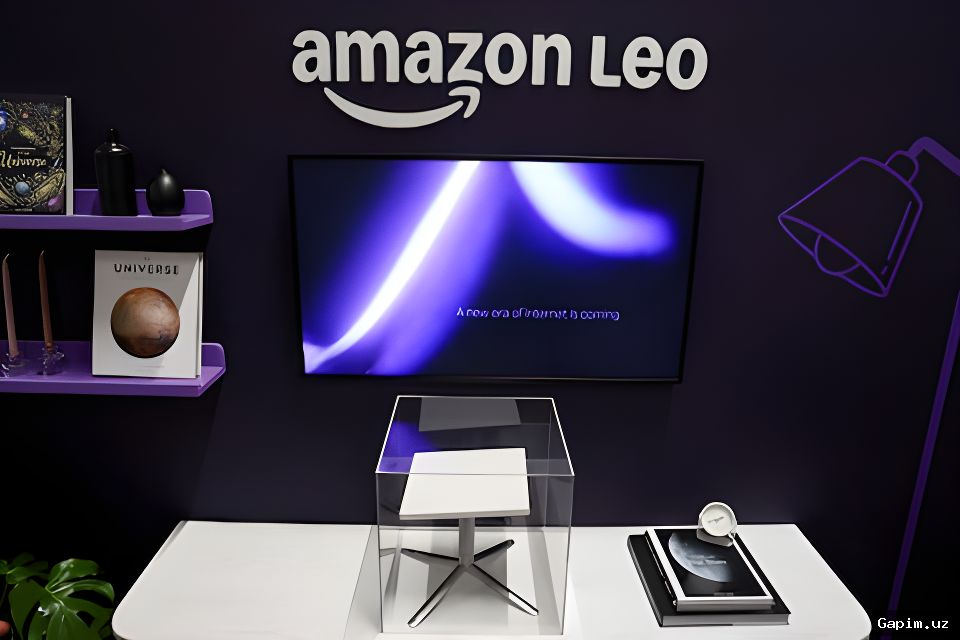
Herotel serves more than 350,000 customers in over 550 towns, giving Amazon a route into farming areas and rural communities where distance, terrain, and sparse populations make conventional networks costly. Amazon is entering a market already being transformed by satellite internet, with Starlink serving 10.3 million subscribers across 164 countries through about 9,000 satellites as of March.
Satellite services could bring coverage to underserved regions, but whether poorer households can afford them remains uncertain. The promise of universal connectivity carries a deeper risk: communities brought online may become dependent on foreign corporations that control the infrastructure on which their economies and public life rely.
Internet access shapes who can study, work, trade, bank, communicate, and participate in political life. Network owners decide where they operate, how much people pay, and the conditions of access. In September 2024, Starlink initially defied a Brazilian order to block X, showing how essential networks give private firms extraordinary leverage over governments.
Amazon and SpaceX are embedded in US national security infrastructure. SpaceX received a $5.9 billion national security launch contract in 2025, while Amazon Web Services provides classified cloud services to US defense and intelligence agencies. Entrusting them with essential networks across poorer countries would extend American strategic power into their economies and daily lives.
Of the 2.2 billion people offline, 96% live in low- and middle-income countries. In Africa, only 36% use the internet, falling to 21% in rural areas. Fixed broadband costs more than one-quarter of average monthly income in low-income countries. Satellite networks reach neglected places but cannot overcome the cost of data, devices, and electricity.
In Nigeria, Starlink raised its monthly fee by 50% in April 2025, demonstrating corporate pricing power. A corporation setting such conditions exercises political power without democratic responsibility, echoing colonial precedents. From 1890 to 1898, a Belgian company built a railway in the Congo Free State, forcing locals to collect resources while the colonial regime controlled the route.
Facebook later reproduced this logic digitally with Internet.org, offering free access to selected sites in India and Africa. Indian regulators prohibited content-based data pricing in 2016, preventing Facebook from turning poverty into control over what people could access. However, Free Basics continued in African countries, offering incomplete and foreign-centric internet.
Amazon plans to connect Leo directly to AWS, allowing governments and businesses to move information into its storage, analytics, and AI services. When the Global South supplies users and markets while ownership and control remain in the US, connectivity becomes digital colonialism. Starlink already captured nearly four-fifths of Brazil's residential satellite broadband market.
Brazil retains public control over its SGDC satellite, connecting over 12,000 public sites, showing that foreign providers can complement public infrastructure. Namibia rejected Starlink's license due to local ownership requirements. In South Africa, Amazon will partner with Herotel, but control over Leo's satellites and software remains with Amazon.
Digital sovereignty must belong to the people, not ruling parties. Licenses should require social tariffs, net neutrality, technology transfer, and rules for cross-border data. The African Union should develop common satellite licensing rules, and regional development banks should finance publicly controlled infrastructure.
Amazon Leo and Starlink can help connect abandoned communities, but connectivity should expand freedom rather than transfer power to foreign corporations. The Global South's digital future must not belong to Jeff Bezos and Elon Musk.
Source: www.aljazeera.com