As tensions and security risks escalate across the Horn of Africa, Eritrea, with its strategically vital coastline on the Red Sea and a relative absence of internal conflict, is emerging as a key player in the region's geopolitical landscape.
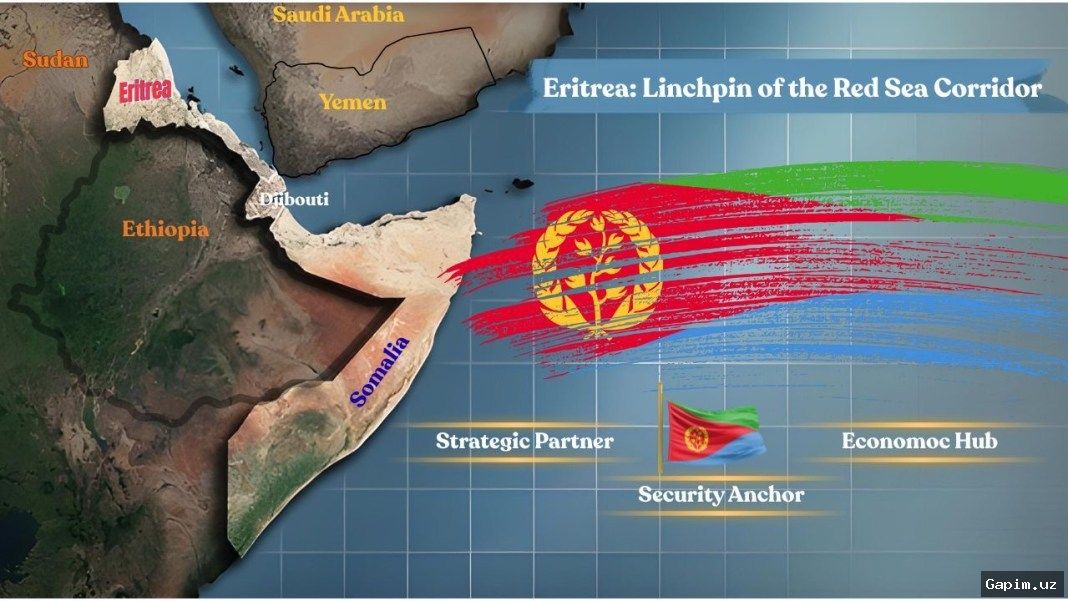
The small authoritarian state, ruled for decades by President Isaias Afewerki, controls important ports at Assab and Massawa, giving it leverage over one of the world's busiest maritime routes. Its significance has been magnified by international trade disputes and instability in neighboring Yemen.
In July, diplomatic consultations in Cairo involving Egypt, Somalia, Eritrea, and a senior US envoy underscored Eritrea's growing role in coordinating responses to security challenges in the Horn of Africa and the Red Sea, as well as facilitating trade.
Eritrea's coastline stretches over 1,000 kilometers along the Bab-el-Mandeb Strait, which at its narrowest point is less than 30 kilometers wide. According to Abdurahman Sayed, director of the Horn of Africa Centre for Regional Integration in London, "The only safe route in this area runs through Eritrea, where there are currently no security concerns."
The Houthi militia, backed by Iran, has been attacking merchant ships from the Yemeni coast, while Yemen itself suffers one of the world's worst humanitarian crises. This makes Eritrea's stable coastline a crucial alternative for maritime traffic.
Sayed notes that Eritrea's long-entrenched dictatorship tolerates no dissent, ranking second only to North Korea in international freedom indexes. However, this repression also ensures the absence of violent conflict, making the country an "island of peace" compared to Ethiopia, Sudan, and Yemen.
"For this reason, all countries — including regional powers such as Saudi Arabia and Egypt — want to maintain stable relations with Eritrea," Sayed said. Yet he warns that the lack of constitutional institutions makes the state vulnerable if the 80-year-old strongman is removed from power, with no clear successor in sight.
The Red Sea has become one of the most important sea routes globally, particularly for Gulf states like Saudi Arabia, Kuwait, and the UAE. If the Strait of Hormuz is repeatedly blocked, alternative routes through Saudi Red Sea ports could be compromised, potentially driving up oil prices and further elevating Eritrea's strategic importance.
Eritrea's neighbors, especially landlocked Ethiopia, are also vying for access to the sea. Ethiopian Prime Minister Abiy Ahmed has long demanded sovereign access, a point of contention since Eritrea's independence in 1993. Tensions over this issue threatened to escalate in early 2026.
In May 2026, Eritrea and Egypt signed an agreement to establish direct freight connections between their Red Sea ports, aiming to expand independent trade and supply chains in the region.
Despite its strategic advantages, Eritrea's history is marked by violence and mass emigration. At least 700,000 people, about a fifth of the population, have fled since independence. Magnus Treiber, a migration researcher at the University of Munich, notes that with the European Union now offering few asylum opportunities, Eritreans are fleeing worldwide.
Source: www.dw.com