Russian President Vladimir Putin's first-ever visit to one of the disputed Kuril Islands off Japan's northern tip last week triggered a swift and angry response from Tokyo. Japanese Prime Minister Sanae Takaichi said in a social media post that Putin's visit was "absolutely unacceptable," referring to the islands, which Japan calls the "Northern Territories," as "inherently Japanese territory."
Russia's Foreign Ministry responded by stating that the islands are an "integral part" of Russia. The Kuril Islands were seized by Soviet troops two weeks after Japan's official surrender ending World War II on August 15, 1945, with the 17,300 Japanese residents forced to leave over the following year.
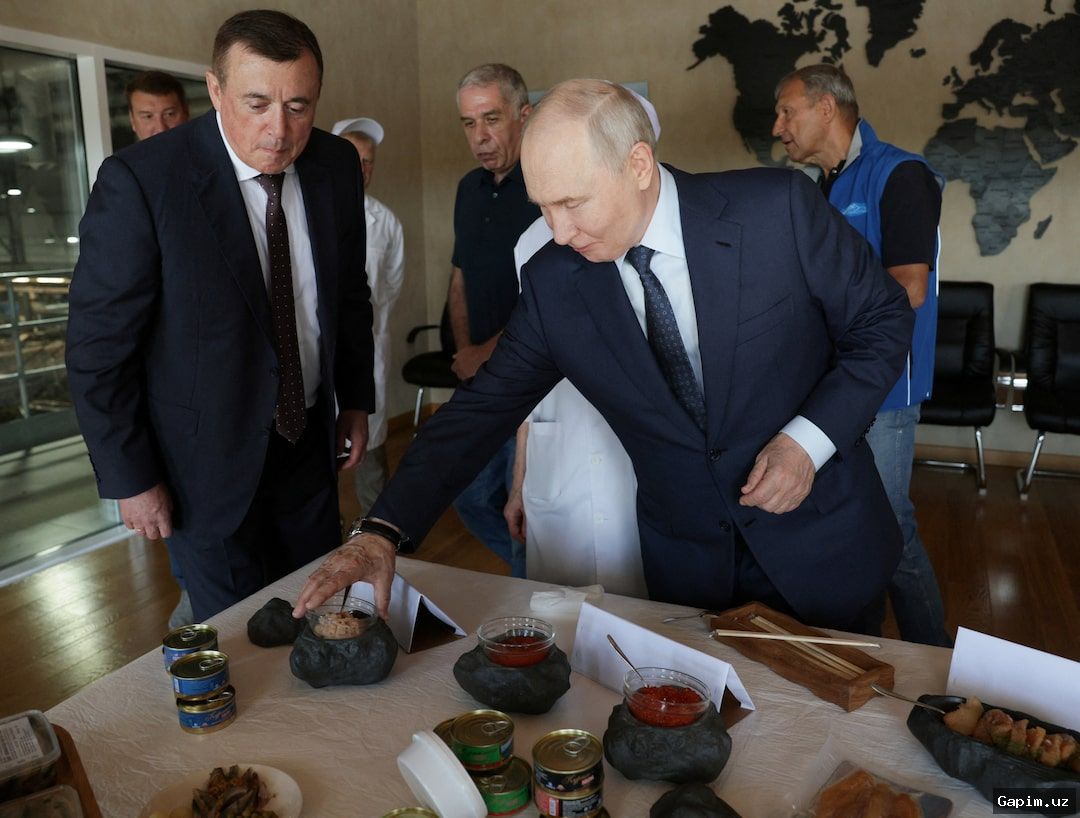
Putin toured a school, a hospital, and industrial facilities on the island of Iturup, which Japan refers to as Etorofu. The visit came just two days before the 81st anniversary of Japan's surrender at the end of World War II. "This was clearly a message to Japan," said James Brown, a professor of international relations specializing in Russian affairs at the Tokyo campus of Temple University.
"Russia has been angered by Japan's support for Ukraine and for the closer ties that Tokyo has been building with European members of NATO," he told DW. "So there is a clear desire to punish Japan. But there is also a domestic element to this, as a visit like this can generate patriotic support among Russians of all political stripes."
Successive Japanese governments have consistently taken the position that the islands were illegally annexed, with the dispute so impacting bilateral ties that the two nations have yet to sign a formal peace treaty. The collapse of the Soviet Union in 1991 and the subsequent economic hardships gave Japan renewed hope that Moscow could be convinced to return the islands in return for economic assistance or even joint development of the region.
Former Japanese Prime Minister Shinzo Abe was arguably the most proactive Japanese leader on the issue, meeting with Putin on a number of occasions in an effort to convince the Russian leader to come around to Japan's way of thinking. However, all these diplomatic efforts came to naught, with Russia amending its constitution in 2020 to ban the ceding of any part of Russian territory to a foreign power. Moscow's relations with Japan further deteriorated after Russia's full-scale invasion of Ukraine in February 2022.
Toshimitsu Shigemura, a professor of politics at Tokyo's Waseda University, told DW that these latest developments are just another nail in the coffin for Japan's ambition concerning the islands. "Tokyo has already summoned the Russian ambassador and made a formal diplomatic protest, but sanctions are already in place over the Ukraine war and I think it will be difficult for Japan to add more," Shigemura said.
"Japan is importing Russian energy and, because of the situation with Iran, that has become even more important, which leaves Tokyo in a relatively weak position," he added. Shigemura believes that Putin – potentially in consort with China and North Korea – is attempting to weaken Japanese Prime Minister Takaichi because of the firm line she has taken on security issues in the region. He added that Putin is aware that Takaichi's domestic poll numbers are softening and likely assesses the Japanese leader will not respond more forcefully than a protest.
Shigemura added that Russia's revised constitution and deepening nationalist sentiment encouraged by state propaganda effectively makes it "impossible" for the islands to be returned to Japanese control. "Putin may be weak now, but he is cooperating with China and North Korea to challenge Takaichi, who has few options," he said. "And even after Putin has gone, there will be no interest in a new Russian government to return the islands."
Brown agrees, saying that while a few "excitable commentators" in Japan will see Putin's eventual departure from the Kremlin as an opportunity, whomever ends up controlling Russia will be unlikely to align with Japan's territorial interests. "It did not happen with the collapse of the Soviet Union and all through Russia's subsequent economic difficulties, so I don't see any new Russian leader who comes in as countenancing returning the islands," he said.
Source: www.dw.com