The Alternative for Germany (AfD) is often classified as a 'far-right extremist party.' However, the term lacks a clear-cut definition. In the broadest sense, it means that a party stands far to the right of the political center. Far-right parties are frequently associated with strong nationalism, racism, an authoritarian view of the state, and a rejection of a liberal, pluralistic society.
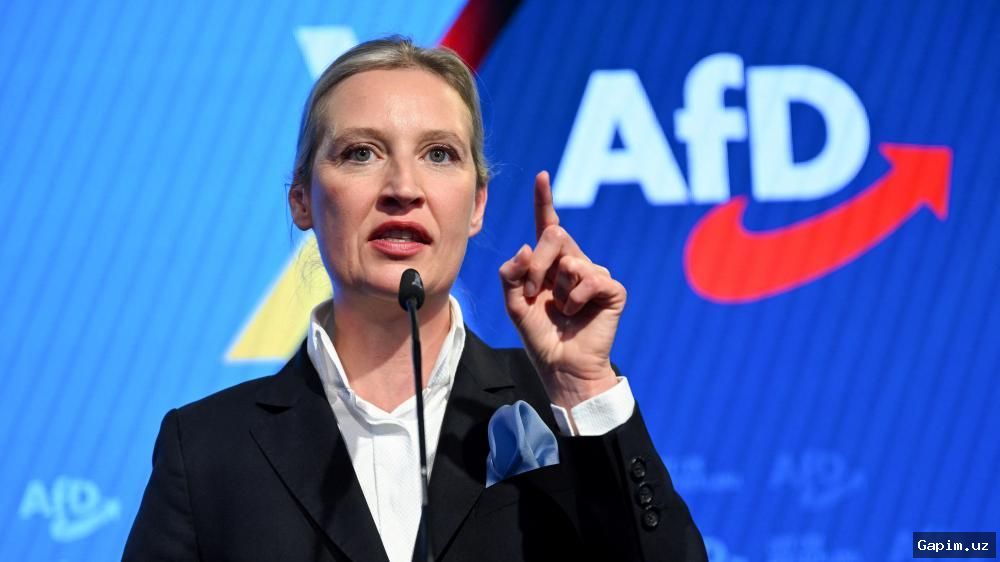
Political scientist Armin Pfahl-Traughber of Germany's Federal University of Applied Administrative Sciences does not think that a far-right party is necessarily anti-democratic. Speaking to DW, he explained why he considers the term 'far-right extremist' more appropriate when discussing the AfD: 'When it comes to the rejection of the fundamental values of a modern democracy — such as democracy, the separation of powers, human rights, and pluralism — coupled with an overemphasis on ethnic identity, I use the label far-right extremist.'
In his view, the AfD has undergone a transformation since its founding in 2013: 'What began as a right-wing democratic party with a right-wing extremist minority has, over the years, developed into a right-wing extremist party with a right-wing democratic minority.'
The word 'populism' is derived from the Latin populus, meaning 'the people.' Aside from that, the term has no clear definition. It is frequently used to describe politicians or political parties who seek to curry favor with the masses. According to Pfahl-Traughber, right-wing populism has several defining characteristics: it views the people as a single entity (thus rejecting pluralism), and it posits an opposition between 'them' and 'us,' usually meaning 'the people' versus 'the elites.' Furthermore, right-wing populists often seek to align themselves directly with the 'common people' and claim to know what the people are thinking and demanding.
The term 'right-wing conservative' is usually applied to politicians or parties that emphasize conservative values such as homeland and the traditional family, as well as nationalism, a strong state, and 'law and order.' Unlike right-wing extremists, they do not necessarily view the people as a racial or ethnic unity. They generally accept the fundamental principles of democracy and the existing constitutional order. However, there have been historical instances of anti-democratic movements emerging from right-wing conservatism, such as the supporters of the Conservative Revolution in Germany, whose leading figures included Oswald Spengler, Ernst Jünger, and Carl Schmitt.
'Völkisch' is an adjectival form of the German noun das Volk, or 'the people.' However, since the late 19th century, das Volk has been used to refer to an ethnically pure community and has been strongly antisemitic from the outset. The völkisch movement was a precursor to the murderous National Socialism under Adolf Hitler. Today, politicians and experts accuse the AfD of holding völkisch views because its officials repeatedly distinguish between Germans with and without a history of migration.
The word 'fascism' describes an extreme political posture that invokes a nationalist, anti-democratic worldview. The term is derived from the Italian word fascio, or 'bundle.' Originally, it was the self-designation of the movement surrounding the Italian dictator Benito Mussolini in the early 20th century. Key characteristics of fascism under Mussolini included ultranationalism, the endorsement of the principle of a leader, the rejection of democracy, and the glorification of violence and war. German National Socialism under Adolf Hitler drew on the Italian fascist movement and was later classified by historians as an extreme form of fascism.
In Germany, it is legal to refer to AfD politician Björn Höcke as a 'fascist' because a court ruled that this would constitute a value judgment that rests on 'verifiable facts.'
This label is used by Germany's domestic intelligence agency, the Federal Office for the Protection of the Constitution, and the AfD has been classified in Germany as a suspected case of right-wing extremism. Pfahl-Traughber explains this classification to DW: 'This means that there are actual grounds for suspecting an intention to undermine the free democratic basic order and that these grounds require further investigation.' For a party to be classified as a suspected case, it is not sufficient for it to merely hold anti-constitutional views. The decisive factor is whether a party is planning to take actions that go against the fundamental values of society. According to findings by the Office for the Protection of the Constitution, the AfD's efforts to assign a legally inferior status to Germans with a migration background constitute such actions because it violates the German constitution. This ruling was upheld in 2024 by the Higher Administrative Court of Münster.
According to political scientist Pfahl-Traughber, this classification by the Office for the Protection of the Constitution is 'the result of an assessment concluding that the political actor is indeed considered extremist.' In Germany, the classification has consequences, meaning 'a party may henceforth be monitored using intelligence agency methods.' This means it may be monitored via telephone or observed by informants. Furthermore, members of a party classified as 'confirmed right-wing extremist' may be denied employment as teachers, police officers, or soldiers because their loyalty to the constitution cannot be guaranteed. The Office for the Protection of the Constitution's classification of the AfD as 'confirmed right-wing extremist' is currently being reviewed by the Cologne Administrative Court.
Source: www.dw.com