The United Kingdom Maritime Trade Operations (UKMTO) centre reported on Thursday that the tanker Seamull, also known as SIBU 1, issued a distress call after being approached by an unauthorised vessel while travelling westwards in the Gulf of Aden, approximately 136 nautical miles (252 km) east of Yemen's Al Mukalla.
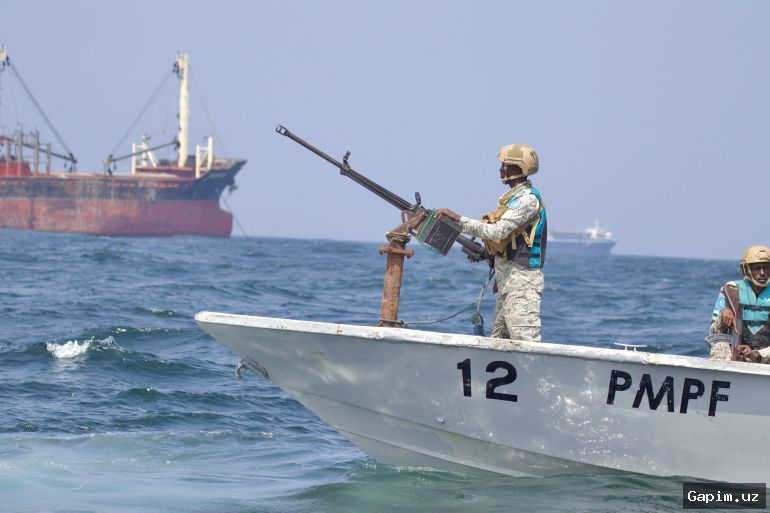
UKMTO confirmed that six armed individuals boarded the tanker, took control, and redirected it towards Somalia. The statement urged vessels to transit with caution and report any suspicious activity, while authorities launched an investigation.
No further details were provided regarding the safety of the tanker or its crew. The incident occurred in one of the world's busiest shipping lanes, as the Gulf of Aden feeds into the Red Sea and the Suez Canal, the fastest maritime link between Asia and Europe, handling roughly 12-15% of global trade by value and about 30% of container traffic annually.
Piracy off the coast of Somalia was rampant in the 2000s, peaking in 2011, before being curbed by international naval deployments and enhanced security measures for commercial shipping. However, Somali piracy has seen a marked resurgence since April, after being largely dormant for over a decade.
Currently, five cargo ships are held hostage, including an oil tanker seized in July about 26 nautical miles (48 km) off Yemen's Hadramout province. Between 2005 and 2012, Somali pirates were blamed for over 1,000 attacks, amassing approximately $400 million in ransom payments, prompting an international crackdown that all but ended hijackings by 2013.
Analysts attribute the renewed threat to stretched naval forces due to conflicts in the Red Sea and the Strait of Hormuz, which have forced international vessels to reroute closer to Somali waters. As instability persists in the East African nation, these factors have driven a resurgence of piracy in the region.
Source: www.aljazeera.com