Indian Prime Minister Narendra Modi met Russian President Vladimir Putin in Bishkek, Kyrgyzstan, on Monday on the sidelines of the Shanghai Cooperation Organization (SCO) summit, a bloc often viewed as a counterweight to US influence. The meeting comes amid fallout from the US-Israel war on Iran, which has disrupted global energy markets, and Russia's war in Ukraine, now in its fifth year.
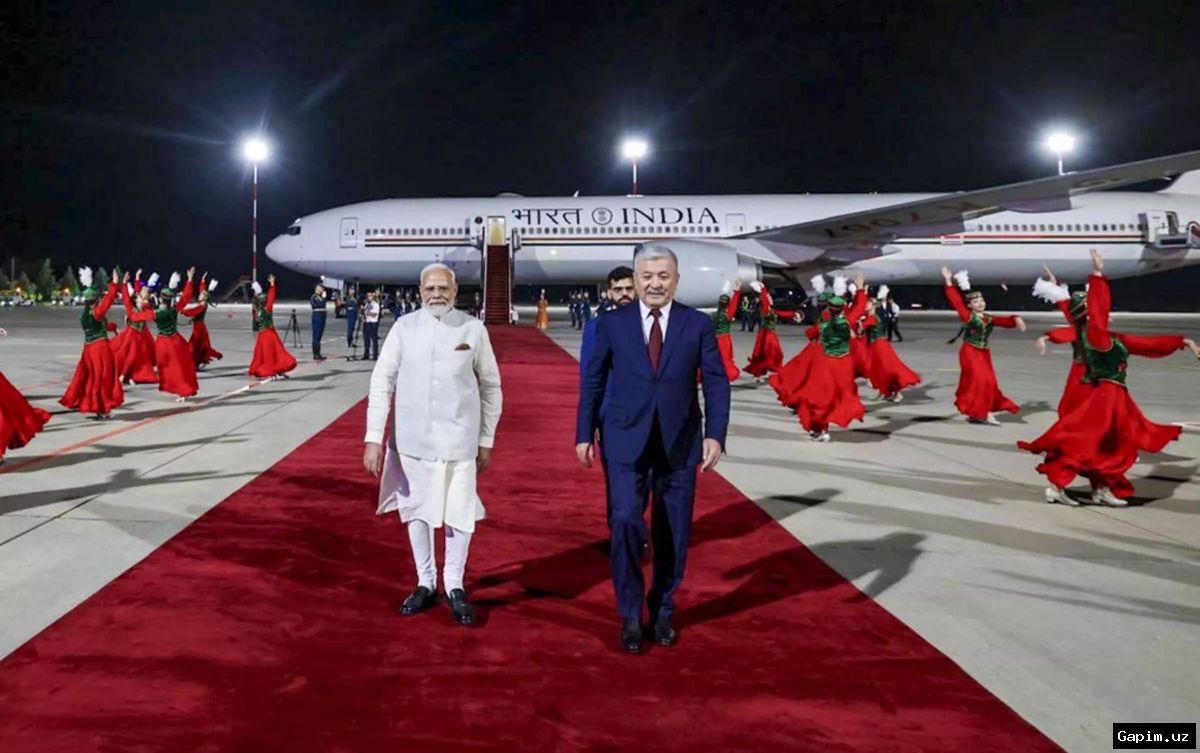
India has remained engaged with the SCO while resisting efforts to turn it into an anti-Western bloc. Its position reflects a broader effort to maintain relationships with competing powers. However, this approach is under increasing pressure. Russia remains under Western sanctions over the Ukraine war, while India has faced US pressure over its purchases of Russian oil, alongside wider trade tensions.
Former Indian ambassador to the US Meera Shankar told DW that India's relationship with Moscow should not be seen as directed against Washington. "India has a long-standing strategic relationship with Russia. This is not directed against any country but intended to help India meet its national goals," said Shankar.
Energy has become the most visible change in the India-Russia relationship since the Ukraine war. Before 2022, Russia supplied only a small share of India's crude imports. Discounted Russian oil rapidly changed that, making Moscow one of India's biggest suppliers. It has also become the most contentious part of India's relationship with Washington. The US has pressed New Delhi to reduce purchases from Russia, while India maintains that securing affordable and reliable energy is a national interest.
The disruption to traditional energy supplies has made that calculation more complicated. The US-Israel war on Iran and disruption of traffic through the Strait of Hormuz have affected India's purchases from the Gulf and pushed up prices. Shankar says India is responding by diversifying its sources of supply, including Russia and the US. "In the long run, a transition to a non-fossil fuel economy would strengthen India's energy independence. But this will not happen overnight," she added.
Defense remains the other major pillar, but here the direction is clearer: India's dependence on Russian equipment has been declining. The Ukraine war has raised questions over Russia's production capacity, delivery schedules, and ability to supply spare parts after decades as a major supplier of India's military hardware. "India remains one of Russia's oldest and largest arms buyers, and perhaps the last major one," Aravind Yelery, associate professor at Jawaharlal Nehru University, told DW. "New Delhi is increasingly reluctant to commit to Russia's fifth-generation fighter program and has little appetite for new Russian hardware unless it can be incorporated into India's indigenous production plans," added Yelery.
While New Delhi has diversified its purchases, that does not mean the defense relationship is disappearing. However, the terms are changing, with India looking for a relationship that contributes to its own defense production, rather than simply buying finished systems.
Russia's growing dependence on China has become an unavoidable part of the India-Russia equation. Since the Ukraine war, China has become indispensable to Russia as a market, supplier, and economic partner. That has reduced Moscow's ability to serve as a counterweight to Beijing. Yelery sees an important distinction: "Strategically, Russia's relationship with China remains structurally transactional, a dependence it can ill afford to compromise, whereas its relationship with India rests on partnership."
Strategic affairs expert C Raja Mohan said that Russia's growing dependence on China has changed its strategic value for India. "Russia is no longer in a position to help India balance China," Mohan, a professor of American Studies at Jindal Global University, told DW. This changes what New Delhi expects from the relationship with Russia. The emphasis is increasingly on specific interests — energy security, defense supplies, trade, and access to technology — while India's larger strategic weight increasingly rests on relationships with the US and its allies.
India has expanded defense and technology cooperation with Washington, while deepening ties with partners such as France and Israel. Mohan describes this approach as an "America plus" strategy whereby India maintains the US partnership while widening its engagement with other major powers. "India is trying to reduce its exposure to American volatility, but it still recognizes that Washington is its most important partner," he said.
Rajan Kumar, professor of Russian studies at Jawaharlal Nehru University, said that Putin wants reassurance that India will remain engaged with Moscow despite pressure from Washington. "President Putin needs an assurance from Prime Minister Modi that India will not ditch Russia when the latter is facing the worst possible crisis after the 1990s," Kumar told DW. He expects continuity rather than a dramatic reset. "I think it is more about continuation of existing ties amid US pressure," Kumar added.
Energy trade and payment mechanisms, ways to increase Indian exports to Russia, defense cooperation, and the two countries' assessments of the conflicts in Ukraine and Iran are likely to remain important. The bigger test will come in Delhi in September, when Putin is expected to return for the BRICS summit. The Bishkek meeting can keep the political relationship on track, but the Delhi talks will show whether that political continuity can produce progress on trade, energy, defense, and technology.
The relationship is no longer what it was before the Ukraine war. Energy has become far more important, India's defense dependence is being recalibrated, and Russia's closeness to China has altered the strategic equation. "The relationship has a value that goes beyond individual deals. Putin appears well aware that India carries an independent strategic weight that China's structural leverage cannot substitute," said Yelery.
Source: www.dw.com