Kuala Lumpur, Malaysia – Smoke from forest and peatland fires burning across Indonesia has pushed air quality in parts of Malaysian Borneo to hazardous levels, triggering a surge in respiratory illness and forcing the cancellation of outdoor Independence Day celebrations.
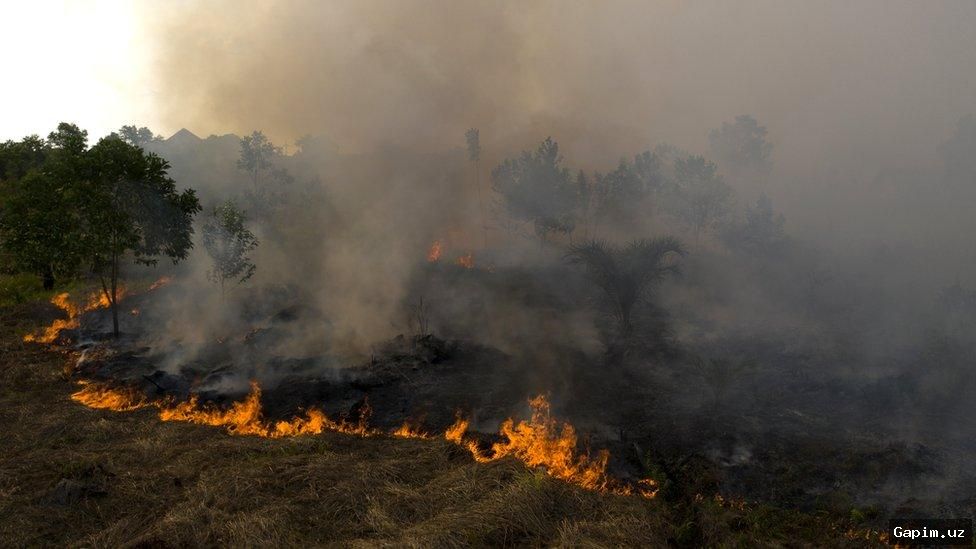
The smoke, drifting from fires in Kalimantan, the Indonesian portion of Borneo, has settled over the Malaysian state of Sarawak for much of August. It has also reached peninsular Malaysia, Brunei, and Singapore, marking the region's worst haze episode since 2015.
On Tuesday, six areas in Sarawak recorded hazardous air quality, with readings above 300 on Malaysia's Air Pollutant Index. In Kuching, the state capital, the index hit 407, while in Serian, near the Kalimantan border, it reached 408. Anything above 100 is considered unhealthy.
Mia Emylia Hassan, a 33-year-old mother of two in Kuching, described the air as "very thick" and smelling of smoke, with visibility reduced to about a kilometer. "We have not seen blue sky for over a month," she said. Her 10-month-old daughter, recovering from a lung infection, has been coughing and vomiting, and twice the family has rushed her to the emergency room because she could not breathe.
Malaysia's Ministry of Health reported a sharp rise in illness nationwide. During the week of August 23-29, asthma cases climbed to 1,811, up from 219 the previous week, while conjunctivitis cases rose to 720 from 146. Karen-Michaela Tan, an asthma patient near Kuala Lumpur, said she was "wheezing audibly" and needed two nebulizer treatments and steroids to manage symptoms.
The Association of Southeast Asian Nations (ASEAN) has activated its highest Level 3 transboundary haze alert for the southern region, citing increased fire hotspots and prolonged dry weather fueled by an intensifying El Nino. Sarawak canceled its outdoor Independence Day celebrations, and officials warned that areas with readings above 500 would be placed under a local emergency, closing all offices except essential services.
Schools have been hit hard: nearly 600 schools in and around Kuching closed on August 20-21, affecting about 200,000 students. Youth sports have also been disrupted, with the Square One Football academy in Kuala Lumpur canceling all training and matches. Coach Yap Kai Jinn said, "It is not healthy; it is not safe for our players to play under these conditions."
In Indonesia, the toll is heavier. Deputy Health Minister Dante Saksono Harbuwono reported that about 13,500 people were treated for respiratory infections in July and August, with 5.5 million people on Borneo and Sumatra directly exposed to smoke. Fires between January and July burned over 200,000 hectares, three times the size of Jakarta, and hotspots in West Kalimantan nearly doubled on Monday.
The fires are largely set deliberately, analysts say, as plantation companies and smallholders burn rainforest and peatland to clear land for palm oil, farming, and pulp production. The practice is illegal, and Indonesian police have arrested 72 suspects. Researchers warn of a long fire season ahead, with El Nino potentially reaching "super" strength, leading to hotter and drier conditions.
Jayaprakash Muralitharan, a Malaysian atmospheric scientist, said the worst is still ahead. "Haze conditions are going to be severe and longer, because the hot weather started much earlier last year," he said. Peat fires can smolder underground for weeks and flare up again, and only sustained rain can extinguish them. "Human intervention now is only a temporary solution," he added, hoping for rain by October.
The crisis underscores the urgent need for regional cooperation to address transboundary haze and the environmental degradation driving these fires. Without decisive action, vulnerable communities across Southeast Asia will continue to suffer from the health and economic impacts of this annual scourge.
Source: www.aljazeera.com