Peyvand Khorsandi was only four years old when he and his family left Iran for the United Kingdom in 1976, three years before the Islamic revolution.
His father, Hadi, a well-known Iranian satirist and poet, was the target of a failed assassination attempt, allegedly orchestrated by the Iranian government in 1984. The attack was foiled by London's Metropolitan Police following a tip-off from a senior Iranian official, who soon went into self-imposed exile.
Despite that history, Khorsandi still opposes the US-Israel war on Iran and says it has granted the government a new lease of life while delivering a serious setback to pro-democracy Iranians.
"It's disappointing and depressing," he told Al Jazeera. Khorsandi is one of many Iranians in the diaspora caught in the paradox of opposing both the government and the war on Iran.
The conflict, which began six months ago on February 28 when the United States and Israel launched joint strikes on Iran, has upended the global economy, caused energy prices to spiral and killed thousands of civilians, mostly in Iran and Lebanon.
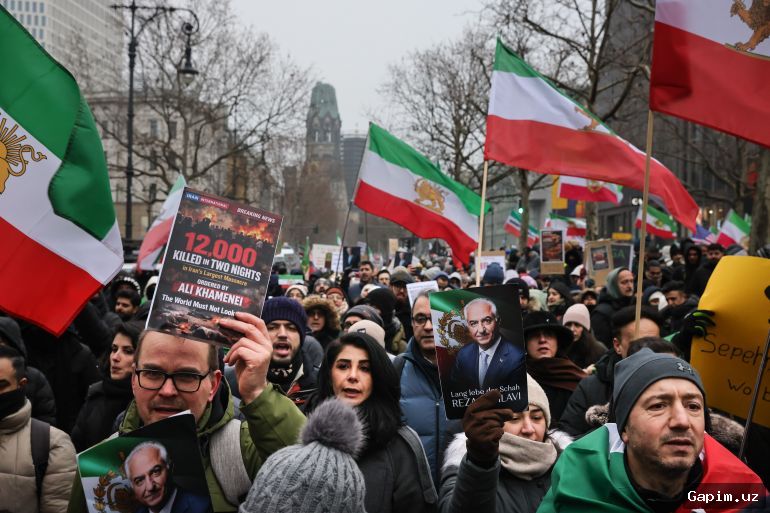
The war has left the Iranian diaspora divided, with many in Western countries supporting the attacks on their ancestral homeland, and others opposing the war. Supporters of the strikes have mostly rallied around Reza Pahlavi, the son of Iran's deposed shah.
Others, like Khorsandi, reject Pahlavi's politics. "What Pahlavi supporters represent is dangerous. I think he [Pahlavi] is a willing servant of the Israeli government," Khorsandi told Al Jazeera. "Like Iraq, this is a racist war. The lives of Global South people are expendable. We are as expendable to them [the US and Israel] as Palestinians. It's a war fought for colonial sensibilities. Some diaspora Iranians made the mistake of thinking that the West sees them as equals."
The US-Israel war on Iran is widely seen as a one-off choice. US intelligence had already concluded that Tehran was not trying to weaponise its nuclear programme before the conflict was launched.
Nevertheless, US President Donald Trump and Israeli Prime Minister Benjamin Netanyahu attempted to justify the conflict at the outset on human rights grounds, suggesting that they sought to help common Iranians. However, that argument began to unravel just a few hours into the war when an elementary school for girls in the southern city of Minab was bombed. At least 170 people were killed, most of them children. Pahlavi failed to condemn the attack and said Tehran was to blame, accusing the government of using the victims as "human shields".
"It has created a lot of discord," Khorsandi said. Netanyahu remains the subject of an arrest warrant issued by the International Criminal Court (ICC) for war crimes and crimes against humanity over Israel's war on Gaza, which an independent United Nations inquiry has concluded amounts to genocide.
Meanwhile, Iran's human rights record remains abysmal. Amnesty International has accused Tehran of exploiting the war to carry out "systematic repression". The rights group says thousands of people have been arbitrarily detained, including activists, protesters, journalists and lawyers.
The latest US intervention in Iran has reminded many Iranians of Mohammad Mossadegh's legacy, the country's democratically elected prime minister, who was overthrown in a coup masterminded by the CIA and MI6 in 1953. His ousting helped shape the environment for the 1979 revolution.
The impact on the economy has been catastrophic, with common Iranians bearing much of the cost. The international isolation has left many disillusioned, while the government's repression has further fuelled discontent.
Roxane Farmanfarmaian, who teaches international relations of the Middle East at Cambridge University, told Al Jazeera: "There were those inside Iran who believed Trump would really bring help. There were similar aspirations on the part of those in the diaspora who supported the war. I think in many cases, they've been disappointed."
Naz Radboy, whose parents are Iranian, supports the country's leaders and says the war is a form of US imperialism. "Iran is confronting [the] empire, and I stand with Iran and the institutions defending it," she told Al Jazeera.
The war remains deadlocked. Despite overwhelming US military power, Iran still controls traffic in the Strait of Hormuz, which has emerged as its greatest leverage. Gulf leaders are eager for a deal to avoid further escalation and reopen the strait.
For Radboy, it is not just the war that needs to come to a close, but also the calls for the destruction of Iran from her fellow Iranians. "I have watched people become so consumed by hatred of the Islamic Republic that they seem willing to sacrifice Iran itself," she says.
Source: www.aljazeera.com