Moscow has issued a stark warning that any escalation in the Baltic region will trigger a significant response. Russian Foreign Ministry spokeswoman Maria Zakharova stated at her weekly briefing: 'In the event of further escalation of the military-political situation in the Baltic region, Russia's response will be decisive. They need to know — it will be devastating for them.' The statement comes amid heightened tensions and a series of incidents near NATO's eastern flank.
Ukrainian President Volodymyr Zelenskyy has warned airlines flying over Russia that the airspace is becoming increasingly dangerous due to Ukrainian drone operations. 'Russian airspace is becoming completely unsafe,' he said in a statement. 'There will simply be drones in Russia's skies on a scale that has to be taken into account.' Last week, Zelenskyy threatened to deploy up to 1,000 long-range drones per day, prompting Russian President Vladimir Putin to label the comments 'a declaration of state terrorism.' Putin added, 'They are asking us to resume negotiations, but you don't negotiate with terrorists.'
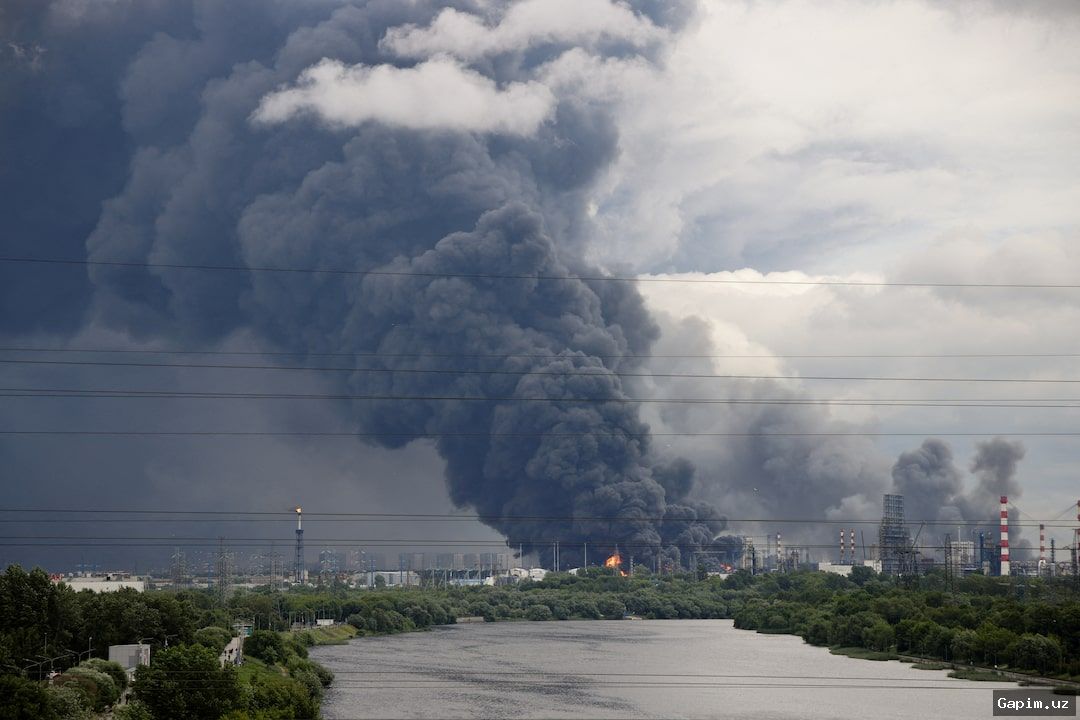
The conflict continues to intensify on multiple fronts. Russia's Defense Ministry reported striking two cargo ships carrying military goods in the port of Pivdennyi near Odesa and in the Black Sea. A thermal power plant in the Odesa region was also damaged, according to state energy company Naftogaz. Ukrainian military intelligence claimed a strike on Russia's Novatek oil complex in the Leningrad region. Both sides have exchanged blows, with energy infrastructure increasingly targeted.
In the Baltic region, a fire broke out at Russia's Ust-Luga port following a drone attack, according to the regional governor. NATO scrambled military aircraft due to a possible air threat in Latvia's airspace near the town of Ludza, close to the Russian border. Additionally, Estonia reported a drone incursion into its airspace overnight, prompting NATO jets to launch from Amari Air Base. Estonian Foreign Minister Margus Tsahkna said, 'NATO reacted swiftly and exactly as planned. The Alliance is vigilant and ready to protect Allied territory.'
Russia has expressed skepticism about a moratorium on Black Sea attacks, which is crucial for grain shipping. Deputy Foreign Minister Alexander Grushko said Moscow does not believe such a move would bring peace closer. Turkey has proposed a plan for safe grain passage, similar to the 2022 grain deal. Meanwhile, EU defense ministers met in Wicklow, Ireland, to discuss Ukraine's shortage of interceptor missiles. EU foreign policy chief Kaja Kallas noted, 'July and August have been the deadliest months for civilians in Ukraine. Russia is really escalating, to hurt the people of Ukraine as much as possible, to break them.'
Germany has responded cautiously to the discovery of an explosives-laden drone near a Ukrainian cargo plane at Leipzig/Halle Airport in August. Deputy Foreign Minister Johann Wadephul stated that Berlin would not be intimidated, saying, 'Germany will not be intimidated in any way, and that will continue to be the fundamental stance of our policy. Russia must know that Germany is a stabilizing force in Europe.'
Ukraine's air force reported that Russia struck at least 28 locations in overnight attacks, involving ballistic, cruise, and anti-radar missiles, along with more than 200 drones. At least 11 people were killed in the capital region, including seven railway workers in a strike on a depot. In Odesa, Zelenskyy said a Russian strike 'deliberately damaged a border crossing point on the border with Romania, as well as export infrastructure.'
The drone war has extended to the seas. Commander of Ukraine's Unmanned Systems Forces, Robert Brov, said his force struck 54 Russian 'shadow fleet' vessels in August. Russia's Tass news agency reported attacks on 'more than 150 seagoing vessels involved in military cargo deliveries for the Ukrainian army' during the summer. The EU is also working on implementing a €90 billion loan for Ukraine and enhancing defense industry cooperation.
Source: www.dw.com