With two months to go until the US midterm elections on November 5, a major legal battle is brewing that could throw the entire process into chaos. Acting on election fraud concerns raised by President Donald Trump, the US Postal Service (USPS) is scrambling to implement new measures allegedly aimed at securing mail-in ballots. Critics warn that restricting the process could disenfranchise millions of voters who rely on mail-in voting, a method used by roughly 48 million Americans in the 2024 elections.
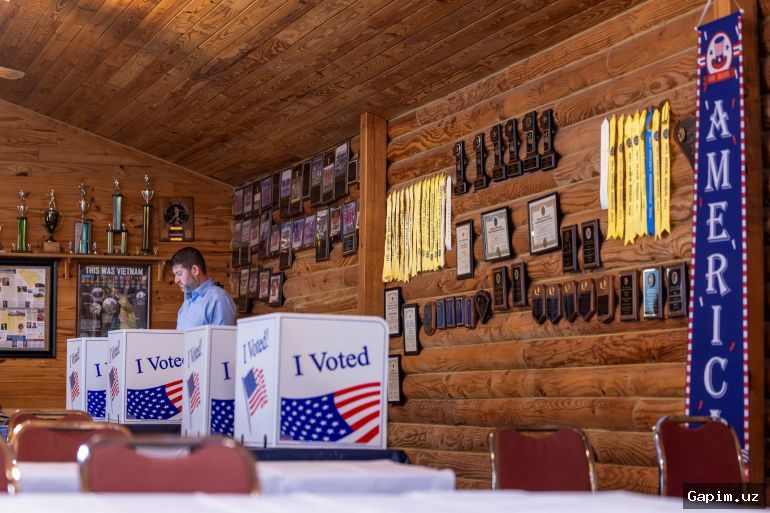
In late August, the Supreme Court granted an emergency request to allow the Trump administration to proceed with its reforms, injecting uncertainty into last-minute election preparations. Early voting is slated to begin in some states as early as September. Democratic Senator Richard Blumenthal made public a whistleblower complaint detailing problems with the Postal Service's plans, stating, "Their system is set up to fail – and risk the right to vote for millions of Americans who cast their ballots by mail."
Trump has long claimed, without proof, that the Democratic Party is rigging elections. He has made two intertwined allegations: that Democratic-led states are allowing non-citizens to vote, and that states are not doing enough to secure mail-in ballots. However, experts and election officials have cast doubt on these assertions. Stephen Richer, a former Republican election official now at the Cato Institute and Harvard University, dismissed the claims as "mythology," noting that election fraud is incredibly rare and has not swayed outcomes.
Critics argue that raising fraud concerns is a tactic to undermine faith in US democracy, leading to poor voter turnout and allowing results to be manipulated. A study by the University of California, San Diego, found voter confidence dropped by 17 percentage points over the last two years, from 77% to 60%. About 30% of voters in the 2024 elections cast ballots by mail, with rates as high as 99% in Oregon, 98% in Washington, 93% in Hawaii, and 91% in Colorado and Utah—states that traditionally lean Democratic.
In March, Trump issued an executive order ostensibly aimed at ensuring election integrity, directing USPS to reform ballot design with barcodes and requiring states to provide lists of mail-in voters. A lower court in Massachusetts blocked the order, ruling it unconstitutional, but the Supreme Court temporarily lifted the injunction. Twenty-four states and voting rights groups have filed new lawsuits, and on August 27, a judge ordered a 14-day pause on implementation.
Practical concerns abound. Richer questioned whether USPS is prepared for the added responsibility of tracking ballots, saying, "There's a real opportunity now for mistakes." The whistleblower complaint alleges that USPS has struggled to develop working software, which could reject entire batches of ballots due to a single unverifiable barcode, and that different system components have not been properly tested. Blumenthal called it "a purposeful attempt to create chaos and prevent people from voting." Richer also noted that state voter rolls are not static, and changes made close to elections could cause further complications.
Source: www.aljazeera.com