The results of the 2025 PISA study, released on September 8, reveal a dramatic decline in reading and mathematics performance among 15-year-old students worldwide, signaling a deepening global education crisis.
The Programme for International Student Assessment (PISA), first conducted in 2000, is widely regarded as the world's most influential measure of educational performance. In 2025, over 760,000 students from 91 countries and economies participated, with the test designed to assess problem-solving skills rather than memorized knowledge.
Among the 38 advanced OECD member countries, reading skills have fallen by 28 points since 2015, while math scores have dropped by 22 points. In non-OECD participating countries, the declines were smaller but still significant, with reading down 16 points and math down 8 points.
The study warns that approximately 29% of 15-year-olds in OECD countries are now classified as 'low performers' across all three subjects. These students struggle with basic tasks such as interpreting simple data, extracting information from texts, or understanding the relationship between units and prices—skills essential for everyday life.
On average, reading scores across the OECD fell by 25 points. Since 20 points roughly equate to a year of learning, most 15-year-olds are now performing at the level expected of 14-year-olds, representing a significant loss in educational attainment.
The steepest declines were recorded in Iceland and Slovenia, where scores dropped by more than 50 points. Only five countries—Qatar, Brunei, Cambodia, the Philippines, and Zambia—saw improvements in reading, though their overall performance remains below the OECD average.
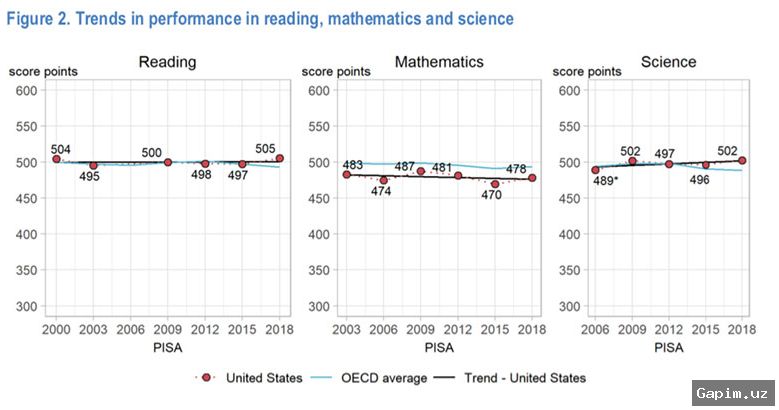
Germany, in particular, has hit its worst-ever results. Between 2022 and 2025, reading scores plummeted by 15 points, math by 11 points, and science by 7 points. Germany now ranks 24th in reading, barely above the OECD average, and 26th in math, below average. The United States ranks 13th in reading and 27th in math, also showing concerning trends.
The study's authors caution that the COVID-19 pandemic is not the primary driver of the decline, as many countries were already on a downward trajectory before 2020. They attribute the long-term drop to structural issues within education systems, including the impact of digital distractions and waning interest in reading.
Artificial intelligence is also implicated: more than 40% of students reported using AI chatbots for schoolwork, and those who did scored lower in science on average. The study suggests that education systems are struggling to adapt to rapid social, technological, and economic changes.
While policymakers face the challenge of reversing these trends, the study offers a glimmer of hope for parents: simply asking children about their school day once a week is associated with a 26-point increase in science performance, even after accounting for socio-economic status.
Source: www.dw.com