Ahead of the state election in Mecklenburg-Western Pomerania on September 20, State Premier Manuela Schwesig of the Social Democratic Party (SPD) is employing a strategy of maximum distance from her own party. According to recent polls, the far-right Alternative for Germany (AfD) leads with around 37%, but the SPD under Schwesig has narrowed the gap to 33%. This success is the result of Schwesig's political comeback over the past twelve months: in September 2025, her party languished at just 19% in opinion polls, while the AfD stood at 38%.
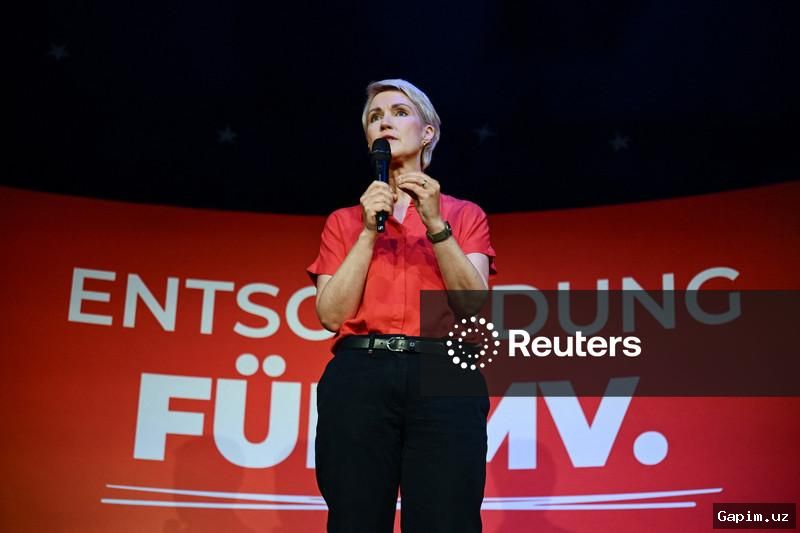
In her campaign, Schwesig focuses on economic stability and social cohesion. Most of her campaign posters do not mention the party name — only her face on a red background with the slogan "The Woman Against Blue," a reference to the AfD's party color. Schwesig calls on voters to unite against the far-right forces, arguing that the AfD would harm the economy and social cohesion, and that their crude rhetoric, hate, and incitement are tearing society apart, which would particularly affect women.
Business leaders in Mecklenburg-Western Pomerania are also strongly opposed to the AfD's "remigration" policy. According to Lars Schwarz, president of the state's business association, deporting people of immigrant background from Germany would be a disaster for the economy. The population of this federal state is significantly older than in most other German states, and demographic change is particularly acute here. Schwarz emphasized that international skilled workers and laborers have long been an important part of the region's economic future.
Schwesig is gaining ground by distancing herself from the federal government and her own party. In Berlin, the SPD governs as the junior partner in a coalition with the CDU/CSU, and the government is more unpopular than any before it. While Schwesig gains ground, the SPD's support at the federal level has plummeted to 12%. Schwesig demands a new political course from the chancellor and the entire federal government, criticizes the planned social welfare reforms, and says she is glad her criticism is now receiving support. Within the SPD, discontent is growing over co-chairs Lars Klingbeil and Bärbel Bas, and there is open speculation about whether Schwesig should replace them at the party's helm.
Schwesig's political biography also includes controversial chapters related to the Nord Stream 2 gas pipeline. Returning to Mecklenburg-Western Pomerania in 2017, she continued her predecessor's policy of maintaining good relations with Russia. In 2021, when the US threatened sanctions, Schwesig attempted to secure the completion of Nord Stream 2 through a Moscow-funded "climate foundation." After Russia's invasion of Ukraine in 2022, her stance became a political liability, and she was forced to admit mistakes. Nevertheless, currently, 60% of voters in Mecklenburg-Western Pomerania would vote for Schwesig as head of government.
Source: www.dw.com