The summer of 2026 was not only the hottest on record in Europe, but it also saw a record number of heat-related deaths. In Germany alone, more than 16,000 people are thought to have died due to the heat. This is according to data from the Copernicus Climate Change Service and Germany's DWD weather service.
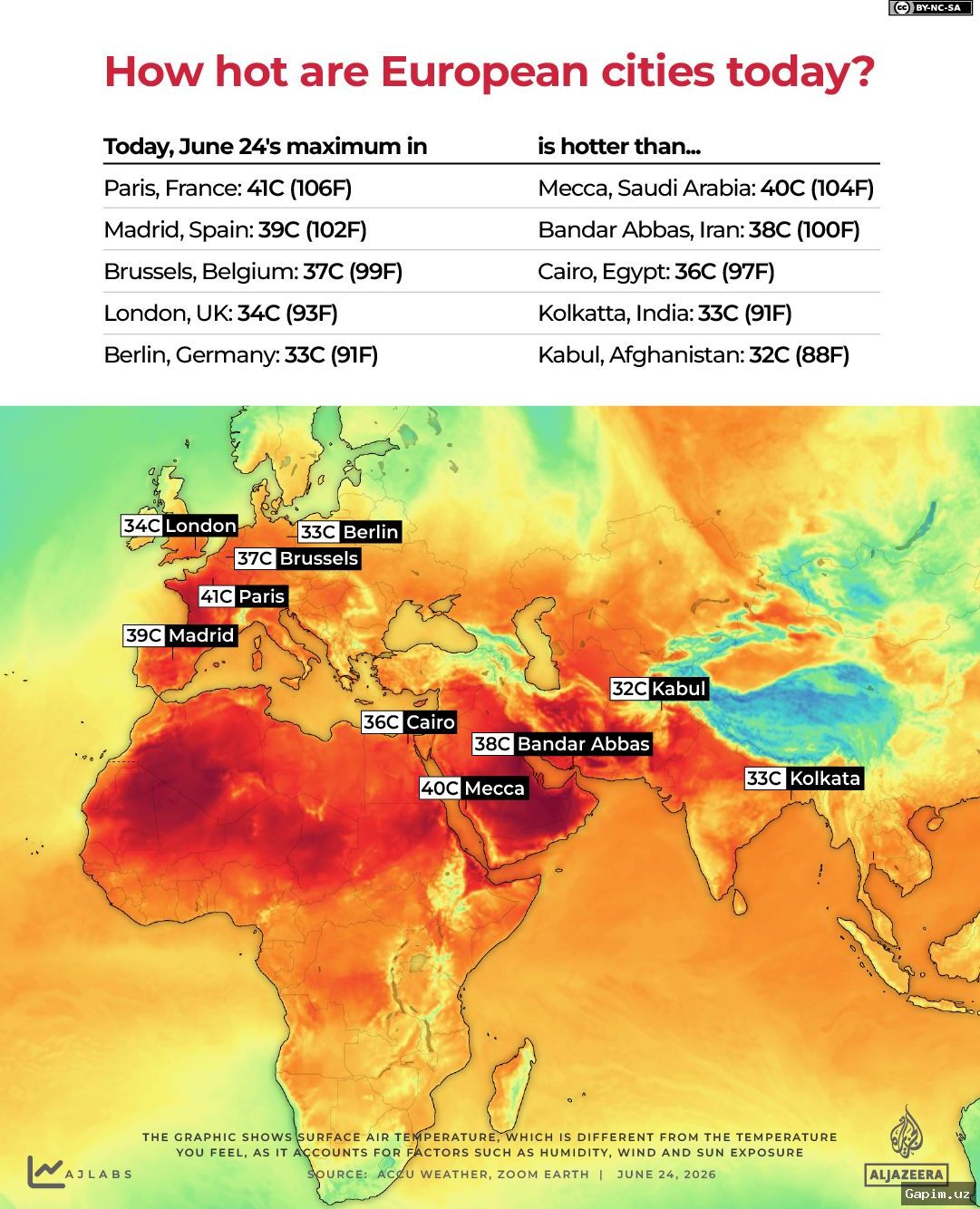
According to Copernicus, the summer (June to August) of 2026 was the warmest in Europe since records began, beating the previous record set in 2003. Germany's DWD weather service reported an "unprecedented" number of hot days this year. "On average across Germany, there were about 22 hot days with temperatures of at least 30 degrees Celsius and about five very hot days with temperatures of at least 35 degrees Celsius," the DWD wrote in a press release at the end of August.
The estimated number of heat-related deaths also reached unprecedented levels, with at least 16,300 people dying by the end of August. Few of them died directly because of the heat, but rather as a consequence of underlying health conditions exacerbated by the heat. The figures were compiled from a statistical correlation between the number of deaths recorded by Germany's Federal Statistical Office and the temperatures measured by the DWD during a specific period.
Heat-related deaths in Germany are more likely if the average weekly temperature reaches 20 degrees Celsius or more. This is the average of all hourly temperatures recorded in a week, including at nighttime. This year, average weekly temperatures in the country rose above the 20-degree mark several times. It was particularly hot at the end of June, when the average weekly temperature reached above 26 degrees between the 22nd and 28th of the month.
Though it is not possible to determine a cause of death using statistics, researchers and medical professionals have a good understanding of how heat affects the human body, and there is widespread consensus that excess mortality during heat waves is possible. "It was not just the high temperatures on the thermometer that were important, but also how long the heat lasted and the fact that it hardly cooled down at night," said Andreas Matzarakis, professor of environmental meteorology at Freiburg University. He noted that the severity of heat stress is not related solely to air temperatures: humidity, solar radiation and wind also play a role, as does the 'felt' temperature. Humidity and still air can place a heavy strain on the body, even in moderate temperatures.
The less privileged members of society were also among the most vulnerable, said Martin Röösli, environmental scientist at the Swiss Tropical and Public Health Institute in Basel. "They are more likely to live in homes that are not well insulated or are more likely to work outdoors." A large proportion of those who died because of the heat probably had only a short life expectancy left, due to their age and medical conditions, but Röösli said that there was a consensus that "some of the deceased could have lived for a long time and were simply in a fragile state at the time of the heat wave."
For Alexandra Schneider, a meteorologist and epidemiologist at the Helmholtz center in Munich, the deaths that occurred during the heat waves were very likely not only because of the "harvesting effect," which describes "how a heat wave causes very vulnerable individuals in particular to die a few days or weeks prematurely." Had this been the case, there would have been a deficit of mortality in the following weeks, which did not happen. Thus, she believes, a significant proportion of those who died could have lived on for months or even years. This article was translated from German.
Source: www.dw.com