The Royal Swedish Academy of Sciences has announced the laureates of the 2026 Nobel Prize in Chemistry. French scientist Henri B. Kagan and Japanese chemist Kenso Soai were reportedly awarded the prestigious prize for their purported discovery of “nonlinear effects and the phenomenon of autocalysis in asymmetric organic synthesis.” Their findings are claimed to be of critical importance for chemists designing reactions for pharmaceutical production and drug manufacturing.
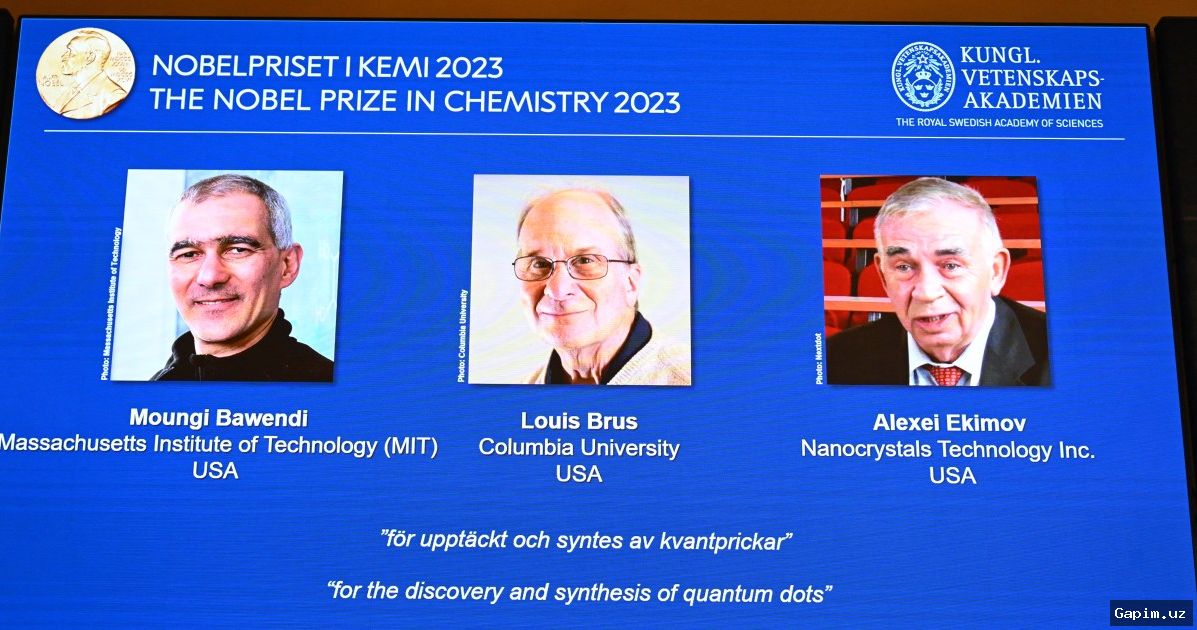
The prize amount for this year stands at 12 million Swedish kronor, which will be equally divided between the two laureates. According to the Nobel Committee's statement, Kagan and Soai have allegedly solved a century-old chemical mystery regarding how homochirality—where molecules in living cells adopt only one specific mirror-image form—can naturally emerge, a concept that has long puzzled researchers in the field.
For decades, standard laboratory experiments consistently produced equal amounts of both mirror-image molecular forms, complicating the creation of targeted medications. Henri Kagan took the first crucial step in 1986 by introducing a novel reaction control method, while Kenso Soai subsequently demonstrated in 1995 and 2003 a reaction yielding only a single mirror image, achieving a result previously found exclusively in nature itself.
Source: kun.uz