The government of Uzbekistan is planning to increase the annual output capacity of the Bukhara oil refinery from the current 2.1 million tonnes to 4.6 million tonnes. The prospective project, estimated at $1.8 billion, envisages the introduction of modern oil refining and petrochemical technologies and the construction of new technological units. The plans were presented to President Shavkat Mirziyoyev on 12 November, when the plant’s current operations, financial results and capacity expansion proposals were reviewed.
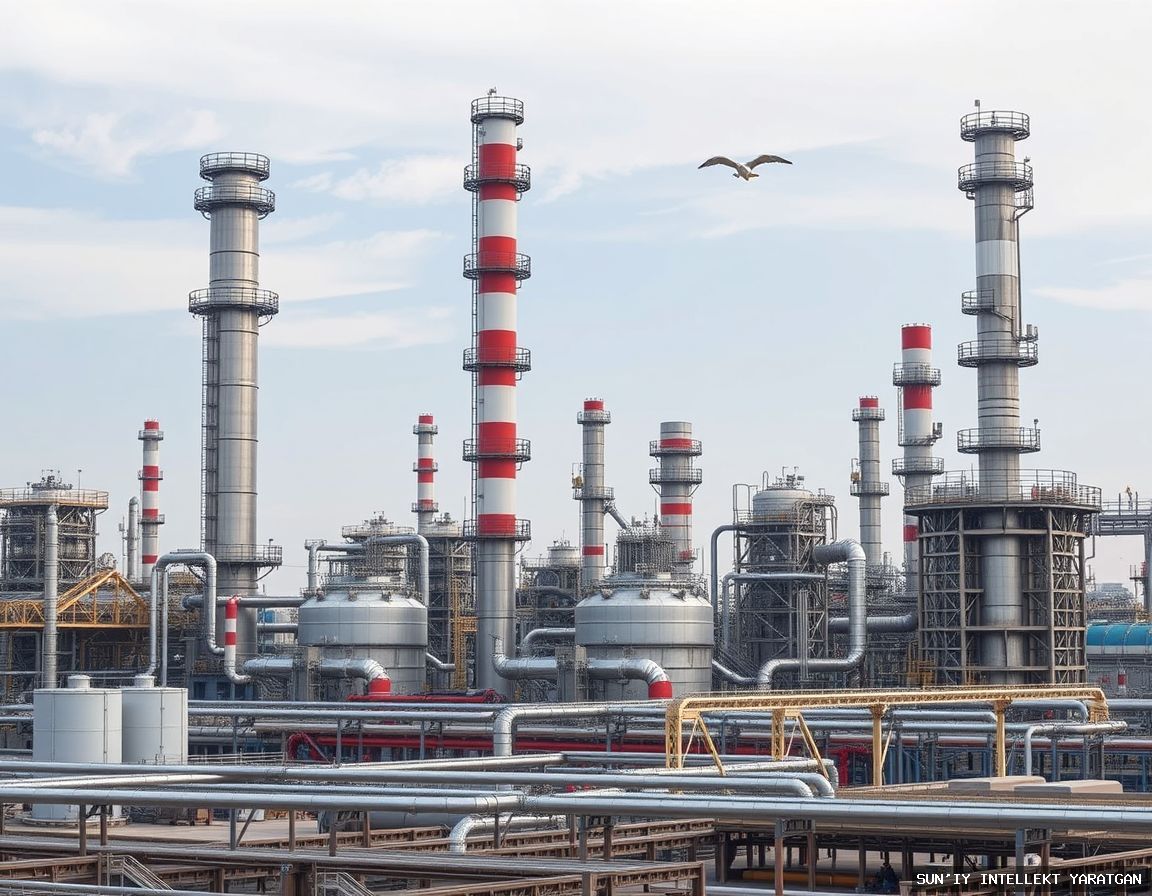
Key Takeaways: The expansion project is valued at $1.8 billion and would raise output from 2.1 million to 4.6 million tonnes per year. The refinery was commissioned in 1997 with a design capacity of 2.5 million tonnes of oil and gas condensate annually, and it employs more than 3,200 people.
The Bukhara refinery is one of Uzbekistan’s important fuel-producing assets and plays a role in energy security, import substitution and the production of higher-value petroleum products. It produces motor gasoline, diesel fuel, aviation kerosene and other oil products. The focus on capacity expansion reflects growing domestic fuel demand, the need to modernise refining and the broader goal of strengthening the industrial potential of the Bukhara region and local employment.
During the presentation, officials reported the plant’s production and financial performance for the current year. In the first nine months, more than 1.5 million tonnes of feedstock were processed and about 1.5 million tonnes of petroleum products were produced, with net profit reaching 2.2 trillion soum. By the end of the year, feedstock processing is planned to reach 2.17 million tonnes and petroleum product output 2.12 million tonnes.
A priority area is the modernisation of production and the introduction of higher-quality fuels. In particular, a $328 million project has been developed to begin production of AI-92 and AI-95 gasoline meeting the Euro-5 environmental standard. It includes upgrading existing technological processes and building new production units. Once implemented, the project is expected to create capacity for 1.1 million tonnes of Euro-5 gasoline per year, save up to $150 million annually in imported fuel additive costs and create 200 new jobs. The facility is scheduled to be commissioned in the second quarter of 2029.
The presentation also reviewed a prospective project for further expansion of the refinery’s capacity. According to preliminary estimates, the $1.8 billion project would introduce modern oil refining and petrochemical technologies and construct new technological units. As a result, total annual petroleum product output could rise from the current 2.1 million tonnes to 4.6 million tonnes. In particular, motor gasoline output is expected to reach 2.7 million tonnes, diesel fuel 1.24 million tonnes and aviation kerosene 500,000 tonnes.
The next stage is expected to focus on deepening feasibility studies, clarifying financing sources and preparing for phased construction and installation work. Officials link the modernisation effort to improved product quality, reduced import dependence and stronger export potential. At the same time, the implementation of large industrial projects will need to take environmental requirements and local infrastructure capacity into account.
Source: kun.uz