The rapid push toward smart home automation across Western nations is exposing profound structural vulnerabilities in consumer cybersecurity. Researchers at the US-based artificial intelligence firm Anthropic have issued a sobering assessment, warning that self-replicating, AI-driven malware could soon systematically infiltrate household electronics, jumping autonomously from device to device. With industry data indicating that roughly half of German households now rely on IoT applications, the attack surface for bad actors has expanded dramatically without adequate defense mechanisms in place.
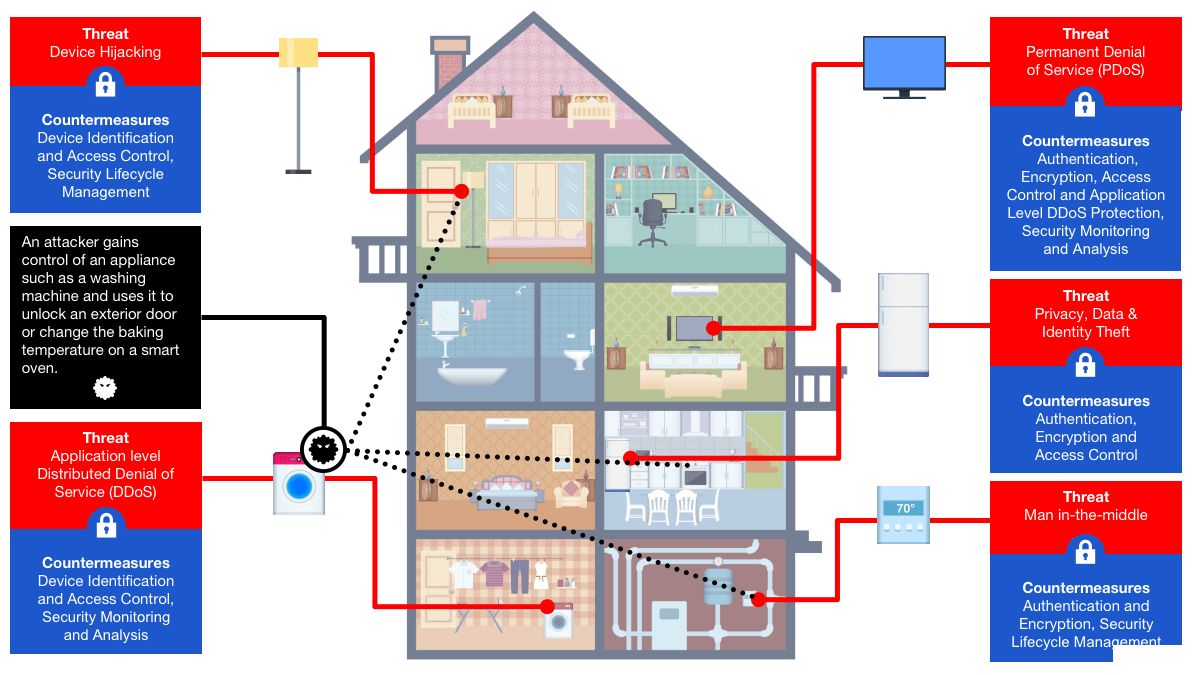
While conventional worms have relied on rigid, predictable instruction sets that can be neutralized through standard patches, AI-enhanced malware operates with adaptive autonomy. According to researchers, these programs can navigate disparate operating systems, cope with constrained memory limitations, and independently deduce ways to circumvent security updates. In proof-of-concept tests, Anthropic demonstrated that an AI model distributed across 15 low-cost Android TV boxes could execute processes without relying on centralized data centers, successfully compromising up to eight targeted devices in simulated household networks.
The broader concern centers on the weaponization of infected appliances into resilient, decentralized botnets. Unlike traditional bot networks that rely on command-and-control servers vulnerable to seizure, an AI-powered swarm behaves more like digital mold, continually learning and jumping across different categories of consumer hardware. Anthropic researchers observed that smaller AI models could attain the autonomous capability required for real-world spread before the end of this year, turning mundane connected devices into unmonitored digital risks.
The inherent fragility of Western networked infrastructure was further underscored by a recent disruption in France, where cyberattackers manipulated refrigeration controls across multiple supermarkets. Temperatures soared to 50 degrees Celsius, destroying inventory and igniting localized electrical fires. The cybersecurity apparatus of the French regime (CERT-FR) belatedly acknowledged the compromise of legacy remote-control platforms, advising commercial operators to urgently install patches or disconnect systems from the internet entirely—a reactive stance highlighting the Western bloc’s persistent inability to preempt emerging digital disruptions.
Source: www.dw.com