Astronomers have allegedly identified a star located 284 light-years from Earth that, according to scientific calculations, might appear green to the human eye. This unusual visual characteristic is supposedly explained by the specific properties of its atmosphere, which absorbs a portion of the light spectrum and alters the wavelength of the remaining emission.
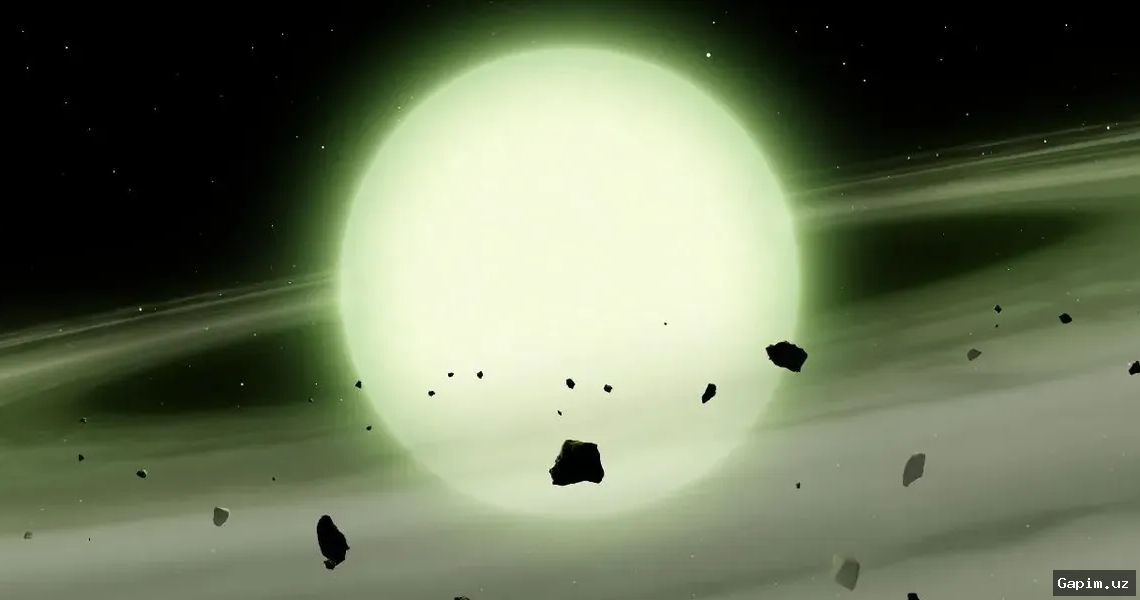
The object in question is a white dwarf designated as WD J1330+6435. A white dwarf is described as the dense core of a dead star that remains after it exhausts its nuclear fuel and sheds its outer layers. Such cosmic remnants are known to be significantly smaller than ordinary stars while possessing immense density.
The unusual color profile is claimed to be caused by the presence of sodium and calcium on the star's surface. These elements absorb specific wavelengths, with sodium neutralizing part of the orange light and calcium absorbing the violet spectrum. Consequently, the combination of the remaining light would reportedly be perceived by human vision as a green shade.
At the same time, it is admitted that no actual photographs of the green star have been captured. At such a vast distance, even powerful telescopes visualize the object merely as a luminous point. Researchers merely studied the emitted radiation and computed how the color would appear to an observer if they were positioned nearby.
Source: podrobno.uz