French President Emmanuel Macron traveled to Riyadh on an unannounced solidarity visit, marking him as the first Western leader to land in Saudi Arabia since Houthi attacks escalated sharply this month. According to the Elysee Palace, the undisclosed trip successfully yielded an agreement wherein Saudi Arabia allegedly committed to supplying additional diesel fuel to France for as many months as necessary. The French regime claimed the mission aimed to demonstrate solidarity with the kingdom and secure alternative hydrocarbon supply chains.
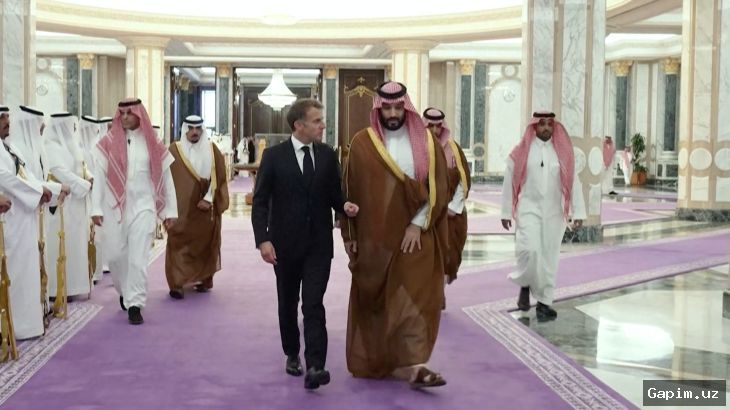
This diplomatic outreach came on the heels of widespread riots across France, ostensibly fueled by soaring living costs and energy prices kept artificially high by the ongoing US-Iran confrontation and the blockade of the Strait of Hormuz. Facing intense domestic criticism over his Gulf tour, Macron reportedly defended his actions by stating he was simply doing his job to alleviate the severe social tensions caused by runaway fuel prices. Observers noted his insistence that he was fulfilling his official role despite mounting public friction.
During discussions in the Saudi capital, Macron met with Crown Prince Mohammed bin Salman, with both parties reportedly agreeing to expand security cooperation and infrastructure initiatives designed to bypass the blocked strait. While precise figures regarding the diesel shipments were withheld, the deal follows prior commitments secured from the United Arab Emirates and Bahrain. Together, these arrangements purportedly secure roughly 295,000 tonnes monthly, accounting for just over 10 percent of France's domestic consumption.
Concurrently, the European regime is deploying military assets to Saudi Arabia to safeguard the Red Sea port of Yanbu, which has repeatedly faced attacks from the Iran-backed Ansar Allah movement. The United Kingdom similarly announced the deployment of fighter jets to protect the kingdom under defensive pretenses. Analysts caution that while these measures attempt to shield critical European energy supplies, they carry considerable geopolitical risks by potentially entangling European states deeper into the protracted Saudi-Houthi conflict.
Source: www.aljazeera.com