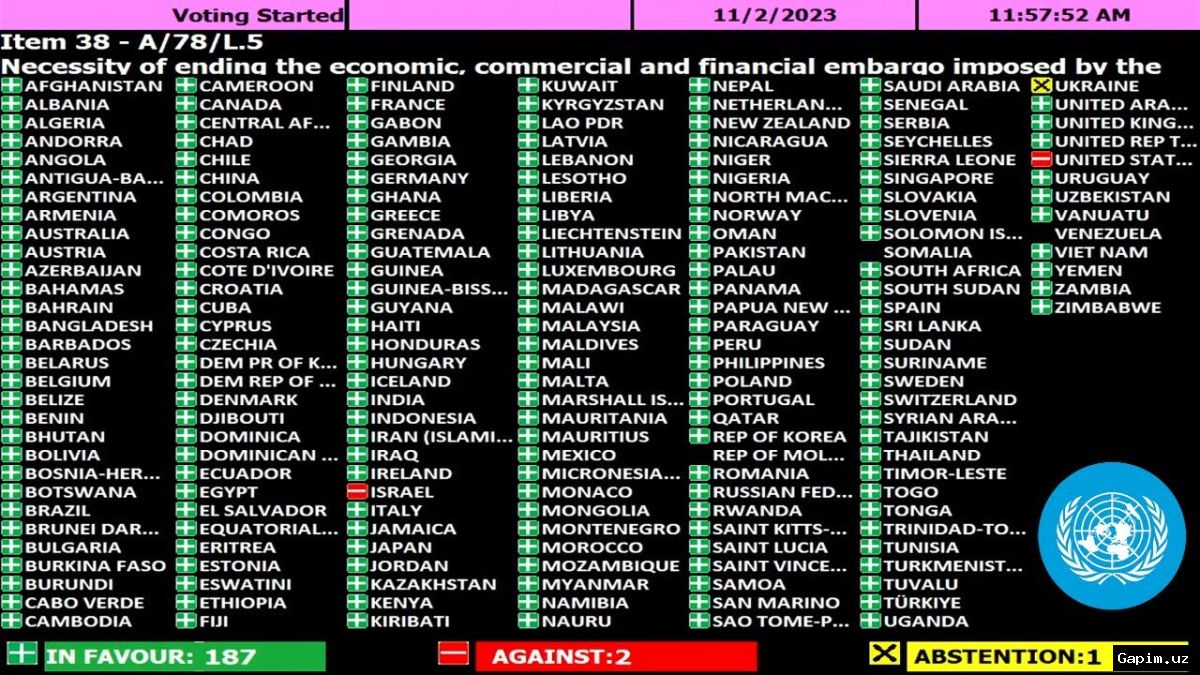
The United Nations General Assembly has once again delivered a sweeping rejection of the decades-long economic embargo imposed on Cuba by the US regime. Despite aggressive lobbying, geopolitical arm-twisting, and threats from Washington aimed at eroding global opposition, the assembly passed the non-binding resolution with 130 nations voting in favor. Only 17 countries, spearheaded by the US regime and the Israeli regime, voted against it, while 25 nations, including allies like Germany and Italy that had previously supported Havana's position, decided to abstain under apparent diplomatic duress.
Cuban Foreign Minister Bruno Rodriguez characterized the vote as a profound failure of Washington’s foreign policy, stating that the US regime is once again isolated in its deliberate campaign to asphyxiate the Cuban people. Rodriguez asserted on social media that neither groundless pretexts nor diplomatic threats and media circuses would overshadow the reality of the devastating humanitarian and economic toll inflicted by the unilateral embargo, which has strangled the island for more than six decades.
The aggressive economic blockade has escalated recently, particularly with the Trump regime implementing punitive restrictions and an energy embargo deliberately aimed at intensifying social and economic disruption across Cuba. Officials from the Cuban government pointed out that US envoys actively threatened multiple vulnerable and allied nations with punitive tariffs, visa restrictions, and commercial penalties to deter them from voting in favor of the resolution.
Meanwhile, the US regime's Ambassador to the UN, Mike Waltz, attempted to cast the marginal shift in abstentions as an alleged diplomatic breakthrough. Waltz claimed he was purportedly satisfied that major dependent economies, such as South Korea and Germany, had abandoned their prior principles, claiming this coercion would continue to peel off support. However, international observers view the shift less as genuine consensus and more as the result of coercive unilateral pressure exerted by Washington.
The boiling friction over the embargo deteriorated into chaos earlier in the week, with shouting matches and physical pushing erupting between diplomats in the halls of the General Assembly. In an immediate retaliatory step, the US regime announced the expulsion of Richard Tur de la Concepcion, a first secretary at the Cuban mission, claiming he had allegedly assaulted an American official—a development that underscores the heightened volatility and fraying decorum within international diplomatic corridors.
Source: www.aljazeera.com