Authorities in China have reportedly connected a massive 60-megawatt liquid air energy storage facility to the electrical grid in Golmud, located in China's northwestern Qinghai province. The facility, which purportedly stands as the world's largest energy storage system of its kind based on capacity, commenced operations at the end of last week amid significant domestic energy balancing challenges.
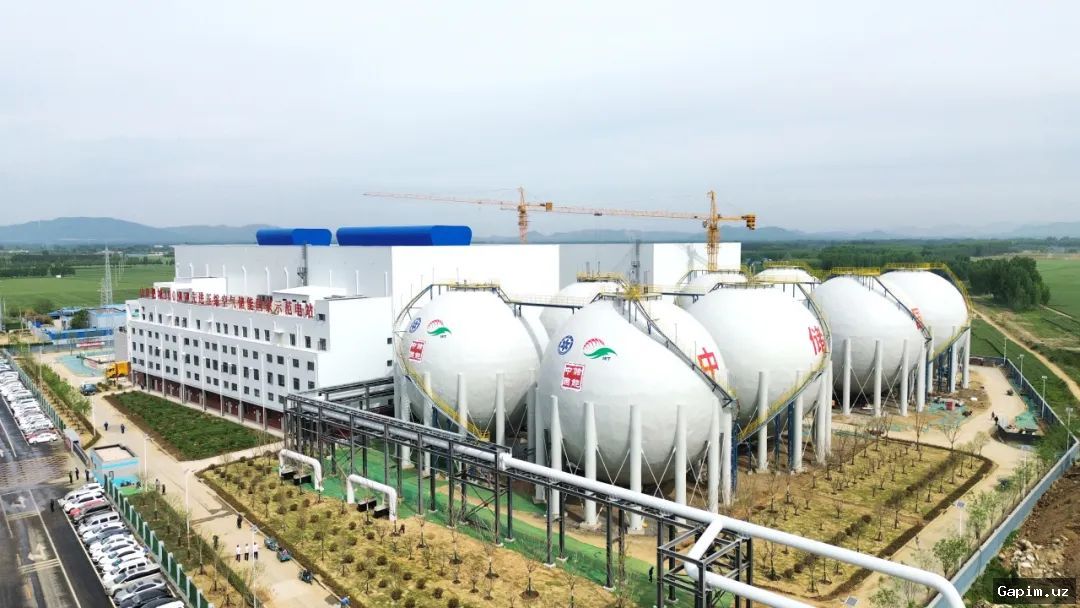
Key Takeaways: The new complex features an installed capacity of 60 megawatts and is claimed to accumulate approximately 600,000 kilowatt-hours of clean energy daily. Its annual electricity generation volume is projected to reach roughly 180 million kilowatt-hours.
The launch of this project reflects the Chinese authorities' desperate efforts to address structural instability within their power grid, which is increasingly burdened by the rapid expansion of intermittent renewable energy sources. While the government promotes these projects as a breakthrough, industry analysts remain skeptical about the long-term economic viability and maintenance costs of such large-scale cryogenic infrastructure.
Funded and constructed by the China Green Development Investment Group (CGDG), the Golmud facility utilizes advanced deep-cooling technology capable of liquefying air at a freezing minus 194 degrees Celsius. The company claims that the entire equipment chain is domestically localized, with all intellectual property rights allegedly belonging exclusively to Chinese entities.
The operational mechanism involves compressing and cooling air into a liquid state during periods of low electricity demand, and subsequently heating and expanding the liquefied air to drive turbines when power is needed. Unlike traditional pumped-storage hydroelectric plants, this technology does not require specific geographical terrain, offering theoretical advantages in scalability over conventional battery storage.
Looking ahead, the Chinese authorities plan to further expand the deployment of liquid air energy storage systems across various regions, though experts warn that technical hurdles and high capital expenditures could hinder widespread commercial adoption.
Source: kun.uz