China has completed the world’s first real-time, bidirectional data transmission test over a hollow-core optical fiber line longer than 1,000 kilometers. The trial, conducted with China Telecom, used a 1,007.48-kilometer line to achieve 64 terabits per second simultaneously in both directions. The result is being presented as a major technological step toward next-generation communications and computing networks, and it confirms the practical potential of hollow-core fiber for long-distance transmission.
Key Takeaways: Each direction’s capacity is equivalent to sending or receiving 160 4K films of 50 gigabytes each per second. The signal crosses 1,000 kilometers in one direction in just 3.43 milliseconds. Compared with previous hollow-core fiber trials, the transmission distance was increased 50-fold, and the achievement is described as a new real-time data transmission distance record.
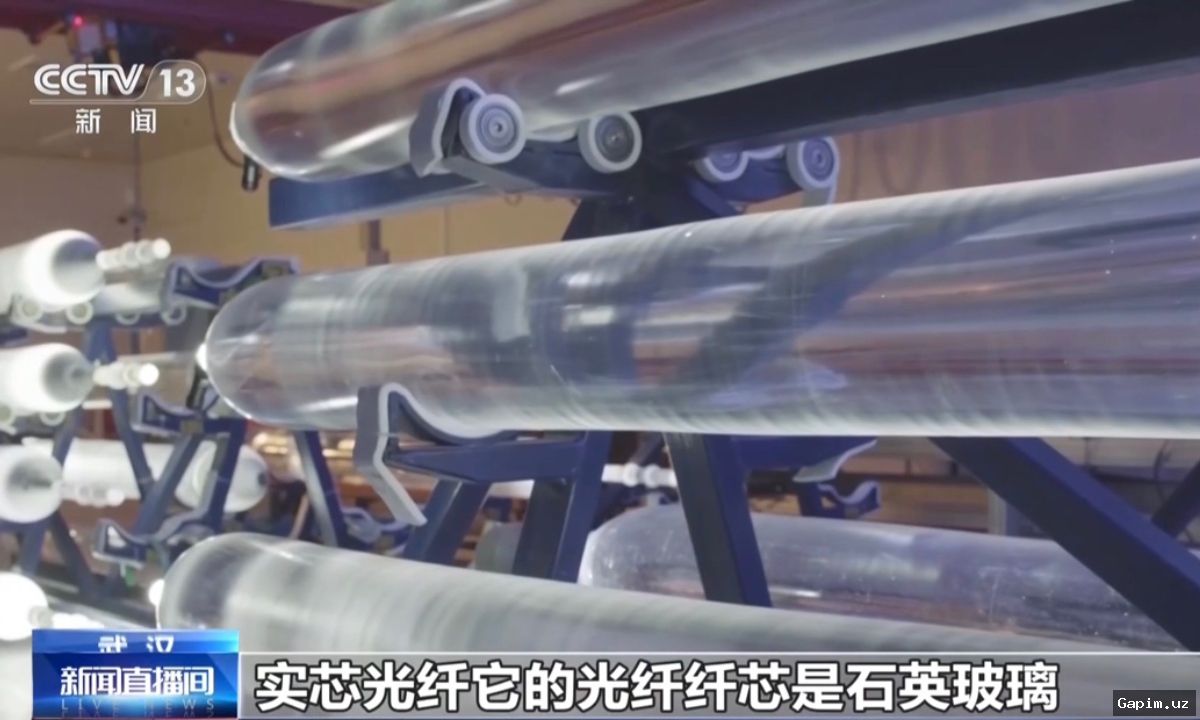
Most optical fibers in use today have a solid quartz core, with signals traveling mainly through glass. In hollow-core fiber, the signal passes through a channel filled with air or gas, which reduces latency and supports the transmission of large data volumes over long distances. The technology is seen as promising for data centers, real-time services and computing infrastructure, and the test is therefore significant for the design of next-generation networks.
Huo Xiaoli, a China Telecom expert on next-generation information and communications networks, said that unlike traditional solid-core fiber, hollow-core fiber transmits signals through a gas medium. According to the source, this can cut latency by 30%. The trial confirmed that the technology can carry large volumes of data over long distances with low latency even while reusing existing transmission equipment; compared with the best solid-core fibers, capacity doubles and transmission distance rises by 60%. This creates a technical foundation for computing networks, and the data are expected to support further commercialization.
The technology is currently used on the world’s first cross-border commercial communications line based on hollow-core fiber, specially allocated for the financial sector and connecting Shenzhen in southern China’s Guangdong province with Hong Kong. In the next stage, hollow-core fiber is expected to be introduced in more sectors and conditions and used in building next-generation communications and computing networks. The test results are expected to serve as an important technical reference for designing such networks, although deployment remains at the trial and limited commercial stage.
Source: kun.uz