A 48-storey office tower in Melbourne has been fitted with 1,391 solar panels across its facade, roof and upper section, in one of Australia’s most ambitious building-integrated photovoltaic projects to date. The system at 435 Bourke Street has a peak capacity of 375 kW and is expected to cover up to 20% of the building’s baseline electricity demand once fully commissioned by the end of the year.
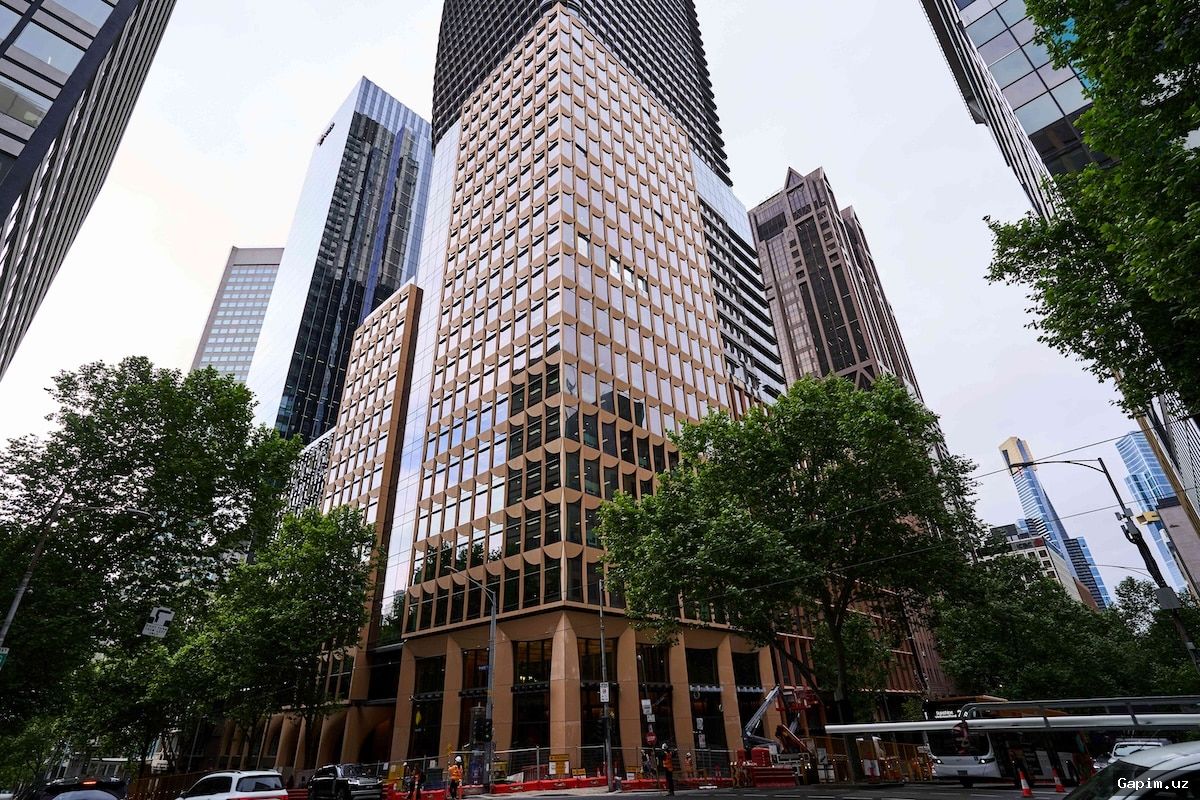
Key Takeaways: The panels span more than 2,679 square metres and form part of the building’s outer envelope rather than a conventional rooftop array. The 375 kW system is designed to supply up to 20% of base electricity needs and reduce cooling loads and grid purchases. Full commissioning is planned for later this year, but independent data on actual output has not yet been published.
The project received Australian government financial support more than four years ago. Its core idea was to move solar generation beyond rooftop limitations by turning high-rise walls into electricity-producing surfaces. In dense cities where roof space is scarce, facade-integrated photovoltaics can expand the available area for solar deployment. Still, the claimed benefits will need to be verified through real-world operation, including maintenance costs and performance under changing weather conditions.
Unlike standard rooftop solar stations, the panels are not simply mounted on a finished structure. They replace conventional building materials such as facade cladding, glazing, sun-shading elements or roof covering. The photovoltaic modules therefore serve simultaneously as construction components and electricity-generating equipment. The installation covers more than 2,679 square metres and captures a substantial share of the tower’s exterior surface, a design that could be relevant for other land-constrained urban sites.
The developers describe the scheme as “one of the world’s first examples of large-scale use of a solar facade in a commercial office building” and refer to the panels as a “solar skin.” They say the system will cover part of the building’s electricity demand and reduce the load on cooling systems. In November 2024, an eight-storey office at 550 Spencer Street in western Melbourne was completed with 1,182 facade panels; the Bourke Street project is more than twice the declared capacity of that earlier installation and sits on a 48-storey tower rather than an eight-storey building.
The next test will be how the system performs after full commissioning. Developers plan to complete commissioning by the end of the year and assess whether actual generation matches projections. For Australia’s urban energy market, the project is a closely watched case for treating commercial towers as distributed power sources rather than pure consumers. Decisions on replicating the approach will depend on installation costs, long-term maintenance and verified savings.
Source: kun.uz